
Diocesan Administrator Account
Family tragedy plants seed of religious life

 Ursuline Sister shares her ‘adventure’ as the Church celebrates National Vocations Week Nov. 7-13
By ANDREW HANSEN
Editor
Aug. 26, 1959 is a date that will forever be in the mind of Sister Mary Ellen Backes, OSU.
“When Janet (her identical twin sister) and I were 14 years of age, a car accident took the lives of our parents and left Janet and myself with serious injuries,” Sister Mary Ellen recalls. “A tragic event such as this changes the course of one’s history. The feeling of helplessness, not being able to awake from a bad dream, ironically became a source of blessing. Amidst the tragedy, I came to know God’s nearness and presence in the human family, in the strangers who appeared to help mend our brokenness. I believe the sudden loss of my parents, the suffering of me and my twin, of my entire family, became the seed that nourished my faith.”
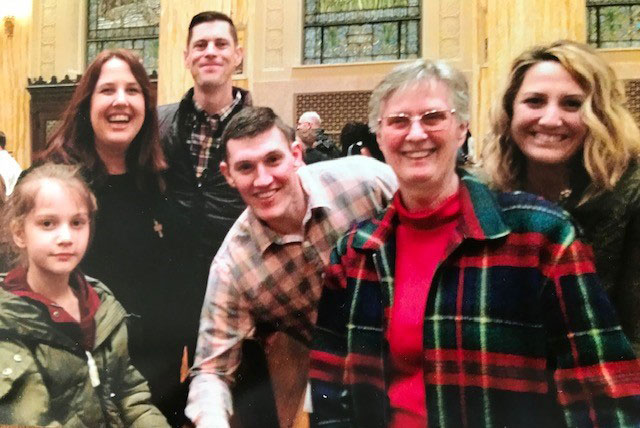 Fast forward to today, and that seed of faith has blossomed into a life-giving tree. Sister Mary Ellen has been ministering at St. Joseph Parish and previously the school before it closed for 27 years, but that is only half her life as a sister. She made her first profession as an Ursuline of Belleville in 1965. She has been an Ursuline Sister now for 60 years come 2023 (since 2005, she has been an Ursuline of Mt. St. Joseph Maple Mount, Kentucky, when the order merged).
“I thought religious life would provide a straight highway to Heaven with no conflicts or distractions,” Sister Mary Ellen said with a laugh. “Eventually I came to understand that it is God who does the choosing, that religious life is one of service, of carrying God’s presence into the lives of others. God chose me first and opened my life to learning what it is to follow in the footsteps of Jesus, to be a servant, to carry the light of God’s love, goodness, joy, and peace to others.”
Born in 1944 in North Dakota, Sister Mary Ellen says her parents and grandparents deeply influenced her faith life.
“They always attended church, never missed Mass, and lived their faith,” Sister Mary Ellen said. “They worked long and hard to cultivate crops of wheat, barley, mustard, and corn, and trusted in a higher power to produce the fruits of their labors. I remember well an often-repeated story that on Sunday mornings, at the exact time most ripe for harvesting the crop, the German pastor would remind them that Sunday ‘is the day of rest.’ Their prayer was unspoken as they walked into the crops to check the health of the wheat and to check to see if insects were present that might destroy the crops. They often looked into the North Dakota skyline for possible coming storms or damaging winds.”
 In high school Sister Mary Ellen met the Ursulines, saying that she found them to be welcoming, relational, fun, humorous, and joyful.
“They shared their humanity,” she said. “I found this to be much more appealing. They invited us into their lives and their stories.
Sister Mary Ellen ended up choosing the name “Ellen,” as that was her mother’s name. Over the decades, she has lived in several places in Illinois and for nearly the last 30 years, in Springfield. Saying that she wanted to minister to children and adults in parish life, she received a master’s degree in theology along her journey to today.
“In 1995, I was offered a pastoral associate and director of religious education position at St. Joseph in Springfield,” Sister Mary Ellen said. “I was interviewed for this position by Father Pat Render, CSV, and remember telling him during the interview that I’m a long-time employee and would remain in this parish for years to come. I have loved the parish since the very beginning.”
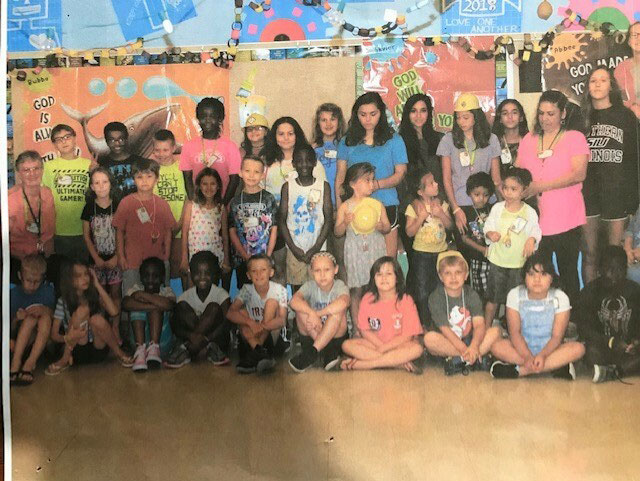
At St. Joseph, Sister Mary Ellen has touched the lives of so many people, from children to older adults. With her vast knowledge of the faith and joy-filled spirit, her ministry has been a true witness of what it means to be a disciple of Christ. She was responsible for sacramental preparation when the school existed and continued that into the PSR program. Currently, she facilitates faith formation from birth to death, directs the Catholic Faith Formation program for children and those in RCIA, facilitates Scripture classes, and is involved in some way in several other ministries at the parish.
 “Sister is incredibly inspirational to me,” said Amy Voils, executive director at Mercy Communities, which is next door to the parish. “We share a wall, so I see her almost on a daily basis. She is incredibly kind. Everything she does, I see her do it through Christ, and it’s very inspirational to me and my faith.
“When she does a program, she completes it, and she does it very good,” said Gary Schmidt, a parishioner at St. Joseph. “You name it, and she is doing it. She spends a lot of her time on building her classes on all these stages people go through to join the Church. I think people appreciate it, and they remember her.”
“It has been a joy to know and journey in faith, life, and death with so many sisters,” Sister Mary Ellen said as she looks back over the decades. “And, it has been a privilege to meet and accompany so many wonderful people who have come into my life through the Church, through my ministry, to struggle with them in their pain, and celebrate with them in their joys.”
Sister Mary Ellen describes her life as a sister as “an adventure.” With National Vocations Week Nov. 7-13, she offers this advice for parents and grandparents who see a vocation to the religious life in their daughter or granddaughter.
 “I think the first thing parents and grandparents must do is practice and cultivate their own relationship with God so they themselves can begin to understand what a religious vocation is all about. In this way parents and grandparents can take a more realistic look at religious life.
“Religious life at this time is being transformed into something new and different. We, religious and laity alike, must remain open to the power and movement of the Holy Spirit.”
After her decades of experience being there for others, teaching others, and witnessing so much, she says that she has learned that “it’s more about what God is doing in my life than what I’m accomplishing or experiencing.”
“I would encourage young people to take Jesus as their model first and foremost, to be true to themselves, to live their lives with purpose,” Sister Mary Ellen said. “I’d tell them to give the best of themselves in all that they do, and to trust that life has meaning. I would advise them to be authentic and open to God’s presence and the action of the Holy Spirit in their lives. If they do, they will experience joy! I’ll close by saying I believe this is what it means to be religious.”
Who is God calling you to be? Go to dio.org/vocations.
Hey, Father! Where can the American flag be placed in church?

Why do we not have an American flag in our church? We are "one nation, under God." We sing patriotic songs on July 4, etc., but the flag of our great nation is nowhere to be seen.
Nancy in our diocese
The practice of placing the national flag somewhere inside churches seems to be an American custom. In my travels, I cannot recall seeing a national flag in the churches I have visited in Italy, Scotland, England, Spain, Turkey, Greece, or Australia; I have only seen a national flag in some churches in the United States of America.
Neither the General Instruction of the Roman Missal — which governs the celebration of the Mass and certain aspects of churches — nor the Code of Canon Law addresses the topic of flags within churches, presumably because such a practice is unforeseen by the Bishop of Rome. The United States Conference of Catholic Bishops, however, has provided some guidance on the placement of flags within churches:
“The Bishops' Committee on the Liturgy has in the past encouraged pastors not to place the flag within the sanctuary itself, in order to reserve that space for the altar, the ambo, the presidential chair and the tabernacle. Instead, the suggestion has been made that the American flag be placed outside the sanctuary, or in the vestibule of the Church together with a book of prayer requests. It remains, however, for the diocesan bishop to determine regulations in this matter.”
Why might this be?
The sanctuary is meant to be a representation of the heavenly Jerusalem and, ideally, represents in various means the worship given to God by the angels and saints, that same worship and life to which we aspire and for which we long. Just as in the life to come, there will be no marrying, neither will there be any national differences among humanity (cf. Matthew 22:30; Galatians 3:28). Consequently, nothing representing national boundaries has a place within the sanctuary because it is not — and will not be — part of the heavenly Jerusalem.
That said, it is permissible to display flags in the vestibule or parish hall, or some other such space, at the discretion of the pastor, unless the local bishop determines otherwise. As far as I know, none of the bishops of the Diocese of Springfield in Illinois has issued a policy on the displaying of flags in parish buildings. The displaying of flags outside of the sanctuary is a possibility, but it is nowhere required.
Father Daren Zehnle is pastor at St. Augustine Parish in Ashland; parochial administrator of St. Alexius Parish in Beardstown, St. Fidelis Parish in Arenzville, and St. Luke Parish in Virginia; and is the director for the Office of Divine Worship and the Catechumenate for the Diocese of Springfield in Illinois.
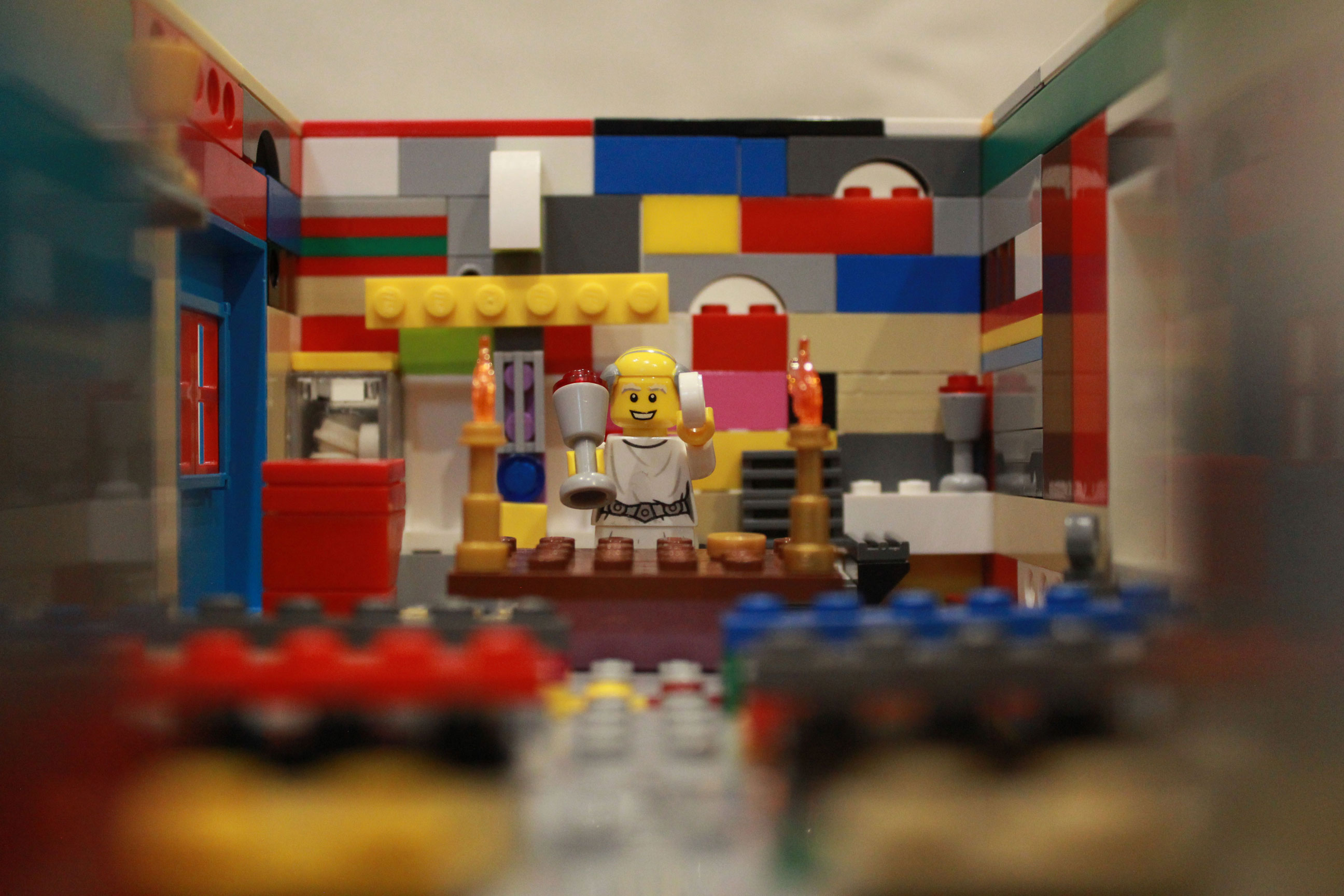
Build a Church LEGO Contest - see winners/all creations

The missions: how you can help people around the world

Inside the mind of former abortionist

 ‘You no longer consider that this is a human being that you are killing’
After performing hundreds of abortions, this doctor is sharing the lies of the abortion industry so truth can prevail
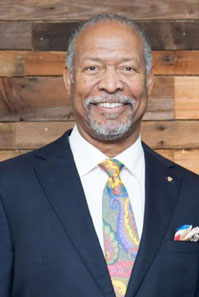
Dr. Haywood Robinson grew up in Southern California and received specialty training in family practice medicine in Los Angeles. He learned how to perform abortions in 1978, after Roe V. Wade legalized abortion in the United States. (This year, the U.S. Supreme Court overruled that decision.) During his residency training, Robinson met his wife and the two started performing abortions together. After performing hundreds of abortions, he and his wife had a conversion, ending their practice of performing abortions after converting to Christianity.
Now, Robinson advocates for life and travels the country speaking the truth about abortion and the lies the abortion industry proclaims. Earlier this year, he was in Granite City as the keynote speaker at the 40 Days for Life kickoff rally next to the abortion facility there.
Catholic Times Editor Andrew Hansen interviewed Robinson to learn about the mind of an abortionist and how manipulation is fooling people into thinking abortion is simply “health care.”
When you were in medical school, what made you think that you wanted to perform abortions?
That’s an excellent question because it really doesn’t quite work out that way. What the abortion mentality or philosophy has been successful at is the mindset of making abortion seem like it is medicine. So, it wasn’t like I decided, “Oh, I think I will go see what abortion is like and go do an abortion today.” Abortions were performed in the hospital I trained in as part of “normal medical practice.” So, I started doing abortions because I thought it was normal. But, abortion is not medicine. Medicine’s purpose is to comfort, to heal, and to make an individual better. There is nothing about an abortion that improves the life of a woman. It kills the baby and damages the mother psychologically and many times, physically.
 What is it like performing an abortion?
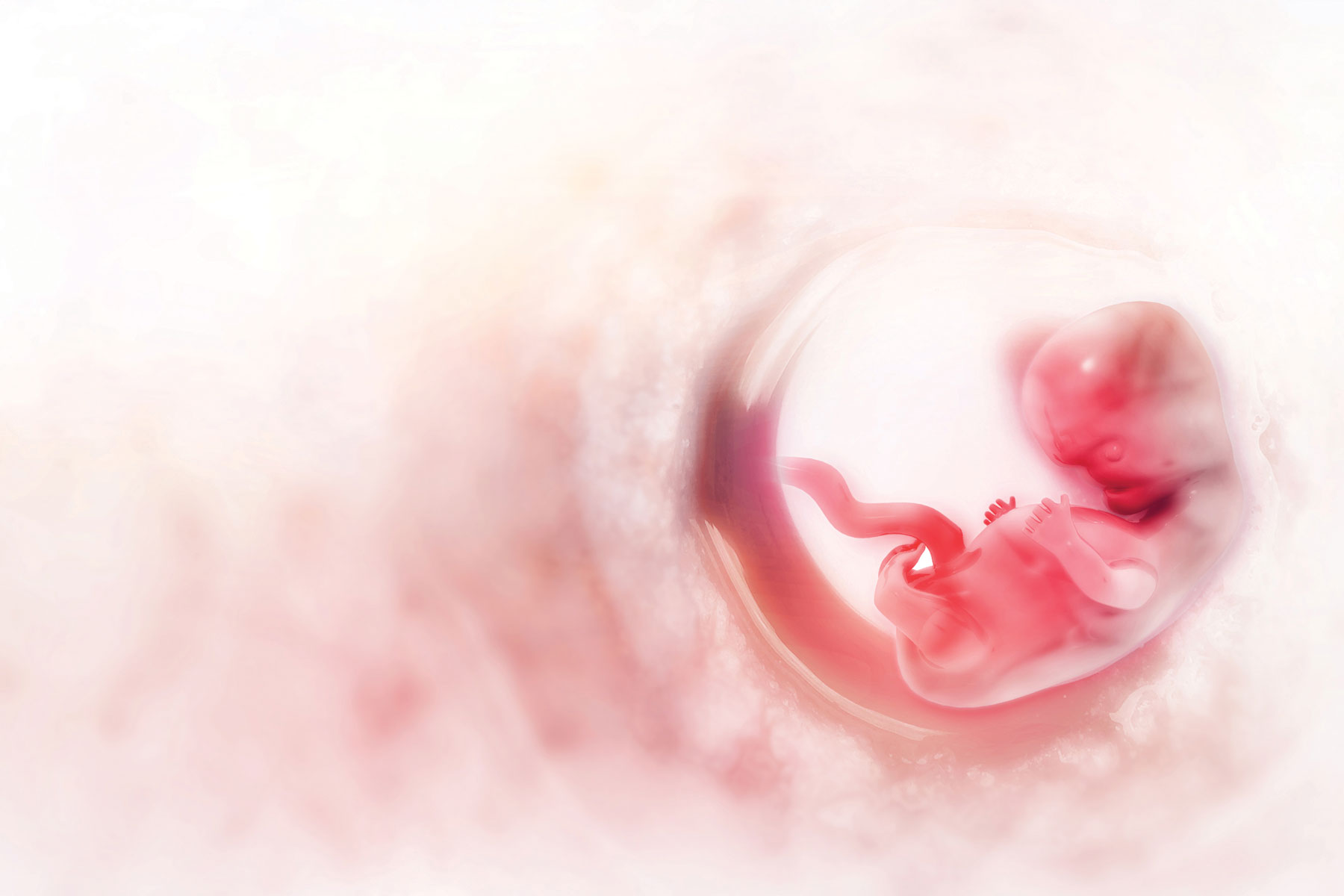
When I first saw my initial abortion, watching over the shoulder of another resident, I will say that there was something about it that made me queasy. God gives us this conscience that He puts in us, which lets us know when something just isn’t right. What the enemy is able to do, is the same thing he has done from scene one, act one in the Bible. That is deception. If he can deceive you to think, “The woman is getting an abortion anyway and this is legal and you need to know how to do this procedure,” you tend to fall for it.
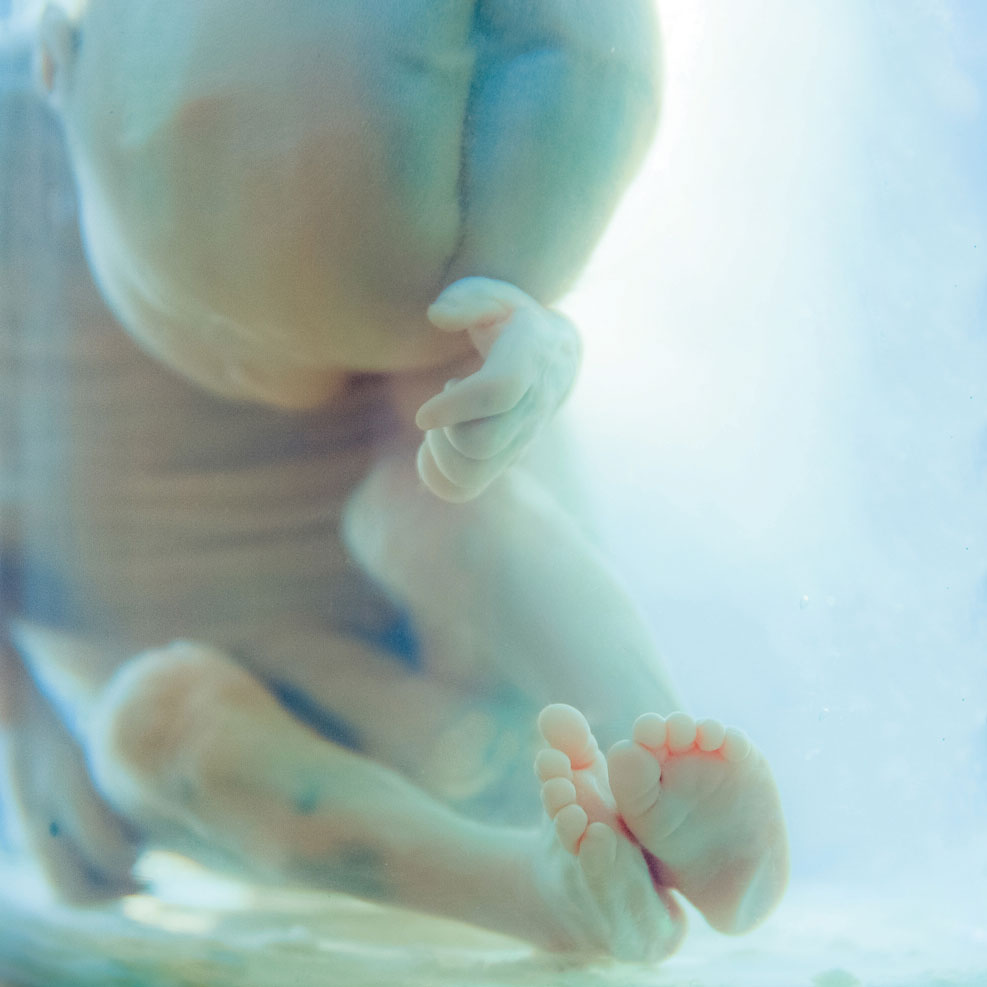
Here is what happens: You have this progressive desensitization and dehumanization that happens, not only in the doctor, but the nurses, and the entire medical team, where you no longer consider that this is a human being that you are killing.
 You mentioned when you first saw an abortion that it didn’t seem right. So, when performing these abortions, taking these now lifeless human beings out of the mother, was there still anything inside of you saying that this is wrong or were you just numb?
You tend to suppress that because you have to remember you are in a setting where your evaluation is looked at how professionally you handle situations like this. If you act like the way you probably should act, then you will possibly be labeled “not professional” or “not being sensitive to the patient’s needs.” So, you treat the abortion just like you treat any other medical procedure. But no, you can’t change that gut feeling that something is wrong.
We totally ignore the humanity of the preborn child, but on the flipside, we admit when a woman has a miscarriage, you’re supposed to handle that a totally different way, being sensitive that there has been a loss in the family, get counseling, etc. But, you can’t have it both ways. It’s a baby no matter what.
How much did money play a role in you doing abortions?
I will say right off, I never enjoyed doing an abortion. I’ve never talked to a doctor who said, “That was a fun abortion.” Abortions are done for money. The fuel for the abortion industry is simply money. If the variable of money was removed from the abortion equation, we wouldn’t be having this conversation because it is a very lucrative and easy business, you don’t have to file insurance, it’s cash, you never have to worry about patients being dissatisfied because once a woman has an abortion, they really don’t want to have anything to do with the facility anymore.
Then, there is the lie you hear of “this is a choice between a doctor and a woman.” I can tell you, it’s not. The doctor doesn’t see the woman until right before the time of the abortion. These abortionists are what we call transient doctors. They just move around to several different venues making their cash.
 What are some other big lies about abortion?
Forty years ago, they said it was “just a blob of tissue.” But babies have become more humanized simply by technology. It happened (recently) where a 20 week (baby in the womb) survived in the neonatal intensive care unit and went home. Back in 1973, that didn’t happen. That’s halfway through a pregnancy. So, technology has helped.
Scott Peterson (of California) received life in prison for two murders. One for the murder of his wife and for the murder of the preborn child when his wife was 20 weeks pregnant. So, we have laws that recognize a preborn child is human in certain instances, but then if you flip the coin, they are no longer human (abortion).
In malpractice, if an obstetrician gives his patient, the mother, a drug that adversely affects the preborn child, that doctor is held responsible for the injury of that child. If a doctor suspects a woman is using crack or heroine, by law, that doctor has to report that to the state because the state has an interest of the child to not become drug addicted or harmed. So, we have this abortion distortion where you try to have it both ways, but it doesn't work that way.
You eventually stopped performing abortions after just a few years because first, the city you moved to with your wife, in your words, had this “community standard where they didn’t perform abortions.” But, then you converted to Christianity and that really changed you?
The Lord told me and my wife and said, “It’s time for us to talk about the past and abortions.” That’s where He really revealed the magnitude of that sin. The Lord really allowed us to see how wrong killing these preborn children are and soon thereafter, I launched into the pro-life ministry, and for me, my first pro-life ministry was pregnancy resource centers.
 On March 7 this year, you were in Granite City in our diocese as the keynote speaker at the 40 Days for Life kickoff rally by Hope Clinic, the abortion facility there. What was your message?
That facility, they call it Hope, but it’s really hopeless. I know what it’s like to work in a building like that. All they do is bring women in and hurt them. That’s all they do. They do late term abortions there. The place looks hard, it looks cold. My message was thanking them for being a part of 40 Days for Life.
40 Days for Life started in Bryan, Texas (by College Station). Planned Parenthood opened a facility there and this was a facility many knew about — Abby Johnson was the director. She walked out after having a revelation about the sanctity of life and what abortion is. After that, the Planned Parenthood closed down because 40 Days for Life, (people) standing in front of the facility, fasting, and praying. It’s very interesting, when we as believers, when we do things that the Lord says we are supposed to do, like prayer and fasting, we are sometimes surprised when we get results when we shouldn’t be.
The science proves that it is a human life at the moment of conception but for those who support abortion, that doesn’t seem to resonate with them. What is your message to those who still believe abortion is OK?
I would ask them, when do think their life began? Was it two weeks after conception? A month? Have them consider their life personally.
Questions and edited answers taken from Andrew Hansen’s interview with Dr. Robinson on Dive Deep, the official podcast of the Diocese of Springfield in Illinois. Hear more from Robinson by going to dio.org/podcast.
My twin brother and I could have easily been aborted. So, why did I ride a bike 700 miles in six days?

 By NATHALIE CORBETT
Special to Catholic Times
March 4, 1993, 11:53 p.m. and March 5, 1993, 12:12 a.m. Those are the dates and times marking when my twin brother and I were born. But here's what they do not mark: they do not mark the beginning of our lives, nor do they mark the beginning of our stories.
Our stories begin with a brave woman named Cindy, our biological mother. A one-night stand resulted in her unplanned pregnancy, with not one but two babies. This is what Cindy was facing. She was alone and only 22 years old. I'm sure she was faced with a lot of concerns. She was probably scared and had numerous reasons for not wanting to bring my brother and I into the world, but she made the brave decision to keep us and to put us up for adoption once we were born.
This, however, is only the beginning of how brave Cindy was to make this decision. A normal pregnancy was not intended for her. Early in her pregnancy, she was diagnosed with cervical cancer. The doctors encouraged her to abort the two of us to give her a better chance at success in her treatment against the cancer. Instead, Cindy chose to give us a better chance at surviving and made the decision to keep us in her womb for as long as she could.
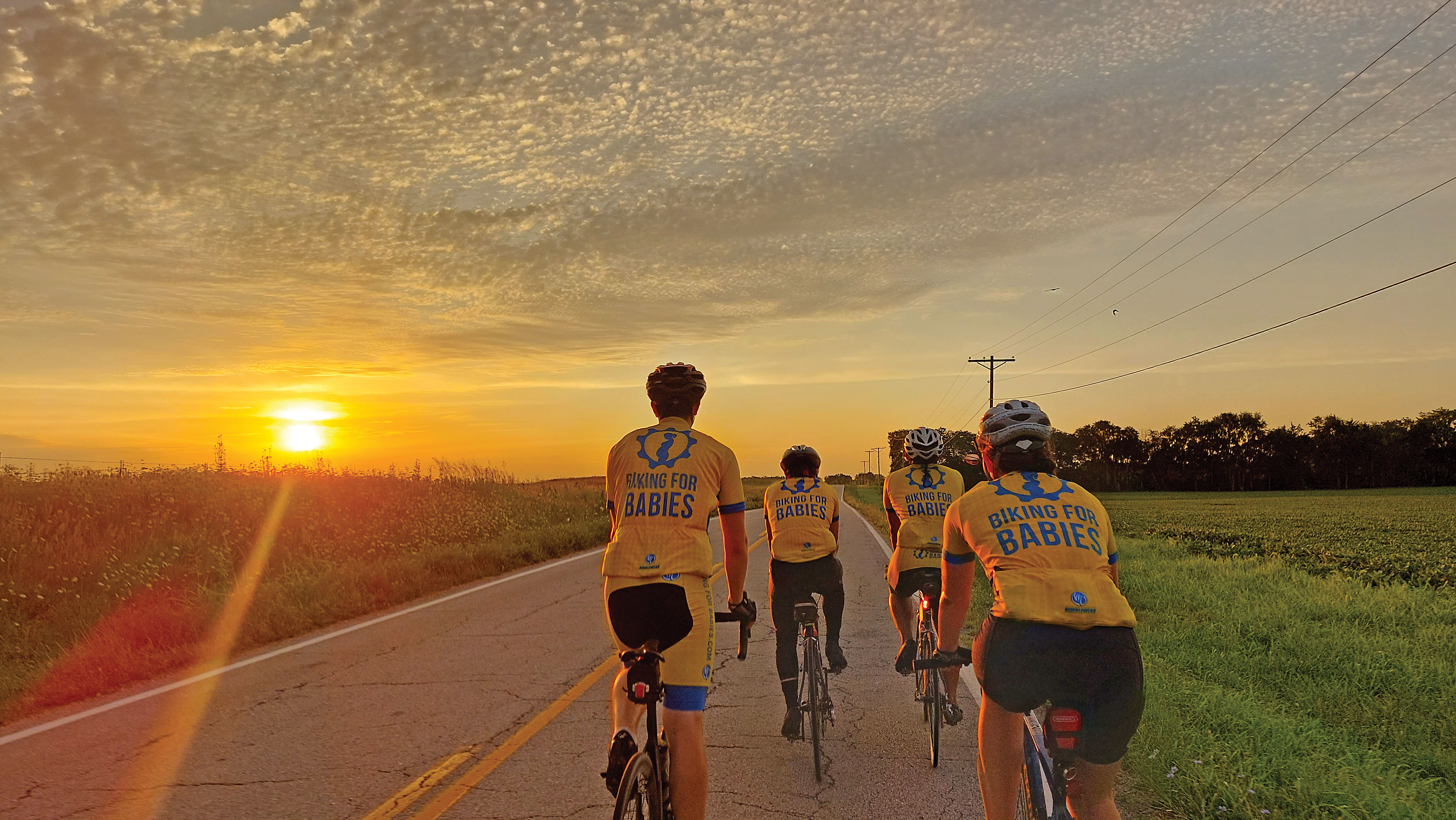
I heard this story for the first time when I was 18 years old. From that moment, my pro-life mission had more focus, and it couldn’t resonate more than with what Biking for Babies achieves every summer. The mission of Biking for Babies is to renew the culture of life one pedal stroke and one pregnancy resource center at a time. Every Biking for Babies missionary partners with a Pregnancy Resource Center (mine was First Step Women’s Center in Springfield), and we raise funds collectively to help these centers and the women entering them by teaming up with other missionaries and bike about 700 miles in six days. Different groups start in various places in the country, but everyone finishes in St. Louis.
In returning to Biking for Babies this year, I thought I knew what to expect when signing up a second time around, but I couldn’t have been more wrong. Several curveballs in both my training and my experience during the national ride came my way. There were several moments where I wanted to give up, but the mission kept calling me back.
Due to injuries to my elbow and muscles to my left leg as well as getting COVID, I was unable to start training until a month before the national ride. I pushed through and managed to get an 80-mile bike ride in before the national ride, which is what I needed to assure the team that I could do this.
I met my fellow “western route’ missionaries in Dodge City, Kan., our starting point for our 700-mile ride to St. Louis. We were excited for the long week ahead of us, but our first day of biking, July 10, gave us an idea of what we would be dealing with the entire week: 106-degree weather and humidity. We had cooling towels to cool us off during breaks and an amazing support crew that would spray us with cold water every two miles, but it was quite a challenge.
My leg injury then started flaring up on day two of biking, which meant that I couldn’t do the entirety of the mileage. I started looking for ways to get back home. The week wasn’t going as I had planned. Whenever I started looking for a way home, I would always come to the following conclusion: This wasn’t about me, and it wasn’t about the mileage I was getting in. It was about supporting my fellow missionaries, being a witness to life on the roads, communities, and families we encountered during the week, and ultimately, helping mothers and their unborn children.
After the ride was finished on July 16, we were asked, “What was a ‘God-send’ moment for you and your team this week?’” For me, it was our last day of biking.
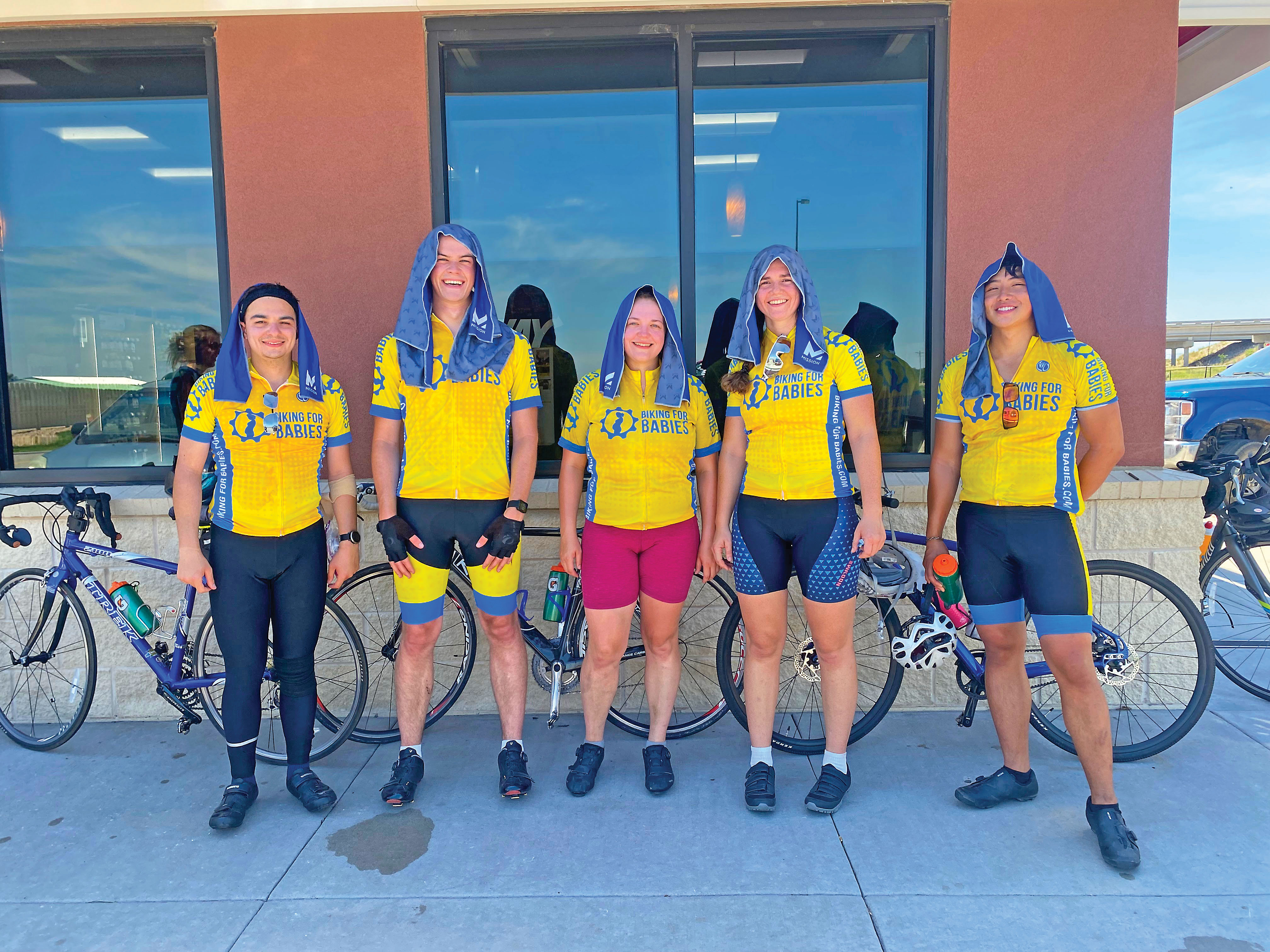 Two of our bikers had to leave that morning, which meant that only four bikers were left, including myself. I was worried at the news because I knew that at some point, I would be getting off the bike. So, at 4:30 a.m., we started on the Katy Trail which runs along the Mississippi River. I managed to do 70 miles before hopping off and giving my leg a break. While taking a break, I went to a bike shop with two of the support crew members to get additional inner tubes since we were completely out and biking on a gravel surface. When we got back to the group, another biker, Ryan, was out due to heat stroke.
I decided to get back on the bike because it was too dangerous for only two people to be biking. After biking five miles, we reached a support crew vehicle and were told to stop. Jimmy, the co-founder of Biking for Babies, came out of a van with a bike and said, “I heard you guys needed another biker.” The three of us were so relieved. Once we were getting closer to St. Louis, the hills got steeper and my leg couldn’t handle it, but I knew that the team was in good hands with Jimmy being there. Ryan and I re-joined the team for the last five miles and then continued to bike the final mile with all the Biking for Babies missionaries.
Our team went through a lot of hurdles that day, and Jimmy showing up when he did was exactly what we needed. It’s that moment that reminded me of my faith in God. He will show up exactly when you need help, so turn to Him and embrace Him.
Nathalie Corbett attends St. Katharine Drexel Parish in Springfield.
Hey, Father! Explain the Church's teaching on birth control

Given the Catholic Church’s teaching on abortion, is the use of birth control pills considered an abortion? If so, does it prevent those who use birth control pills from receiving the Eucharist
Anonymous in the diocese
To answer your questions, we have to make several important distinctions. Briefly put, the Church’s moral evaluation of abortion is distinct from that of using birth control (contraception) because these are very different acts. Abortion is the “direct and voluntary killing of an innocent human being” (John Paul II, Evangelium Vitae, n. 57). Contraception is “any action which either before, at the moment of, or after sexual intercourse, is specifically intended to prevent procreation” (Humanae Vitae, n. 14). Abortion destroys life, contraception prevents it. If chosen freely and knowingly, both abortion and contraception constitute serious sins (see Pius XI, Casti Connubii, n. 56).
In the case of abortion, a new human life is already present, and therefore the only “birth control” possible would be to destroy the human embryo or fetus, a clear violation of the Sixth Commandment, “You shall not kill.” In the case of contraception, fertilization is prevented in some way, and so there is no question of destroying a human life. However, contraception violates the nature of marital love, in which the spouses should give themselves to each other unreservedly. Openness to new life is an essential element of every sexual expression of marital love, even when natural methods like Natural Family Planning (NFP) are used to avoid pregnancy for some legitimate reason (illness, spacing births for serious financial reasons, etc.).
When it comes to contraception, we have to be precise, because the term is often used to describe a variety of drugs with very different effects. The most common contraceptive drug is a combination of estrogen and progestogen known colloquially as “the pill.” The pill alters a woman’s menstrual cycle and prevents ovulation (the release of egg cells), rendering her temporarily infertile. This is contraception in the proper sense of the word because conception is prevented altogether.
However, other drugs advertised as “contraceptives” can actually allow conception (fertilization) to occur and then cause the death of the embryo afterwards. Such drugs are not really contraceptives but “abortifacients” (abortion causing drugs). This is especially the case for drugs sold as “emergency contraceptives.” The so-called “morning after pill,” Plan B (levonorgestrel), is the most popular of these. When taken after sexual intercourse (as advertised and instructed), the only remaining way for this drug to “work” is by preventing the embryo’s attachment to the uterus. This ultimately kills the embryo and is thus an abortion. Of course, given the typical woman’s fertility window of about six days per month, so-called “emergency contraceptives” certainly do not cause an abortion every time they are used. This does not diminish the moral evil of using them, but it does reduce the number of human lives destroyed.
There are also drugs that are explicitly advertised as abortion drugs. The most common one is RU-486 (mifepristone), openly called “the abortion pill.” It is usually used together with the drug Cytotec (misoprostol). These drugs are used throughout the first and second trimesters of pregnancy. They first cause the death of the embryo or fetus and then its discharge. This is called a “chemical abortion.”
So, to your question about whether the Church considers “birth control pills” to be a form of abortion, the answer is that it depends on which drug is used. The most common form of contraception, “the pill,” is taken daily and prevents fertilization itself rather than killing embryos post-fertilization. It is possible for the pill to make the uterine wall less hospitable to the embryo’s attachment. But this would be an indirect abortive effect and not an abortion properly speaking (many medications can have indirect effects on fertility and pregnancy). Recall that abortion is the “direct and voluntary killing of an innocent human being,” not a rare, indirect, and unintended side effect of some other action. On this note, it is important to acknowledge that some women are prescribed the pill for therapeutic reasons, for example, to treat endometriosis, severe acne, and certain forms of cancer. This use of the pill is morally permissible provided that the contraceptive effect is not the intention of the woman, and she is still open to life (in the context of marriage, of course) (see Humanae Vitae, n. 15).
It is possible and perhaps even likely that someone could be ignorant of the abortion-causing effects of so-called “emergency contraceptives” like Plan B. After all, they are advertised as “contraceptives,” not abortifacients. This ignorance would reduce the person’s moral culpability for using the drug. However, it would be difficult for someone to claim ignorance about a drug like RU-486, which is openly advertised as an abortion pill.
Regarding worthy reception of the Eucharist, abortion and contraception are not unique: All Catholics who are conscious of committing any serious sin are obliged to refrain from holy Communion until they receive absolution in the sacrament of reconciliation (see 1 Cor 11:27–30 and Code of Canon Law, n. 916). Anyone who has been involved in an abortion in any way should ask for God’s forgiveness and come to the sacrament of reconciliation to receive mercy, grace, and healing. Anyone who has used contraceptives for the purpose of preventing new life should do the same. Behind every “no” in the Church’s teaching is a life-giving and liberating “yes” to authentic human love and flourishing.
Father Christopher Trummer, S.T.L, is parochial vicar at St. Agnes Parish in Springfield, associate delegate for Health Care Professionals, associate chaplain of the Springfield Chapter of the Catholic Physicians Guild/Catholic Medical Association, and has a license in Sacred Theology in Moral Theology at the Pontifical University of the Holy Cross in Rome, Italy.
Diocese’s newest pregnancy opens in Newton

 The Newton Family Life Center is the newest pregnancy center in the diocese. It provides pregnancy testing, limited OB ultrasounds, parenting classes, educational pregnancy classes, adoption information and referrals, post-abortion support, and baby supplies (as part of the Client Cash Program). By BRIAN BIERMAN
Special to Catholic Times
NEWTON — On June 24, the U.S. Supreme Court overturned Roe v. Wade ending federal protection of the right to abortion. Now, individual states will get to decide whether or not to allow abortion in their state. It was a tremendous victory for the pro-life movement, but there is still much more work to be done, especially in the state of Illinois. On the day of the ruling, Illinois Gov. JB Pritzker promised the state would remain a “safe haven” for women seeking an abortion and called for a special session of the General Assembly to further expand and protect those rights in the state.
As many in Illinois fight to expand abortion rights, people who support life in Newton are standing up to support men, women, and families experiencing pregnancy, parenting, and other related issues. The small city in Jasper County is now home to the diocese’s newest pregnancy center, the Newton Family Life Center.
In addition to the Family Life Center, a new thrift store, The Silk Purse, has also opened in Newton. The Silk Purse Thrift Store carries a full range of items for the public’s shopping experience. All items are donated and all net proceeds from the store go to support the ministries of the Family Life Center.
The Newton Family Life Center and Silk Purse Thrift Store are expansions of the locations already located in Effingham that have been operating for 27 years. So many clients were coming from Jasper County and the surrounding area that the board of directors thought there was a need to expand the Effingham pregnancy center to Newton to help those people. After several months of searching for locations in Newton, in April, two suitable locations were found for the pregnancy center and the thrift store.
Thanks to the generosity of one individual, the cost of the pregnancy center building was covered and the thrift store building and land it sits on was donated by the neighboring concrete plant. Both buildings required some renovations, and a capital campaign was started to raise an estimated $290,000. To date, The Moving Forward in HOPE Campaign has raised more than $240,000, so there is still work to be done. If you would like to get involved, you can find information at the Friends of Newton Family Life Center Facebook page or donations can be mailed directly to Moving Forward in HOPE Campaign, 605 Eden Ave., Effingham, IL 62401.
The Family Life Center is a NIFLA affiliated Christian not-for-profit ministry that provides practical assistance, education, and support to empower and equip women, men, and families experiencing pregnancy, parenting, and related issues, to live healthy productive lives. The Newton Family Life Center provides pregnancy testing, limited OB ultrasounds, parenting classes, educational pregnancy classes, adoption information and referrals, post-abortion support, and baby supplies (as part of the Client Cash Program). Participants in parenting classes earn incentives of diapers and Client Cash for use at the Silk Purse Thrift Store with each monthly visit. With the completion of six visits, a mom earns a basket of new items for the baby and a car seat. The Family Life Center has several employees that are all trained to deal with clients as needed as well as many volunteers who help with many of the center’s events throughout the year. You can learn more about the Newton Family Life Center at their Facebook page, Friends of the Newton Family Life Center.
The Silk Purse Thrift Store will be a huge asset to Newton and the surrounding area by providing a wide array of various household items and clothing at low prices. All of its inventory is donated by the public and most of the workers are volunteers keeping operating costs low. Countless area businesses and individuals volunteered labor and donated material to turn the building into a beautiful space the community can be proud of. Donations of clothing and household goods are accepted Tuesday through Saturday 10 a.m.-6 p.m. (closed Sunday and Monday). You can find more information about the store on Facebook at the Silk Purse Thrift Store – Newton.
The Newton Family Life Center and Silk Purse Thrift Store could not be possible without all of the amazing community support. Countless individuals, churches, and area businesses have gone above and beyond to help make these facilities a reality. Together, we can all create a positive environment where families stay strong, and society respects the dignity of life from conception to natural death. If you would like to learn more about the Family Life Center, please visit familylifepcc.org.
Brian Bierman is a board member of Family Life Center and a St. Thomas the Apostle parishioner in Newton.
The Silk Purse Thrift Store provides a wide array of various household items and clothing at low prices. All of its inventory is donated by the public and most of the workers are volunteers keeping operating costs low. Participants in parenting classes earn incentives of diapers and Client Cash for use at the Silk Purse Thrift Store with each monthly visit. With the completion of six visits, a mom earns a basket of new items for the baby and a car seat.
Submitted photo
Respect Life Month

Long married couples celebrate together at Sept. 18 Mass
 Rita and Fred Greenwald, long-time members of Cathedral of the Immaculate Conception Parish, have been married 71 years. They raised seven children together. By DIANE SCHLINDWEIN
Managing Editor
If you added up the years of wedlock represented by the couples at the Sept. 18 Mass celebrating 50 or more years of marriage that number would exceed well over 2,500 years of love, commitment, and fulfillment of sacramental vows. That’s because not only were many couples there at the Cathedral of the Immaculate Conception celebrating the vows they took in 1972, but also the vows that many of them took in the 1960s and the 1950s.
The evidence of staying together in sickness and in health was obvious among the couples. Some were accompanied by family members, some arrived with one or both of the spouses using canes or walkers, and a few rode in wheelchairs while their loved one pushed them along. In sweet demonstrations of celebration, some even wore corsages or boutonnieres, reminding them of their special day so many decades ago.
All the couples were acknowledged by Bishop Thomas John Paprocki who gave “thanks to Almighty God” for the opportunity to celebrate the annual Mass hosted by the Diocese of Springfield in Illinois. The Mass was concelebrated by Vicar General Msgr. David Hoefler, whose own parents, Deacon Ben and Leona Hoefler, were at the Mass.
One of those couples who were married in the early 1950s were Fred and Rita Greenwald, long-time members of Cathedral of the Immaculate Conception Parish in Springfield. The couple raised seven children at Cathedral and saw all of them attend and graduate from the grade school. “Most of our children worked here at Cathedral (while growing up) and several of them were married here,” Rita said. As for their 71 years of marriage, Rita says she believes couples just must put their minds to it. “It takes work,” she said. “But we are still here!”
Another couple, Jim and Pat Nevins from Our Saviour Parish in Jacksonville, were at the Mass to celebrate 66 years of marriage. The couple, who have four children and eight great-grandchildren, gave their own good advice. “Never go to be angry,” Pat said, to which her husband, Jim, added, “Pray together before you go to bed. That way you can’t go to bed angry. It doesn’t work that way.”
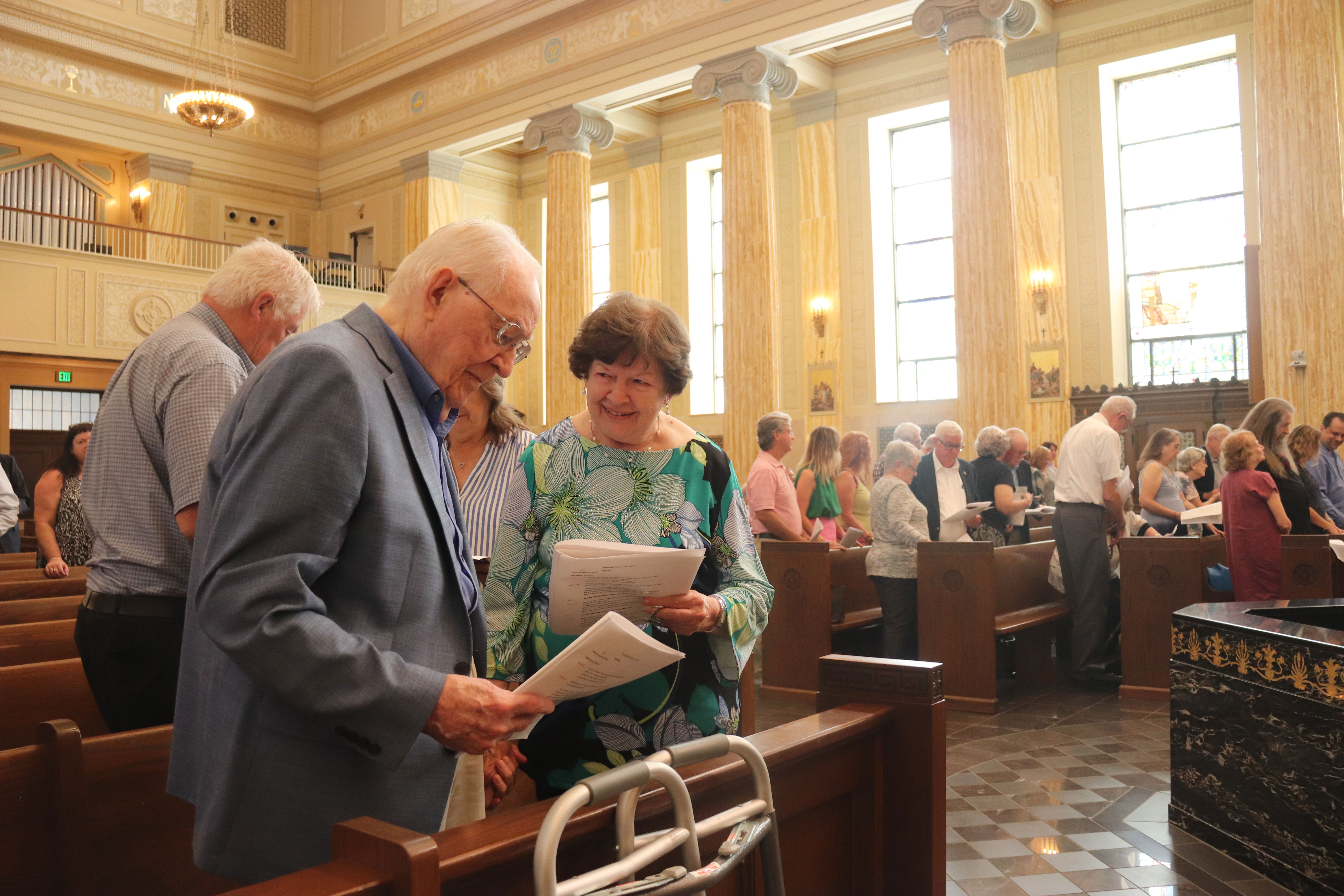 Jim and Pat Nevins of Our Saviour Parish in Jacksonville renew their vows to one another at the Mass for couples married 50 years or more. They have been married 66 years.In his homily Bishop Paprocki spoke about the sacrament of marriage and how long-married couples are mentors to others. “Today I want to step back with all of you to that life-changing exchange at your own marriage. I invite each of you to recall that moment, that day, that Mass — to remember the joy and grace that came as you made that vow to God together,” he said. “You have all lived out those promises for 50 years or more, promises to be faithful, to love, to honor.
“Today I want to thank you personally for your witness to the world, to the Church, and to me, of fidelity in your vocation. Holy marriages are a great reminder and inspiration to the people of God as we see how you have fought for your marriages day by day, through good and bad, sickness and health, carrying together the sorrows and joys of giving your lives in commitment to one another.
“How happy we are to know and love you,” he said, “to see your strength and commitment, to see the fruit and beauty of the sacrifices that your married love has entailed, to have before us your witness of what lasting forgiveness, patience, gratitude, and commitment look like.”
Photos by Diane Schlindwein