
Diocesan Administrator Account
Are you doing these 10 things when attending Mass and receiving the Eucharist?

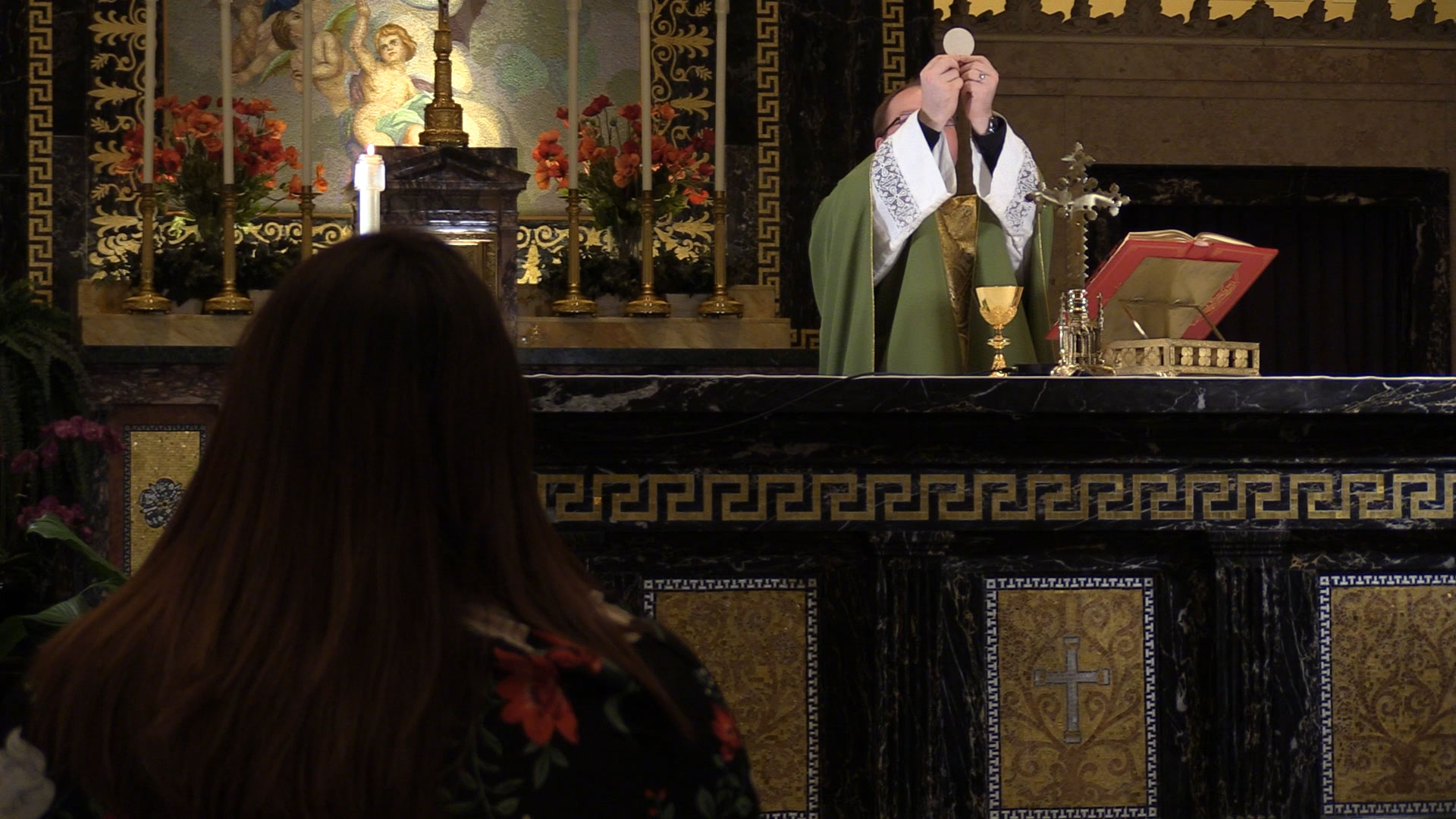 Because Jesus is truly present in the Eucharist reserved in the tabernacle, commonly behind the altar, Catholics should genuflect when entering and exiting their pew to show reference to God, who is truly present.
 - Likewise, one should also kneel (if physically able) during and after the Consecration.
- Catholics must pray and deeply prepare to receive the holy Eucharist.
- Catholics must reverently receive the Eucharist. This includes, first, bowing your head before receiving. You should receive the Eucharist, not take the Body or Blood of Christ (no grabbing, pinching, or biting).
- Say “Amen” after receiving, which means “It is so” or “I believe.”
- One must never receive the Eucharist while in a state of mortal sin.
- One must go to confession if one has purposely skipped attending Mass (breaking the Third Commandment) before one can receive the Eucharist again.
- Catholics must also consume the Eucharist immediately after receiving it. If you ever see someone not consume the Eucharist, confront him or her at once and alert the priest. Some people who do this are intentionally stealing the Host for desecration. If a Catholic knowingly desecrates a consecrated Host, they are committing grave sin and face immediate excommunication from the Church.
- After receiving Jesus, Catholics should spend time in a prayer of thanksgiving for this incredible gift from God.
- Catholics should remain until after the dismissal from Mass.
“Because we are human beings, a union of body and soul, what we do with our bodies affects our hearts and minds,” said Father Daren Zehnle, director of the Office for Divine Worship and the Catechumenate for the Diocese of Springfield in Illinois. “If we approach the Eucharist in a sloppy or hurried manner, we run the risk of forgetting who it is we are receiving and of setting a bad example for those whose faith might be weak. Rather, if we approach the Eucharist with a reverent demeanor, it can help strengthen the faith of others and offers the respect to God that He deserves.
“If a Catholic has intentionally not participated in Mass every Sunday and Holy Days of Obligation, he or she may not receive the Eucharist without first being reconciled to God and the Church through the sacrament of confession. We should remember that the obligation to attend Mass on Sundays and Holy Days is not the same as receiving holy Communion. If we are not prepared to receive the Eucharist, we should not do so.”
St. Maximilian Kolbe, who gave his life in order to save another man’s life during his imprisonment in Auschwitz during the Holocaust in World War II, said, “If the angels could be jealous of men, they would be so for one reason: Holy Communion.” That’s a great reminder we have the most holy and pure gift available to us every Mass, Jesus, truly present in the holy Eucharist.
Does your mind go elsewhere during Mass? Are you distracted? How you can better prepare for Mass to receive our Lord

 My answer to better prepare for Mass would be prayer, study, and live. If possible, I would arrive a few minutes early before Mass. Use the time to pray and quiet yourself. Most of us live very rushed and busy lives these days, so that time of silence allows us to focus our attention on God and offering worship to the Lord. Also, I would suggest praying over the readings before Mass on Sunday. By praying over the readings ahead of time, you will be more familiar to them and ready to let the Lord our God speak to you through them.
The second suggestion I would offer would be to study the Mass. Today as Catholics, we have so much Catholic media at our hands to learn more about our Catholic Faith. We have Dynamic Catholic, Catholic Answers, EWTN, or Word on Fire, to name just a few, literally at our fingertips. Studying the Mass can really open our eyes to the amazing meaning behind the symbols and gestures that are used at Mass. One excellent series on the Mass that I recently watched was Bishop Barron’s The Mass. It is a short series that goes through the different parts of the Mass and explains the rich meanings.
Finally, my third suggestion would be to live the Mass. The Mass is meant to form how we live because the Eucharist is the source and summit of our faith. At every Mass, the Lord Jesus speaks to us and pours out his grace to heal and nourish us. One way we live the Mass is to bring an intention to every Mass. We all know someone or something to pray for at every Mass. Offer that intention up during the Prayers of the Faithful in your heart.
Also, we can live the Mass by offering up and uniting our sacrifices up to the Sacrifice of the Eucharist. We see and hear this at every Mass when the priest says, “Pray, brothers and sisters, that my sacrifice and yours may be acceptable to God, the almighty Father.” We are all invited here to offer our sacrifices from our lives that we do for God like our work life, family life, and prayer life represented by the gifts of bread, wine, and money. So, to better prepare for Mass, think of your sacrifices that you want to offer to God before Mass and offer them up during the Eucharistic Prayer. Then look in awe as your sacrifices and mine are lifted up literally by the priest to God the Father through the power of the Holy Spirit, and we receive the ultimate gift back, the sacrifice of Christ’s Body and Blood.
Father Mark Tracy is pastor of Holy Family in Decatur and Catholic chaplain for the Illinois Army National Guard
We say this at Mass as a congregation: ‘Lord, I am not worthy that you should enter under my roof, but only say the word and my soul shall be healed.’ But, what does that mean?

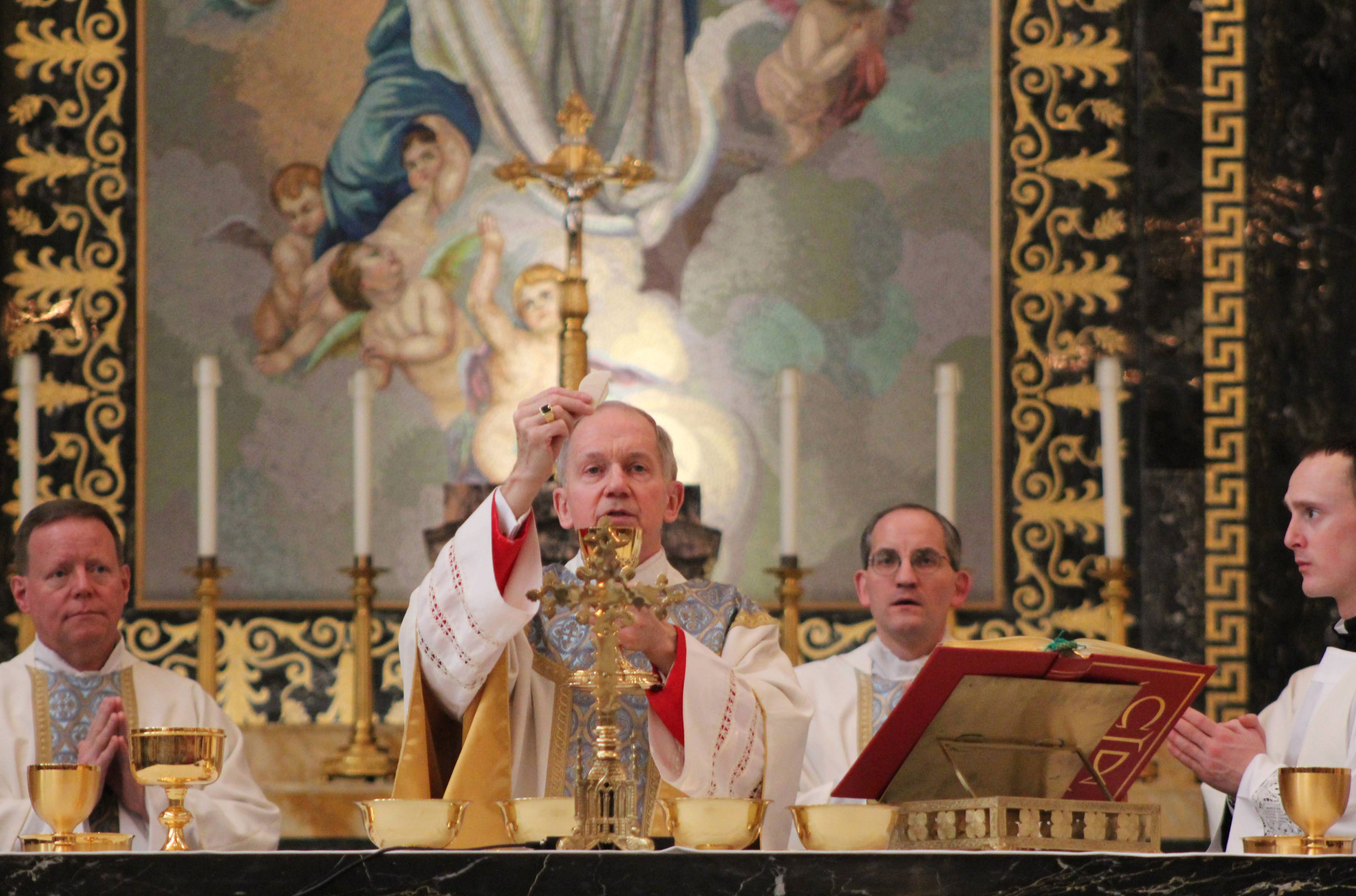 We believe as Catholics that in the holy Eucharist the Lord is truly and substantially present. If we believe this, we also believe that we are unworthy to receive the most holy of gifts offered by Christ, the gift of Himself — Body, Blood, Soul, and Divinity.
This response at Mass comes after the priest, elevating the Body of Christ in the sacred Host and the chalice of the Blood of Christ says, "Behold the Lamb of God, behold him who takes away the sins of the world. Blessed are those called to receive the supper of the Lamb” (the reference to John the Baptist's words when he observes the coming of Jesus). When we respond, "Lord, I am not worthy that you should enter under my roof, but only say the word and my soul shall be healed," we are using the words of the centurion from St. Matthew's Gospel when he asked Jesus to heal his servant who was paralyzed.
In the Gospel passage I just referenced, Matthew 8:8, the centurion refers to the word of Jesus as enough to heal his servant and not his soul as we respond. The responses we make at the liturgical celebration of the Mass refers to our individual response in faith to the power of Jesus and so “soul” was inserted in place of “servant.”
This does not change the words of sacred Scripture but strengthens it, because we are servants of Christ and therefore called to serve in mastery over sin and embracing the spiritual nourishment of our souls.
The Body and Blood of Jesus can heal our souls. Our worthiness to receive the holy Eucharist is found in our disposition to receive what we believe and reflects our dependence upon Christ to help change our hearts to receive what is sacred and holy as nourishment for our souls. To receive the holy Eucharist in an unworthy manner is taken up by St. Paul in his letter to the Corinthians (1 Corinthians 11:27-29) when he says, "Whoever, therefore, eats the bread or drinks the cup of the Lord in an unworthy manner will be guilty of profaning the body and blood of the Lord. Let a man examine himself, and so eat of the bread and drink of the cup. For anyone who eats and drinks without discerning the body eats and drinks judgment upon himself."
To acknowledge our unworthiness to receive the Eucharist is to embrace humility before the Blessed Sacrament and to prepare ourselves to be united more intimately to Christ in His passion and death and as a member of His body. Our mind, our heart, and our soul must be prepared to receive what the Church says about the Eucharist in the document Sacrosanctum Concilium from the Second Vatican Council, that the Eucharist is the source and summit of our Christian faith.
Father Stephen Thompson is pastor of Holy Family Parish in Granite City and St. Mary and St. Mark Parish in Madison
‘I go in with an anxious heart and come out with peace and forgiveness in my heart’

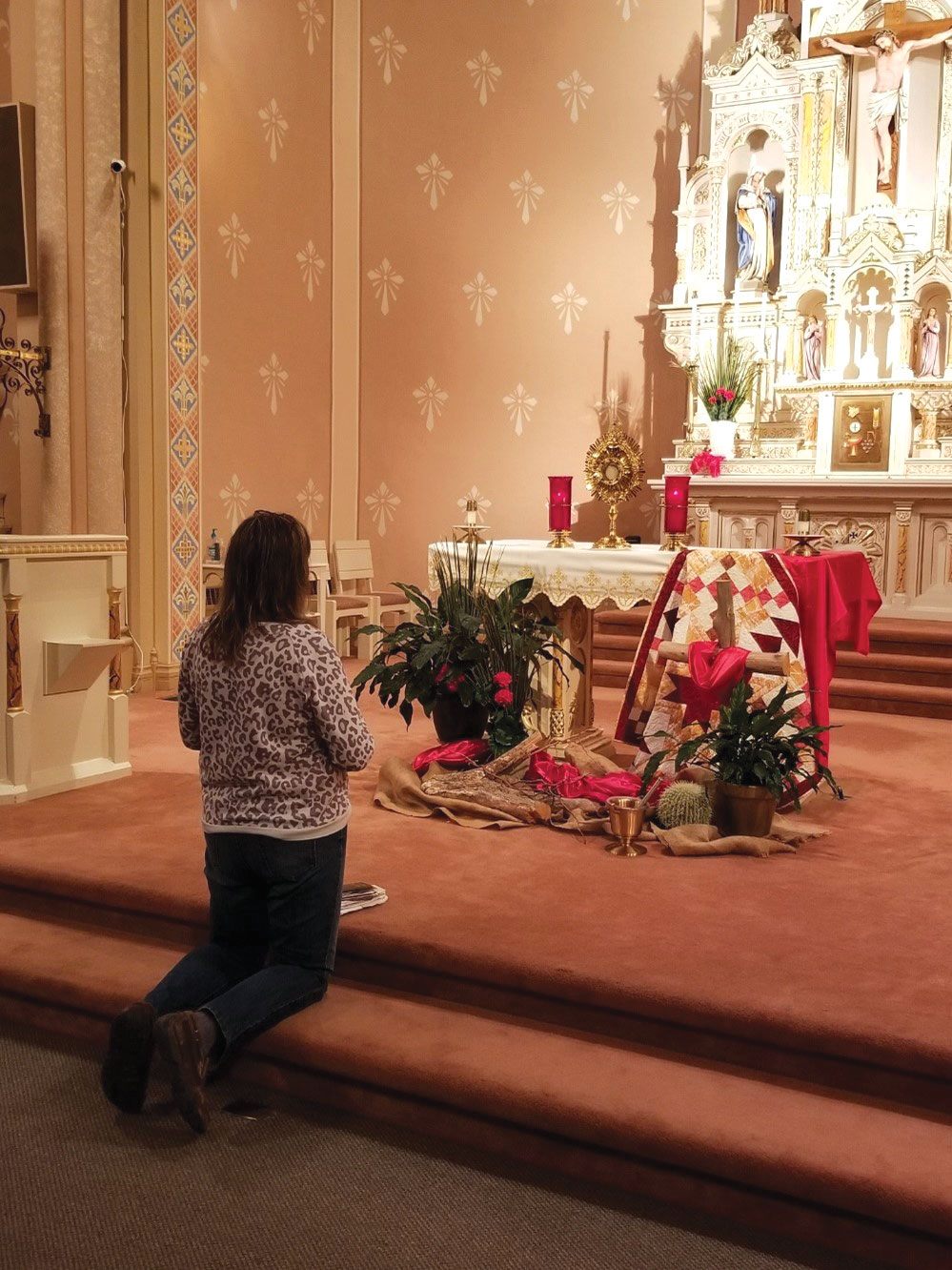 The power of eucharistic adoration
By LISA REXROAT
Special to Catholic Times
Eucharistic adoration. What does it mean to me? Wow, I could never explain this fully in words. I will do my best to express the pure joy and the bursting of my feelings that I get and the feeling of not wanting to leave! Eucharistic adoration is a place where I feel happy, joyful, secure, and safe.
I usually attend eucharistic adoration at our church on every Tuesday when we have perpetual adoration that day. I attend at our hospital chapel on other days if I feel the need for extra help on a different day. It is hard on me if I have to miss my hour, as it has become a habit, a habit which I am so happy to embrace.
While at adoration, I like to kneel as close to the Blessed Sacrament as possible. Sometimes I walk and do the Stations of the Cross. Sometimes I pray the rosary. I usually always lay my special needs up on the altar (not physically). Before I begin, I usually sing all the verses of Amazing Grace. I would be lying if I didn’t tell you a couple times I have caught myself dozing off or getting distracted. But, we are all human, we all have free will, and Jesus loves us right where we are right now!
Through adoration, I have realized He has given us all the gifts we need. We just need to be with Him in silence and ask specifically for things that we feel we need at a particular moment. We need to adore Him and thank Him. Remember, He came to earth in the flesh and suffered and died on the cross because He loves us so much. So, over the many years that I have been going to adoration, I have realized that I need to take that time and sit in silence with Him, away from the hustle and bustle.
We must believe that He can heal and answer our prayers, but we must also realize the healing may be eternally in Heaven and not here on Earth. I have had many situations that I took to prayer at adoration — for family members, friends, or myself who were sick or even a young girl that was needing to find beautiful parents to adopt her that she could trust. Those prayers were answered. So many times, I go in with an anxious heart and come out with peace and forgiveness in my heart.
Each of us has our own gift. A gift that God has given me is after each Tuesday night after adoration, He gives me a spiritual reflection, and I share that with others on my Facebook page, through text, and in our local paper. I know I have to take that quiet time and peace to hear what He reveals to me.
Some days I will cry while praying because I feel remorse — or just know He is there with me, and I get super excited. Other times, I feel a sense of peace.
I highly recommend putting adoration on your schedule. I had to do every week, otherwise I wouldn't attend because it just wouldn't get done. That is my nature. Now, I feel an emptiness when I am unable to go. If your church does not have eucharistic adoration, talk to your priest about starting it. If you have one already about your parish, set a schedule and/or bring a friend literally to Christ. We need these graces He gives freely to us. You will have no regrets. God will give you everything you need. All you need to do is ask and adore Him right there in the Blessed Sacrament.
Lisa Rexroat is a parishioner at St. Isidore Parish in Dieterich.
From Alton to Springfield - approaching a century in Springfield

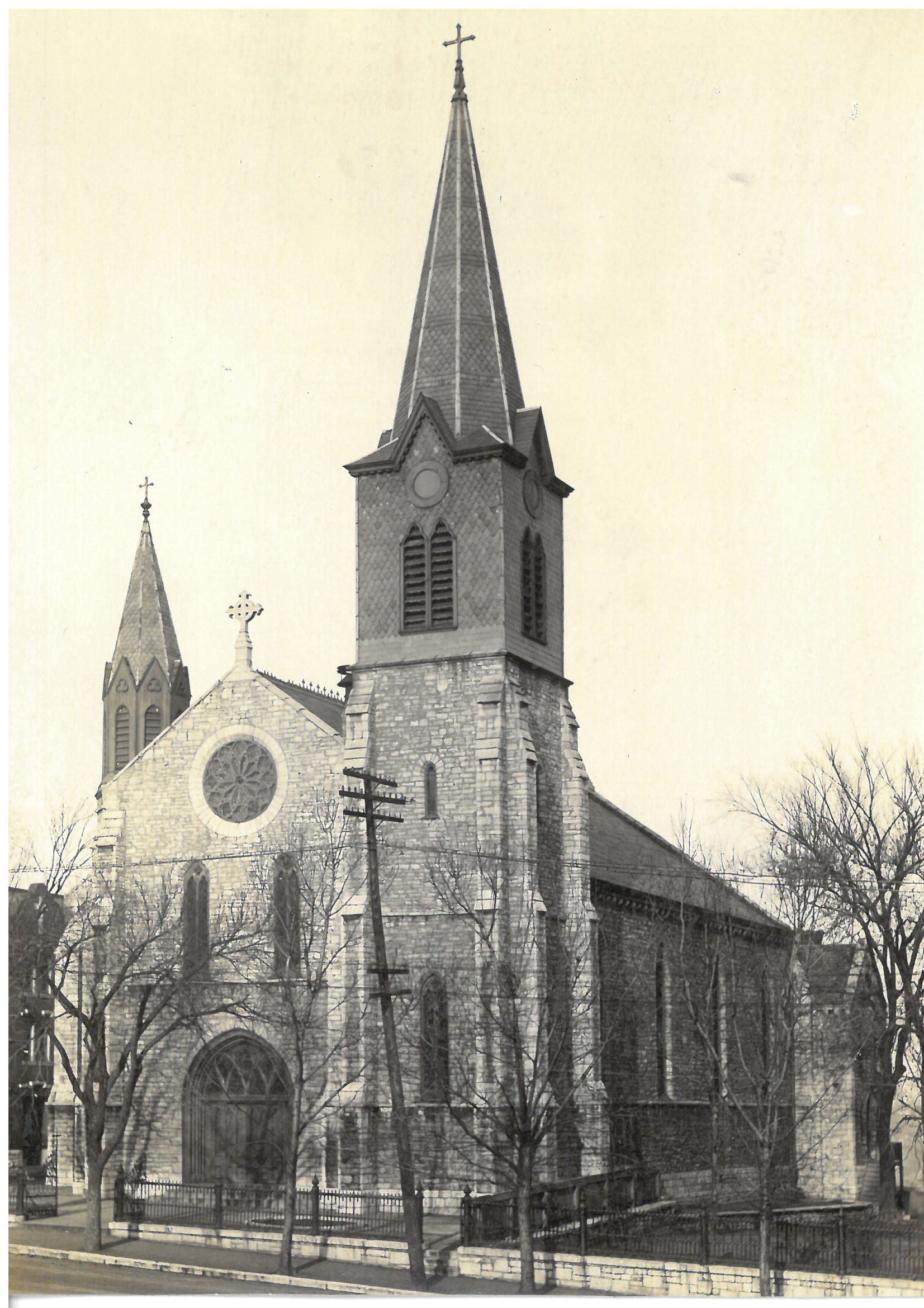 In 1857, what was then the Diocese of Quincy, became the Diocese of Alton, making Ss. Peter and Paul church the Cathedral of the diocese - at that time, the southern half of Illinois. Below the main altar are the tombs of the first two bishops of the Diocese of Alton, Bishop Henry Damian Juncker and Bishop Peter Joseph Baltes. The third bishop of the Diocese of Alton, Bishop James Ryan, is buried in St. Patrick's Cemetery.During the Year of the Eucharist in our diocese, Catholic Times and the social media channels for the Diocese of Springfield in Illinois will also get you ready for the 100th anniversary of the transfer of the diocesan See city from Alton to Springfield (October of 2023). This includes articles and photos about the rich history of our diocese, videos from the Office for the Archives and Records Management showcasing fascinating documents and objects from our history, and 100 trivia questions, so stay tuned!
In this edition of Catholic Times, we present to you a brief history of our diocese up to the See transfer and the pioneers that made our region flourish in faith.
By KATIE and P.J. OUBRE
Office for the Archives and Records Management
Special to the Catholic Times
Even though Springfield has been the See city of our diocese for just under 100 years, the story of our diocese spans over 300 years. The land that our diocese occupies was once the home to Illini Nations and the migration path of the Peoria, Kickapoo, and Kaskaskia tribes of Indigenous People.
In 1789, the newly formed Diocese of Baltimore included the territory that is now the Diocese of Springfield in Illinois. At that time, only a small population of Catholics lived in this area, practicing their faith in the settlement established by Father Jacques Marquette, who had arrived in the areas in 1673 with a group of French explorers. Since then, this area has passed under the administration of the Diocese of Bardstown, Kentucky (1808), St. Louis, Missouri (1826), and Vincennes, Indiana (1834). In 1843, the entire state of Illinois was formed into a single diocese with the See city in Chicago.
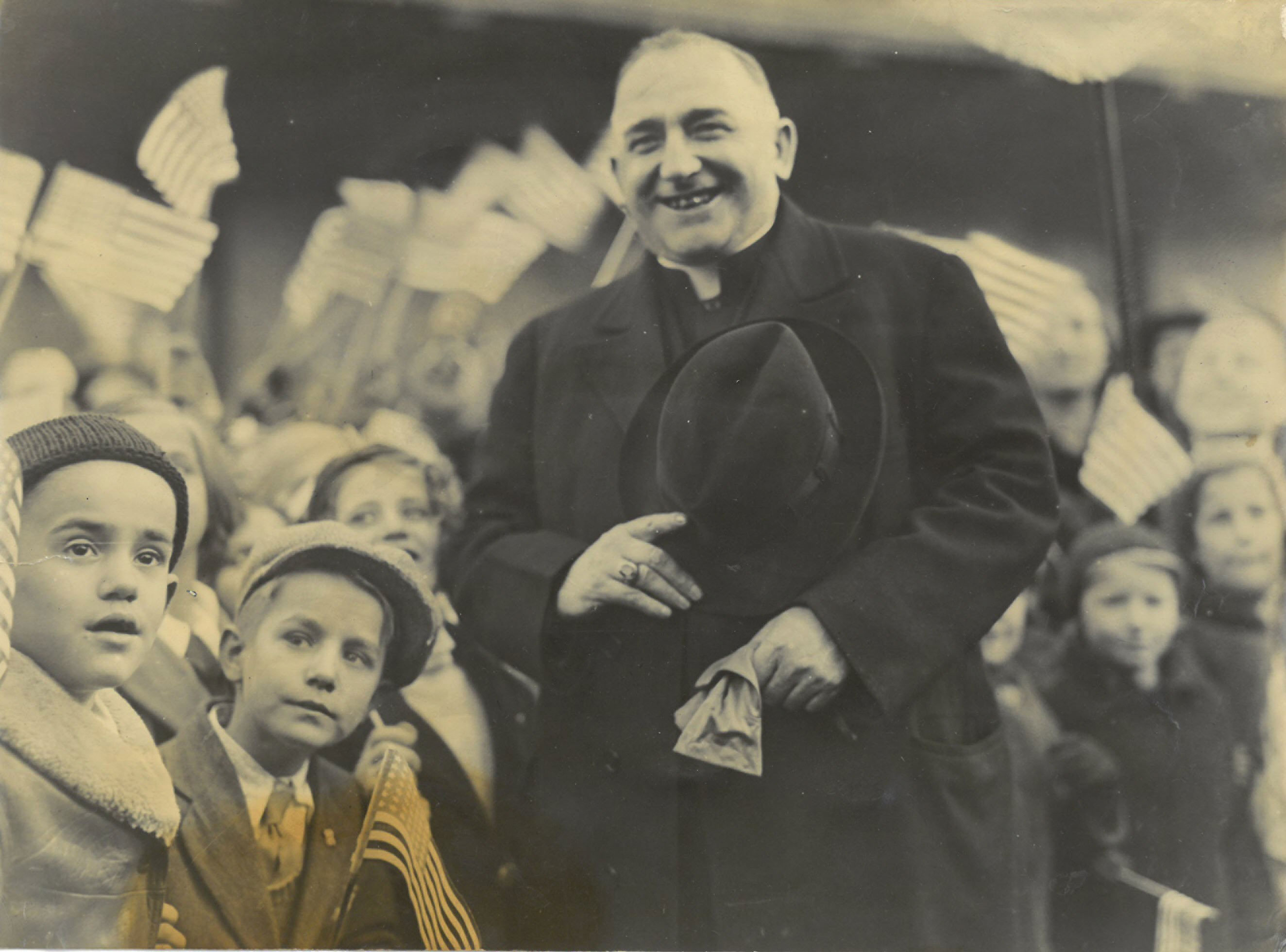 On October 26, 1923 Pope Pius XI transferred of the see of the diocese from Alton to Springfield. Just 12 days earlier, the pope had named James Griffin (pictured) as the first bishop of the Diocese of Springfield in Illinois. Griffin was consecrated at Holy Name Cathedral in Chicago, on February 25, 1924.In 1852, American bishops and archbishops met in Baltimore for their first Plenary Council. There, they discussed creating more dioceses in the United States. They recommended that Illinois be divided, and on July 29, 1853, Pope Pius IX erected the Diocese of Quincy, which was comprised of the current Diocese of Springfield in Illinois and Diocese of Belleville. A bishop of Quincy was appointed but declined the honor. On Jan. 9, 1857, Pope Pius IX moved the vacant see to Alton and appointed Henry Damian Juncker, a priest from Ohio as the first bishop of Alton.
Bishop Juncker traveled to Europe and recruited priests and seminarians to commit to serve in the new diocese. Bishop Juncker built a solid spiritual foundation that made it possible for our diocese to flourish. He died on Oct. 2, 1868, having overseen the dedication and erection of over 50 local parish churches and missions.
The second bishop of our diocese was Peter J. Baltes. He was consecrated at St. Peter Church in Belleville on Jan. 23, 1870. Bishop Baltes actively recruited women religious for the Diocese of Alton and three communities established motherhouses. He stabilized the administration of the diocese and oversaw continued growth.
In 1887, upon the death of Bishop Baltes, Pope Leo XIII split the diocese in two, establishing the Diocese of Belleville from the southern portion of the diocese. Father James Ryan from the Diocese of Peoria was appointed as the third bishop of Alton.
Bishop Ryan had the longest tenure of any bishop of our diocese, serving a little over 35 years. His episcopacy saw a massive rise in immigration to the area. Thousands of immigrants settled in Central Illinois and Bishop Ryan had to contend with providing religious services to more than a dozen ethnic groups. He steered the diocese through a period of growth and change and is best known for his role in expanding the Alton orphanage. Bishop Ryan died on July 2, 1923.
 Bishop Griffin's first task was to move the chancery from Alton to Springfield and to establish a new cathedral. St. Mary's Church in downtown Springfield became the pro-cathedral, but the building, which was built in 1859, was showing its age. In 1927, Griffin launched the Cathedral Campaign to raise money for the new building and within a month, the campaign had reached its goal of $750,000 and shortly thereafter, it topped the million-dollar mark. Griffin had timed the construction of the cathedral so that it would be completed in time for the celebration of the diocese's Diamond Jubilee. The Cathedral of the Immaculate Conception was dedicated on October 14, 1928 as the highlight of the four-day jubilee festivities. This photo of the cathedral was taken in 1928.On Oct. 26, 1923, Pope Pius XI translated the diocesan see from Alton to Springfield. Just 12 days earlier, the pope had named Father James Griffin of Chicago as the first bishop of the Diocese of Springfield in Illinois. Bishop Griffin's first task was to move the chancery from Alton to Springfield and to establish a new cathedral.
St. Mary Church in downtown Springfield became the pro-cathedral of the newly-formed diocese, but the building, which was built in 1859, was showing its age. In 1927, Bishop Griffin launched the Cathedral Campaign to raise money for the new building and within a month, the campaign had reached its goal of $750,000 and shortly thereafter, it topped the million-dollar mark. Bishop Griffin had timed the construction of the cathedral so that it would be completed in time for the celebration of the diocese's Diamond Jubilee. The Cathedral of the Immaculate Conception was dedicated on Oct. 14, 1928, as the highlight of the four-day festivities.
Bishop Griffin worked to centralize the administration of the diocese by creating several new offices. The creation of Catholic Social Services (now Catholic Charities) in 1925 exemplified his new management style. During the Great Depression, Catholic Social Services, in cooperation with St. John's Hospital, initiated a systematic program to feed the hungry. St. John's Breadline operated directly from the kitchen of the hospital at first, but eventually became a freestanding operation.
The death of Bishop Griffin on Aug. 5, 1948 marked a turning point in our diocese. He ushered the diocese into the modern era, but he could not have imagined the challenges that would face the Church in the coming decades.
Our diocese continues to thrive as we celebrate the centennial of the translation of the See from Alton to Springfield, and we look forward to both the centennial of the Cathedral of the Immaculate Conception and the 175th Anniversary of our diocese in 2028.
Katie Oubre, MLIS, CA, CRM is the director of the Archives and Record Management for the Diocese of Springfield in Illinois. P.J. Oubre, MA, CA, is the assistant archivist for the Diocese of Springfield in Illinois.
GriefShare program helps the grieving heal through Christ - Cathedral program leaders share how it helps

By DIANE SCHLINDWEIN
Managing Editor
Berni Ely and Bev Hoffman, both parishioners at Cathedral of the Immaculate Conception Parish in Springfield, agree that by helping people deal with loss, they have found their special niche in life.
The two women co-facilitate a program that helps believers of all faiths paddle through the waves of grief. That program, GriefShare, is now under way on Tuesdays, from 1-2:30 p.m. in the Cathedral School library. It’s a 13-week program (the current one began Nov. 1) that allows people to join in at any time — and Cathedral runs two sessions a year.
GriefShare has existed for over 25 years and is made available in over 19,000 churches in the United States and several other countries. It is a Christ-centered video-based support group that equips lay volunteers to encourage and comfort people going through bereavement.
At Cathedral GriefShare meetings — usually attended by between five and 15 people — each person is welcomed by name. The leaders explain the agenda, offer refreshments, and welcome any new members. When everyone is settled, they say an opening prayer. The leaders inquire about the last week, to see if anyone wants to share any special concern or incident, then discuss the workbook session that has followed the previous week’s topic. The invitation to share is open, but not required. After that discussion, the group views a video, followed by a brief discussion. Guests look over the workbook pages for the upcoming week and then the session is closed with another prayer.
Because they are all feature the same GriefShare videos and share a nation-wide support team, most of the sessions are similar, no matter where they take place. For example, at the urging of her friends, Eli attended her GriefShare program at Athens Christian Church. She later approached Vicki Compton, coordinator of Faith Formation and Mission at the Cathedral of the Immaculate Conception and asked if the parish be able to offer the program.
“I wasn’t sure if the parish could offer it — because it was Christian but not specifically Catholic in origin — but Vicki listened to me and looked into it,” Ely said. “She was very helpful. Our pastor at the time approved it and then we got started.”
“Berni said it was the best thing she could do after her husband’s death. GriefShare is what finally helped her move forward after Jack’s death. She encouraged us to start GriefShare and been part of the team since the beginning (in 2019),” Compton said.
Hoffman says, like Ely, she is pleased to be part of the GriefShare team. “I witnessed the depth of grief my sister and husband experienced following the loss of their 18-year-old son in a car accident, as well as my mother’s grief following my dad’s death. While I could not change the situation, I wanted so much to ease their pain.
“I am a long-time Cathedral parishioner. I have regretted for a long time that Catholic churches have not offered the supportive programs that some other denominations offer,” said Hoffman. “After early retirement from my career in state government, I wanted to do something that made a difference — and that was a position at a local funeral home. For many years, I referred families served by the funeral home to GriefShare programs offered by other churches. I was delighted when it could be offered by Cathedral and wanted to support and be a part of it. It is important to remember that we are not counselors, but presenting information in a compassionate manner and facilitating healing discussion. ”
“We’ve found that our guests find so much solace in good video and print resources, but mostly from the deep and sincere listening of the other participants. We have seen people change over the 13 weeks,” Compton said. “At the beginning they could only cry, but by the end were finding some moments of happiness and sharing stories and supporting others. It is really beautiful to see.”
“After several sessions, individuals feel safer about sharing their grief and tears as they recognize that they are not alone in their grief and others in the group understand,” Hoffman said. “It is easier to share the grief, though the grief doesn’t get ‘easier’ for some time.”
Most people who experience loss have people around them to help immediately after a death. But GriefShare is designed to extend a grieving ministry that follows in the months or even years after a loss, when people around the griever have returned to their busy lives.
“Some guests come as soon as few weeks after the death of a loved one, some years after the death,” Compton said. “All seem to find some healing and hope. Several participants, especially those who come soon after their loss, return to repeat the course. When grief is fresh it is difficult to take in any of the content, but being with others who know how they feel, is a comfort in itself. The second time thru is like a completely new experience for them.”
The materials point to Christ as the ultimate healer, something that Ely thinks is most important. “I don’t know how you can grieve without God,” she said. “I had been to other grief programs, but GriefShare really helped me more than anything. I felt like it was the best thing that ever happened to me. I just want to help people. I understand now that my husband had to die for me to get to this point, but I feel like this is my calling. ”
To find out more about beginning a GriefShare program in your parish, go the website, www.griefshare.org. Or, you can contact Vicki Compton at (217) 522-3342 or email .
A new vocation - Deacon Krug ordained to the diaconate

 Deacon Krug and his mother, Mary Jane, hug after Deacon Krug is ordained to the permanent diaconate.By ANDREW HANSEN
Editor
Husband, father, and now, a deacon for the Catholic Church. Deacon Andrew Krug was ordained to the permanent diaconate Oct. 28 at the Cathedral of the Immaculate Conception in Springfield by Bishop Thomas John Paprocki. Family, friends, priests, and deacons of the diocese were all in attendance.
“The Church has always been a major part of my life,” Deacon Krug said. “My mom instilled that in my siblings and myself. So, that thought of serving has always been present. One day, Deacon David Sorrell (director for the Office for the Diaconate) brought the idea of the diaconate to me. I spoke to my family, and it made sense as a move in the right direction. God has blessed me, and I want to serve and help others see God's graces in their lives.”
Those blessings include his marriage to Deanne and daughter, Ally, and now a granddaughter, Aviana Marie.
 “I can truthfully say that I can relate with others fears, joys, doubts, and hopes,” Deacon Krug said. “I hope to think of those experiences will help others see that, yes, I can understand and serve by that, walk/talk with them on their journeys of faith. Life can be challenging. It helps to have a friend along the way.”
Deacon Krug will primarily be ministering at St. John Vianney Parish in Sherman and occasionally at Resurrection Parish in Illiopolis. In addition to his work in the Church, he’ll continue as a marketing specialist for Levi, Ray, & Shoup, Inc. When asked what he’s looking forward to the most as a deacon, his response was one of positivity.
“At each level of my journey as a Catholic, be it student, adult, husband, parent and now deacon, the new adventures, challenges, and joys that come with each new level, I witnessed others in that office and watched them help others and themselves in their faith journey, and I hope with enthusiasm for the new experiences,” Deacon Krug said.
Learn more about the permanent diaconate on page XX of this issue.
All Catholics to benefit from new Evermode Institute in Springfield

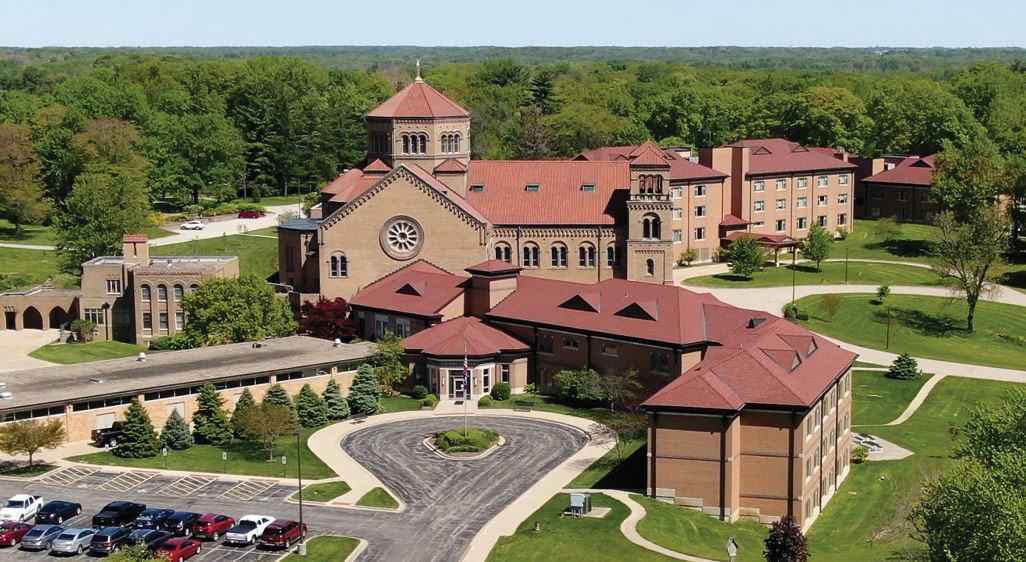 An exterior view of the Evermode Institute in Springfield.
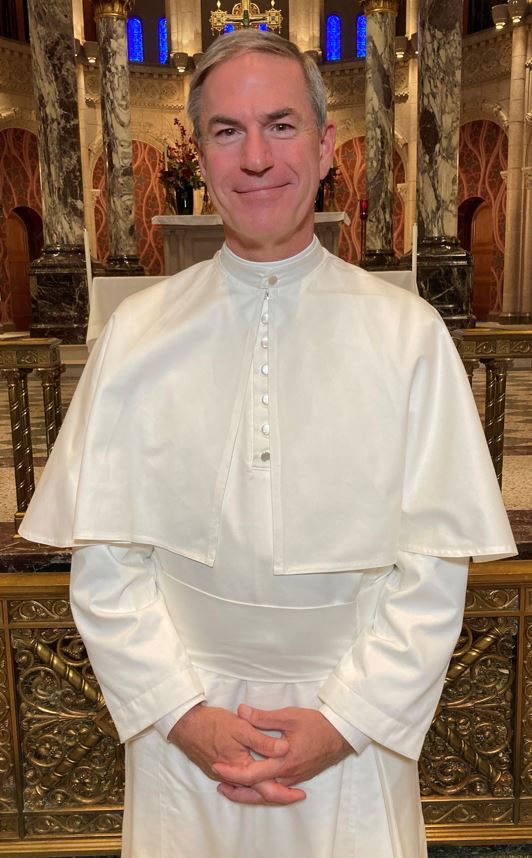 Father Augustine Puchner is the prior of the new Norbertine community at the Evermode Institute. All Catholics to benefit from new Evermode Institute in Springfield
Prior of community that will lead the Evermode Institute details timeline, mission, programing
By ANDREW HANSEN
Editor
Father Augustine Puchner was serving as pastor of a large, multilingual parish with a school in the Diocese of Orange in California earlier this year when he was approached by the abbot of his community with a new assignment. He remembers that moment as “a day my life changed.”
“I didn’t know too much about Springfield, Ill.,” Father Puchner said with a laugh.
Since that moment, he has come to know a lot more about Springfield. That’s because Father Puchner, a priest of the Norbertine Fathers of St. Michael’s Abbey based in Orange, was given the assignment of being the prior of a community of Norbertine Fathers who are tasked with opening and leading the new Evermode Institute in Springfield, which the Diocese of Springfield in Illinois announced plans for last March. The Evermode Institute is something that is expected to become one of the nation’s top centers for Catholic spiritual and intellectual formation, opening in July 2023.
“The Evermode Institute will teach and train the teachers and administrators who themselves are in positions of responsibility and influence in regard to teaching the faith,” Father Puchner said. “Our mission is for the glorification of God and the salvation of souls through the imparting of Catholic doctrine, true Catholic teaching, in regard to all the aspects that will help school principals, administrators, teachers, directors of religious education, catechists, directors of RCIA programs — all of those involved in Catholic formation. They will be participating in the program in a variety of ways, and we’ll be offering classes that we’ll make sure that they themselves really know the faith and know it in a way that will give them the tools along with the enthusiasm and zeal to be even better teachers. But for all lay people, it will be a program that many people can benefit from.”
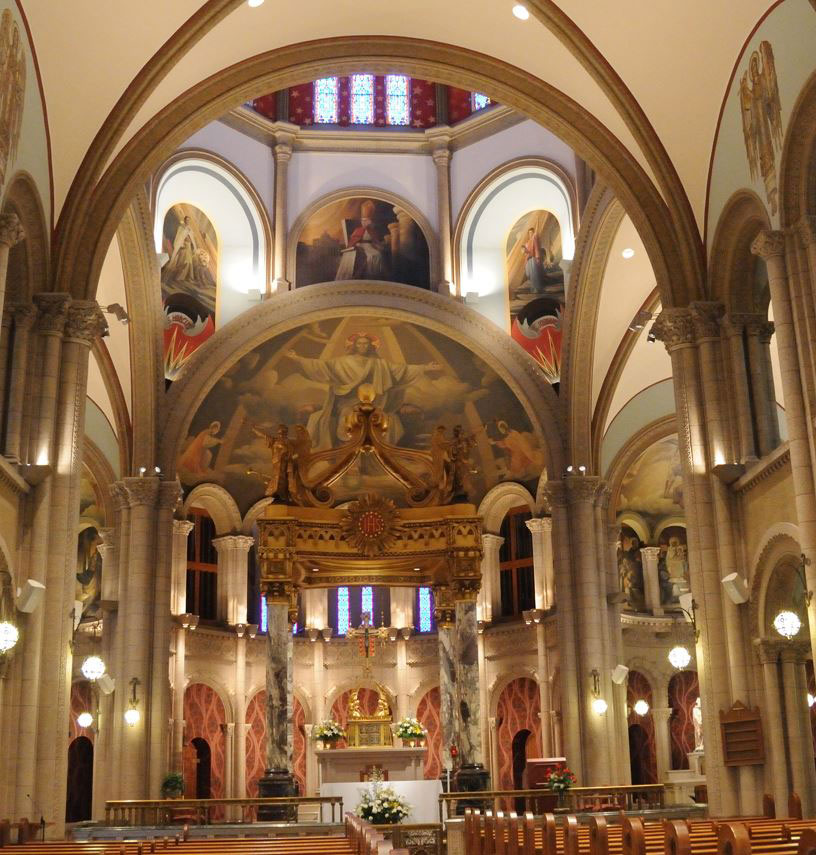 St. Francis of Assisi Church at the Evermode Institute.A native of Milwaukee, Father Puchner has been living in Wisconsin the past several months, making trips to Springfield often as he embarks on this rare and exciting opportunity to start the Evermode Institute from scratch. The Norbertine Fathers also announced Father Ambrose Criste as the director of the Evermode Institute. Both priests have already been working on the programing for the institute.
“It (the programming) will be at a level that is not overwhelming,” Father Puchner said. “It will start with a more basic curriculum to reinforce what our teachers already know about the faith, but maybe they don’t know the reasons behind some of the teachings or how those teachings can be effectively integrated with other teachings. So, it’s a comprehensive program of theology and spirituality. It will be accessible to the common person but it a way that will definitely elevate the knowledge of their faith.”
Located on Springfield’s northeast side on the grounds adjacent to the convent of the Hospital Sisters of St. Francis, the Evermode Institute includes St. Francis of Assisi Church, a large conference room, overnight accommodations for guests, and beautiful outdoor prayer trails, Stations of the Cross, and grottos.
“It’s an incredible gift, and we, the entire Norbertine Community, everyone realizes this is an incredible gift from God,” Father Puchner said. “The first time I came, and now that I am here, the beauty of the grounds and the property and the majestic beauty of this gorgeous church (St. Francis of Assisi Church), all this to glorify God and the mission of evangelization, faith formation, and celebrating the sacraments — it will be renewed in a very powerful way.”
Before the Evermode Institute fully opens in July next year, several more priests from the Norbertine Fathers will join Fathers Puchner and Criste as they will all set up full-time residence at the property, with the Evermode Institute being their primary apostolate.
“Our plan is to make this not only special for Springfield, but far beyond,” Father Puchner said. “There will be in-person classes at the Evermode Institute and electronically.
“The Nobertines have a long history of faith formation programs. We feel we bring a certain amount of gifts, talents, expertise, and experience in regard to the Evermode Institute which will really form the teachers and administrators to be even more well-versed in teaching and living the Catholic faith.”
For the past several years, the Norbertine Fathers were looking for another location in the country to grow their community as they have had to reject potential seminarians because they were full. This happened despite them completing a new and expanded home just last year in California.
Immersed in the 900-year tradition of their order, the Norbertine Fathers live a common life of liturgical prayer and care for souls. Their life at St. Michael’s Abbey in Orange, and next year in Springfield, is organized according to prayer of the Church: the Holy Sacrifice of the Mass and the Liturgy of the Hours. The public will be able to pray with them and attend Mass at St. Francis of Assisi Church, many of whom call the church a “gem of the Midwest” for its striking beauty, history, and relics on display.
The Evermode Institute (4875 Laverna Road, Springfield, IL 62707) is being established under the patronage of St. Evermode, a Norbertine prelate who died in 1178 and was a close collaborator of St. Norbert. St. Evermode is credited with great and effective works of evangelization and formation in the Catholic faith.
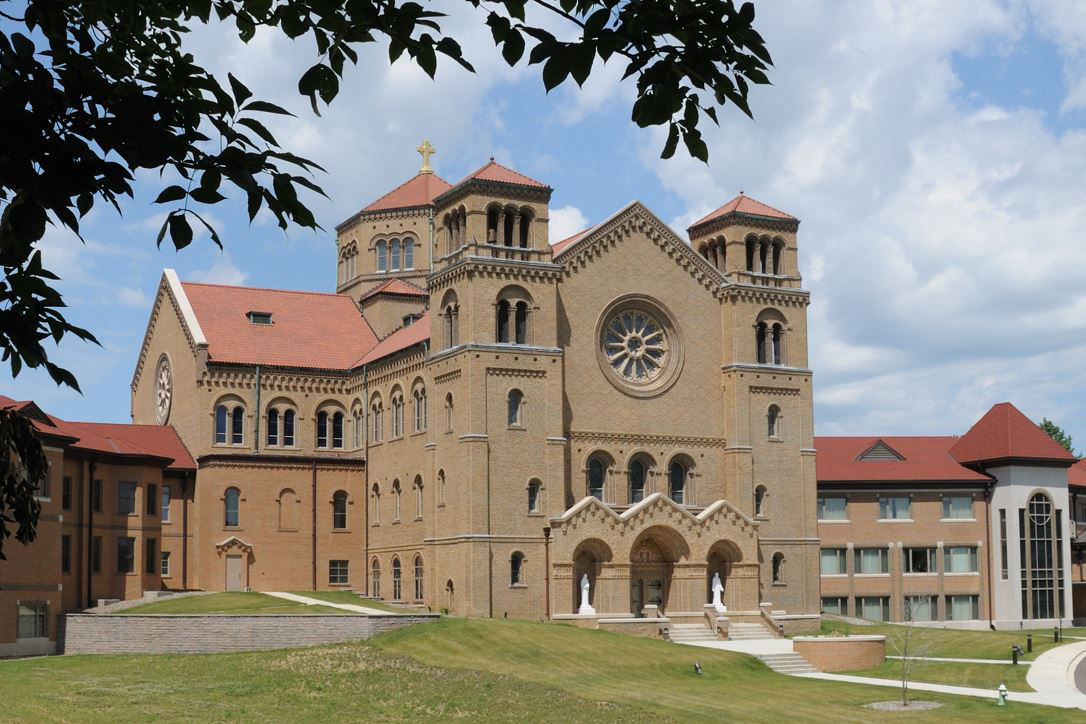 The front of St. Francis of Assisi Church at the Evermode InstituteIn addition to the Evermode Institute, the Diocese of Springfield in Illinois is also working with the daughter of one the most popular modern day Catholic saints, who announced plans to establish an international pilgrimage site and center very close to the Evermode Institute (a block or two away). Dr. Gianna Emanuela Molla, the daughter of Italian saint, St. Gianna Beretta Molla (1922-1962) and Pietro Molla, will establish the St. Gianna Beretta Molla and Pietro Molla International Center for Family and Life, which will be a peaceful place of prayer, learning, study, and spirituality for pilgrims geared to spreading the knowledge of and devotion to her holy parent’s virtues and, thus, to promote the holiness of the family and respect for the sanctity of all human life.
That means in the future, Central Illinois will be home to the Evermode Institute; the St. Gianna Beretta Molla and Pietro Molla International Center for Family and Life; Venerable Father Augustine Tolton, the nation’s first black priest who is buried in Quincy and who is on his way to sainthood; and Venerable Archbishop Fulton Sheen, who is buried in Peoria and is also on his way to sainthood. When asked if this area could therefore become a “Catholic mecca,” Father Puchner laughed and said, “That’s our plan.”
“After every meeting (with Bishop Thomas John Paprocki and his staff), we all agree that this can be huge,” Father Puchner said. “I mean, all glory be to God, we’ll do the work. God has chosen this place for a ministry that will be so far reaching and renew and reform so much in regard to Catholic education, Catholic formation, and sacred worship. It’s a lot to grasp, but we have great ideas and resources to make it all happen. It’s really exciting.”
Answers taken and edited from Andrew Hansen’s interview with Father Puchner on Dive Deep, the official podcast of the Diocese of Springfield in Illinois. To hear more of their conversation, go to dio.org/podcast or search “Dive Deep” on all the major podcast platforms. Make sure to subscribe to the podcast as a new one comes out every month.
The permanent diaconate in our diocese: Looking back helps us to look forward to restoration, renewal, and fidelity

 By DEACON DAVID SORRELL
Special to Catholic Times
As we reflect over the past 20 years, much has happened regarding the permanent diaconate in our diocesan Church. Shortly after Bishop George Lucas was installed as our bishop in 1999, he began a conversation concerning the permanent diaconate in our Diocese of Springfield in Illinois. Since Vatican II had restored the permanent diaconate, many dioceses in our country had already implemented a formation program and called many men to holy orders. Members of our diocesan Curia, Quincy University, and Father Bill Burton, a Franciscan Friar at Quincy University, began collaborating on a formation program for our diocese. From the effort, a dual path was created resulting in a certificate or master’s degree in pastoral theology.
After exhaustive consultation, in the fall of 2002, Bishop Lucas issued an invitation to all interested Catholic men, single and married, above the age of 35 and in good standing in the Church to come and learn more about the permanent diaconate in our diocese. More than 30 candidate families completed the application and evaluation. To be admitted to the formation program, it was necessary for each applicant to be supported by their family and parish. Supported by the faculty of Quincy University and diocesan priests, classes began in December 2002. Two groups of men and wives were graduates of the Quincy University program. In June 2007 and 2009, 28 men petitioned and were ordained to the holy order of deacon.
Periodically throughout the Quincy University program, goals were reevaluated. Further discernment resulted in the formation team looking east to the Benedictine’s at Saint Meinrad in Indiana. They were actively engaged in preparing deacons in more than 20 dioceses across the country and Caribbean in a non-degree model. However, the classes could benefit a deacon after ordination should he desire to continue higher education. The Villa Maria Retreat Center in Springfield, with all its accommodations, became the venue for the permanent diaconate formation. For 12 years, Saint Meinrad’s national network of faculty provided exceptional professors who traveled to Springfield monthly. During this time, 27 men petitioned and were ordained to the holy order of deacon.
Once again, as the formation team reevaluated process and goals, it was determined that formation was lacking in certain dimensions. It was also during this time that the Hospital Sisters of St. Francis in Springfield entered into agreement with the diocese to assume responsibility of the marvelous campus and facilities. Now, the Evermode Institute at that campus has been formed to provide formation not only for teachers and catechists but also for priests and deacons. In August, a group of six men began their path to ordination, God willing, in 2027. Once fully implemented, this new model will allow for men to enter into formation every year.
However, what remains the same is the purpose of formation of future ministers for our diocesan family. So how might we ask the question, “What is a deacon?” A deacon is an ordained minister of the Catholic Church. There are three groups, or "orders," of ordained ministers in the Church: bishops, presbyters, and deacons. Deacons are ordained as a sacramental sign to the Church and to the world of Christ, who came "to serve and not to be served." The entire Church is called by Christ to serve, and the deacon, in virtue of his sacramental ordination and through his various ministries, is to be a servant in a servant-Church.
This review of our permanent diaconate formation once restored and through these renewals remains in fidelity to the call to serve in the manner and example of Christ the Servant. Visit dio.org/diaconate to learn more about this vocation and contact information.
Deacon David Sorrell is director of the Office for the Diaconate for the Diocese of Springfield in Illinois.
Hey, Father! Why are we asking for the "Sacred Heart" of Jesus to pray for us?

Why are we asking for the “Sacred Heart” of Jesus to pray for us? Does the Heart of the Lord pray to the Lord or to God? In the traditional Mass, we ask for the Sacred Heart to have mercy on us and not to pray for us.
- Jake in Springfield
Dear Jake,
Thanks for your question. It brings up a couple of opportunities for clarification that I find are pretty common. First, on the distinction of asking for God's mercy versus asking the intercession of the saints: We can look at the centuries-long practice of the Church's use of litanies in her public prayer to answer your principal question.
Litanies today seem to be recited, more often than not, but in former times, they were nearly always sung, which better illustrates that they are a dialogue. Some of the litanies that people might be familiar with still today include the Litany of the Saints, Litany of the Holy Name of Jesus, Litany of the Most Precious Blood, Litany of the Holy Ghost (a central element of St. Louis de Montfort's Total Consecration to Jesus through Mary), the Litany of the Blessed Virgin Mary (commonly called Loreto), and the Litany of St. Joseph (to which Pope Francis recently added additional invocations). Since you mentioned the Extraordinary Form of the Mass, you might also be familiar with the Major Litanies of the Rogation Days celebrated each spring, leading up to Ascension Thursday, and those of the feast of St. Mark.
In all these, we begin by praying, “Lord, have mercy. Christ, have mercy. Lord, have mercy.” These are supplications first to the Father, then to the Son, and finally, to the Holy Spirit. Then we ask for Christ to hear us, and then more emphatically, to graciously hear us. Then we pray, “God the Father of Heaven, have mercy on us. God the Son, Redeemer of the world, have mercy on us. God the Holy Spirit, have mercy on us. Holy Trinity, One God, have mercy on us.”
This would be the most appropriate point to address the second clarification. Many people colloquially use "God" when what they are talking about is "God the Father." Additionally, many use "Lord" only when they mean "Jesus," but we know from the Old Testament that Lord in Hebrew is "Adonai," and they were certainly invoking God the Father of Abraham, Isaac, and Jacob, when saying "Lord." This leads to some people saying they invoked "both God and Jesus," which is extremely problematic language we should not use, because the three Persons of the Trinity (Father, Son, and Holy Spirit) are indeed all God and Lord. This is most clearly expressed in the ancient Preface of the Holy Trinity which says:
"It is truly right and just, our duty and our salvation, always and everywhere to give you thanks, Lord, holy Father, almighty and eternal God. For with your Only Begotten Son and the Holy Spirit you are one God, one Lord: not in the unity of a single person, but in a Trinity of one substance. For what you have revealed to us of your glory we believe equally of your Son and of the Holy Spirit, so that, in the confessing of the true and eternal Godhead, you might be adored in what is proper to each Person, their unity in substance, and their equality in majesty."
I am unfamiliar with any prayers that would ask the Most Sacred Heart of Jesus to "pray for us." Instead, the proper response is either "have mercy on us" or "save us" (as in the Litany of the Most Precious Blood), or "Lord, deliver us we pray" (as in the Litany of the Saints), or "hear us / Lord, hear our prayer" (as opposed to not hearing our petitions).
In the Litany of the Saints, the Litany of Loreto, the Litany of St. Joseph, etc., we always respond "pray for us" after invoking the saints. It's possible whatever resource you saw that put Jesus on the same level as the saints just made an error in typing. The distinctions in what we ask from the Persons of the Trinity and what we ask of the saints, by God's power, has been consistently expressed in the ways I've mentioned for a very long time. This is true in both the Extraordinary and Ordinary Forms of the Mass.
To best envision how prayer works in general is to remember what happens at the Offertory of the Mass. We have the horizontal dimension of the faithful entrusting all their prayers and needs symbolically to the priest, who then offers all these needs along with the bread and wine that will later become the Body and Blood of the Lord at the consecration. Then there is the vertical dimension where the priest, on behalf of the faithful, offers up all these things to Jesus on the cross at the Consecration, Who, in turn, offers it all up to God the Father. The priest also asks that the Holy Spirit would come down upon the gifts on the altar and sanctify them. So, Heaven meets earth on the altar, and the vertical dimension of prayer (our love of God) and the horizontal dimension (our love of neighbor) meet. Many hours of meditation can be spent on that reality alone!
I hope this was helpful. Please pray for me and all the clergy.
Father Zach Edgar is in residence at St. Rose of Lima Parish in Quincy and is chaplain at the Illinois Veterans Home.