
Diocesan Administrator Account
Sign up your child for Totus Tuus, popular weeklong summer program coming to a parish near you

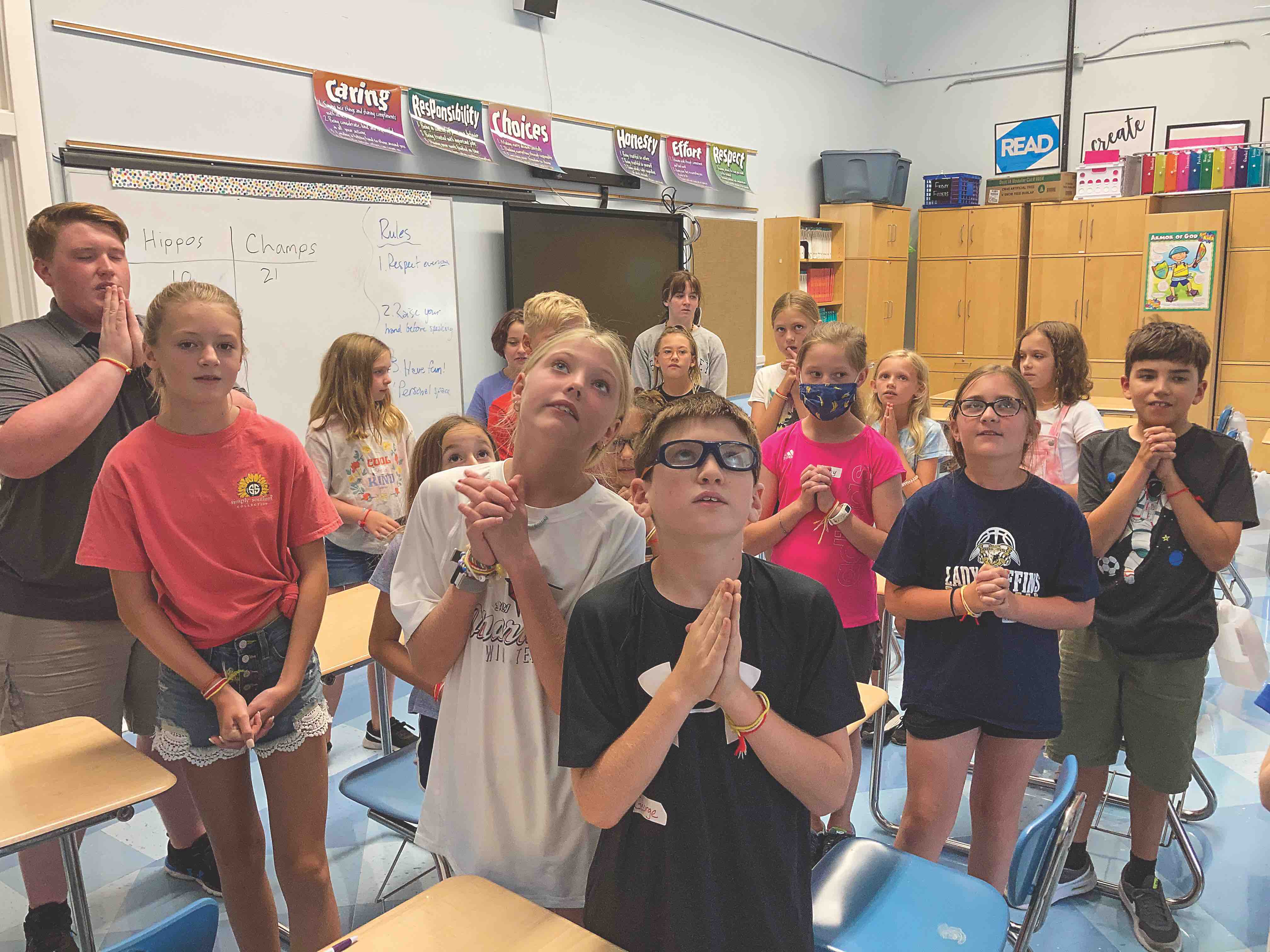 This summer, the Diocese of Springfield in Illinois is excited to have Totus Tuus, a fun and faith-filled experience for children coming once again to several parishes across the diocese in June and July.
Totus Tuus is a weeklong Catholic youth program dedicated to sharing the Gospel and promoting the Catholic faith through evangelization, catechesis, Christian witness, and eucharistic worship. The program inspires in young people a true longing for holiness, a deep desire for daily conversion, and an openness to their vocation.
Two teams of college-aged teachers are traveling to a different parish each week, hosting the five-day catechetical program for grades 1-12. The week is filled with faith, fun, and friendship. There are messy games and crazy skits, in addition to prayer, learning the sacraments, and going to Mass. The teachers also provide a witness to being an authentic disciple of Christ. The popular program sees hundreds of children participate every year in the diocese.
“My favorite parts of Totus Tuus were learning the Ten Commandments and the Beatitudes and fun ways to memorize them,” said Sophia Llosa, a previous Totus Tuus participant. “I liked that we had plenty of time to have our teachers explain them and talk about them. I also liked learning more about Mass and finally learning the songs for Mass, and I liked the snacks.”
“I really liked the teachers, and their skits were so funny,” said Delaney Raskie, a previous Totus Tuus participant. “I also met new friends.”
For the schedule below, grades 7-12 are from Sunday-Thursday each week and the program is in the evenings. For grades 1-6, the program is Monday-Friday and starts in the morning and finishes in the afternoon.
June schedule:
- June 11-15 (grades 7-12), June 12-16 (grades 1-6): St. Francis Solanus (Quincy), Sacred Heart (Effingham)
- June 18-22 (grades 7-12), June 19-23 (grades 1-6): St. Boniface (Edwardsville), Our Lady of Lourdes (Decatur)
- June 25-29 (grades 7-12), June 26-30 (grades 1-6): Holy Family (Granite City), St. Isidore (Dieterich)
July schedule:
- July 9-13 (grades 7-12), July 10-14 (grades 1-6): St. Katharine Drexel (Springfield), St. Mary (Paris)
- July 16-20 (grades 7-12), July 17-21 (grades 1-6): St. John the Evangelist (Carrollton)
Costs vary by parish. For more information and to sign up your child, call the parish office that is hosting Totus Tuus near you. You can also contact Daniel Heffernan, programming coordinator, Office for Vocations, with questions at .
"Hey Father!" Explain all these vestment colors?

“Hey Father!” Explain all these vestment colors?
Vincent in Springfield
The use of color in the Sacred Liturgy is as old as Catholic worship itself. The Church’s choice of colors is not random, though. Moving through the mysteries in our liturgical year allows these colors to help us focus our prayer and worship. Until the time of Pope Innocent III (1198-1216), there was no standardized scheme or codification for the use of liturgical colors. Pope Innocent III promulgated the use of four colors: white, red, black, and green. The exact shades of these colors depended on the dyes that were available in particular places and times.
Our current use of liturgical colors was promulgated in 1570 during the pontificate of Pope St. Pius V (1566-1572). His main objective was the continuation of the massive program of reform for the Church, in particular the full implementation of the decrees of the Council of Trent. And so, the liturgical colors we use today were born out of this part of the Church’s history.
So, what is the significance and particular use of specific colors during the liturgical year?
White is the color of the Easter season, Christmas season, feasts of our Lord, and Blessed Mother, non-martyred saints, and other special feasts outside these times. White is also used for weddings, baptisms, and may be used for the Mass of Christian Burial. White signifies joy, glory, light, and purity. Gold vestments may also be worn whenever white is permitted.
Violet/purple is the color of the Advent and Lenten seasons. It may be used for special penitential celebrations and the Mass of Christian Burial. Violet/purple signifies penance, contrition, and humility.
Red is used for Pentecost, Good Friday, the feasts of martyrs, and the sacrament of confirmation. Red signifies the “fire” of the Holy Spirit, Jesus’ obedience to death on the Cross, and the blood shed by martyrs.
Green is the color of Ordinary Time. Green signifies hope, life, and anticipation. It is a reminder that the mission of the Church is to share the hope and life of Christ with the world. If one pays close attention, there seems to be an endless variety of shades of green!
Rose, yes rose and not pink, may be used twice during the liturgical year on Gaudete Sunday during Advent and Laetare Sunday during Lent. Rose signifies subdued rejoicing and anticipation.
Black may be used for the Mass of Christian Burial and on All Souls Day (and was formerly used on Good Friday). Black is a symbol of death and mourning.
What about blue? The privilege of using blue vestments in the Latin rite is of two kinds. One kind is granted to some Marian shrines. This was the case of Pope Emeritus Benedict XVI’s Mass in 2007 which was held at Austria's foremost center of devotion to Mary. The other privilege is granted to whole countries. For example, all Spanish churches may adopt blue vestments on the Solemnity of the Immaculate Conception, and this favor is sometimes also extended to countries once ruled by the Spanish crown. White vestments with blue trimming or motifs are permitted at any time/place it is appropriate.
Just as we decorate our homes for the seasons and holidays of the year, so too, does the Church use color to emphasize the timelessness of our liturgical worship. It is a potent reminder that all of the symbols and traditions of our faith are, as St. Augustine says, “Beauty ever ancient, ever new!”
Father Joseph Havrilka is pastor of St. Clare in Altamont, St. Anne in Edgewood, and St. Mary in St. Elmo.
Miscarriage stories show pain of grief, faith in healing

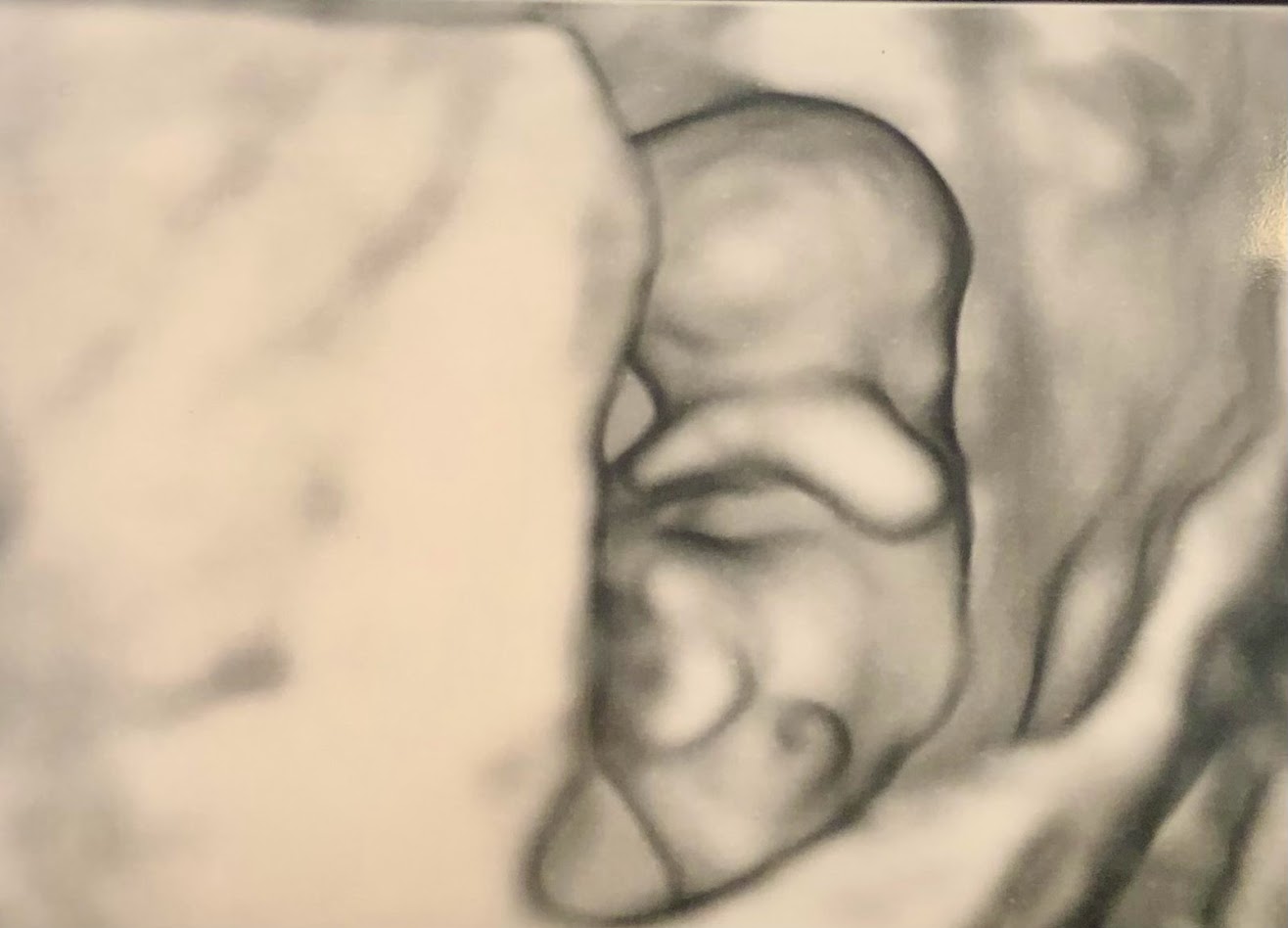 The sonogram for baby Noelle Williams, who was miscarried in February 2022.By DIANE SCHLINDWEIN
Managing Editor
“A mother is never defined by the number of children you can see, but by the love she holds in her heart,” says grief author Franchesca Cox. No doubt, that’s how countless women feel after having suffered a miscarriage.
Marie Fleck and her daughter Sarah Williams are two of those women. It has been about 25 years since Marie and Greg Fleck, who are members of Cathedral of the Immaculate Conception Parish in Springfield, lost two babies in subsequent miscarriages. Fleck, who says she is the mother of seven — two in Heaven, was naturally devastated by those losses. After decades, she grieves those children, still.
“I never told anyone at the time, other than my husband and my three older daughters. I didn’t quite know how to deal with those feelings, so instead of confronting them and allowing myself to grieve, I buried them. I just pushed the hurt down deep, thinking time will heal those memories.”
Marie and Greg later went on to have another daughter and a son. Fleck says that last born daughter had an important lesson to teach her. When she was about 12 years old, Emily Fleck overheard her parents talking about their miscarriages. “She came back later and said to me, ‘Mom even though you didn’t give birth to those babies, they are still your children and should have names. She decided to name them Matthew and Katharine and I gave them the names James and Therese, after the saints. What Emily did for me that day was the one thing I really needed to bring some sense of healing from my losses. I vowed that I would never forget my children again.”
Because of her own experiences with loss, Fleck fully understood her second-oldest daughter’s pain, when Williams began having miscarriages. Williams and her husband, Joseph, have lost six children to miscarriages, including a set of identical twins. They have four living children, Clara (9), Grace (8), Nathanael (4), and Timothy (2). The also named their lost children: James, Philip, Francis, Gideon, Sophia, and Noelle.
“It helped that she had walked the road I was traveling, that she had experienced the same kind of pain,” Williams said. “I didn’t try to make her understand what I was going through — she already knew. She has been a wonderful emotional support to me through the loss of my six children, and my parents have both acknowledged and validated the lives of all of my unborn children.”
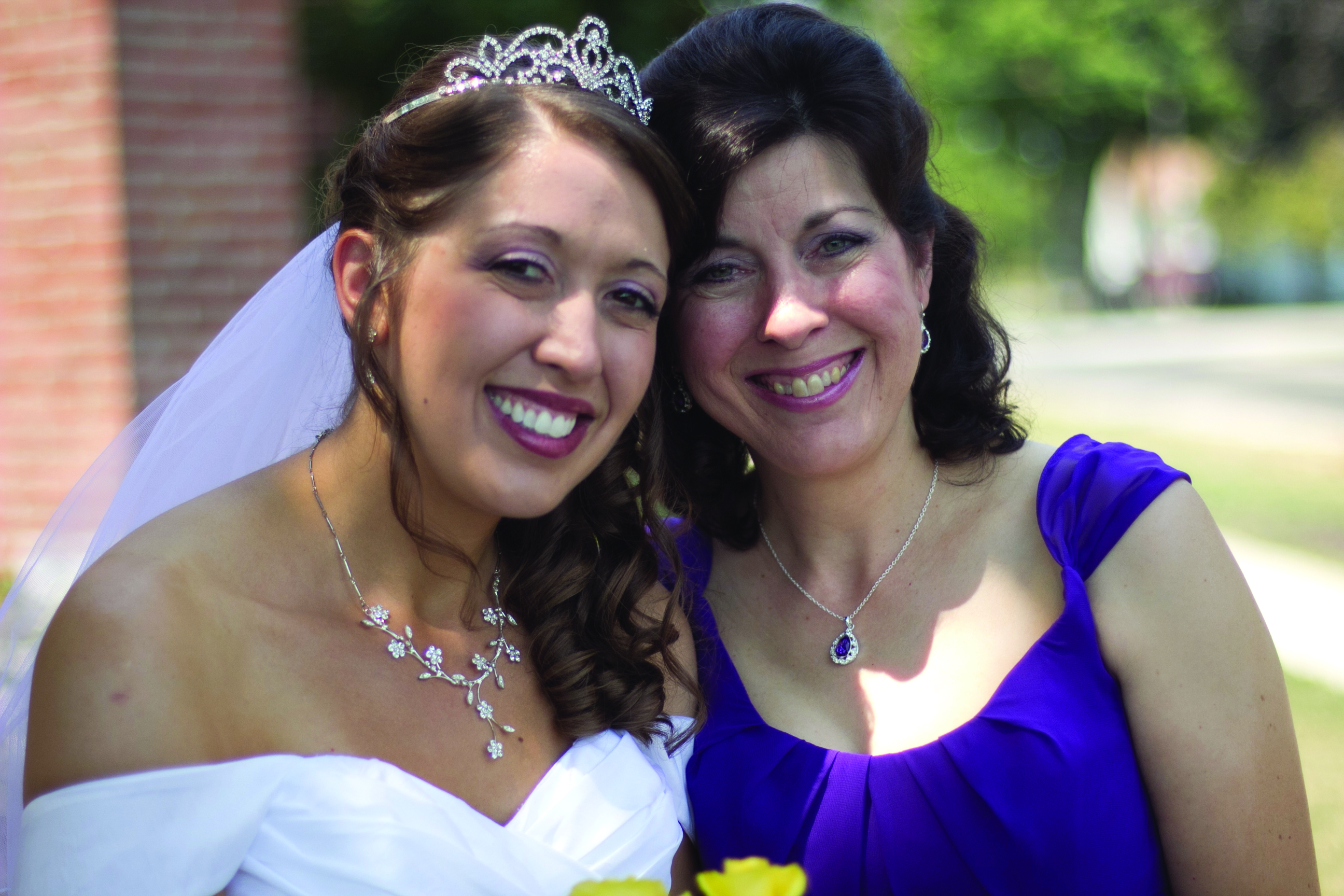 On her wedding day, Sarah (Fleck) Williams is shown with her mother, Marie Fleck. Williams says her mother has been one of her main supporters when she has suffered miscarriages, and has rejoiced with her when she has given birth to healthy babies. Williams remembers what it was like having her first miscarriage. “When I miscarried our first baby, James, in the fall of 2016, I was completely devastated. It was rather traumatic, and I ended up with a hospitalization and a blood transfusion,” she said.
Fleck says she continued her own grieving process when her daughter lost baby James. “I found myself with Sarah, who was expecting her third child. She was having her 12-week pre-natal checkup and I was coming down to be with her. I remember being so excited to see this little one on the ultrasound and to hear the heartbeat,” Fleck says. “But when I got to the doctor’s office the nurse pulled me aside before I went into the room and said, ‘Don’t go in there.’ When I asked why she said, ‘We can’t find a heartbeat.’ What started out as a joyous event, soon turned out to be one of sadness and confusion.”
When Williams decided to go home and wait out the birth of her lost baby, Fleck went with her. “She waited two days and then it happened. On Nov. 16, 2016, my little grandson entered the world, but not as we had hoped,” Fleck said. “As a mother, I felt totally helpless. To have your child ask you why God took her baby was a question I had to wrestle with. I silently prayed to God to give me the words that would, hopefully, bring some comfort to my daughter.”
Fleck was torn apart emotionally as she held her weeping daughter, who in turn held her own lifeless baby in the palm of her hand. “I began to tell her I really didn’t know why God took her baby home. I simply said to her that God’s ways are not our ways. Those babies are His children before they are ours.”
Fleck told her daughter that she did know it was OK to cry out to God and ask why. “Even Jesus cried out, while hanging on the cross, to His Father, saying, ‘My God, My God, Why hast thou forsaken me?’ When Sarah placed my little grandson in my hand, he fit perfectly into my palm. I sat there in awe of this beautiful little infant and remember counting 10 fingers and 10 toes,” she said. “He was perfect and even had his eyes open, facing toward his mother.”
When Williams asked her mother to baptize the tiny baby boy — because of the emergency situation —Fleck baptized him with the name James Raphael, the name his mother had chosen . “Little did I know until later, that the name Raphael means ‘God’s healer.’ My little grandson was the healing balm that I desperately needed. After doing this, I told my daughter that it was not a coincidence that I was here, but that I was supposed to be here.
“That was part of my healing process. God allowed me to see my pre-born grandson at 12 weeks in order for me to come face to face with my losses. He wanted to remind me that my children, whom I had lost so long ago, were not forgotten. … I may not have been able to see them and hold them, or to hear their first cries, but God gave me the privilege to hold my grandson and wanted me to never forget the children I held in my womb so long ago.”
After losing baby James, Williams said she experienced extreme anxiety and “couldn’t fathom being pregnant again.” “However, my husband and I both knew we desired to have more than two children, and I eventually got up the courage to try again and to let the Lord work. We were able to have our two boys (Nathaniel and Timothy) interspersed between our losses, which was a wonderful blessing, but after losing six babies in a span of six years (2016-2022), I was so broken.”
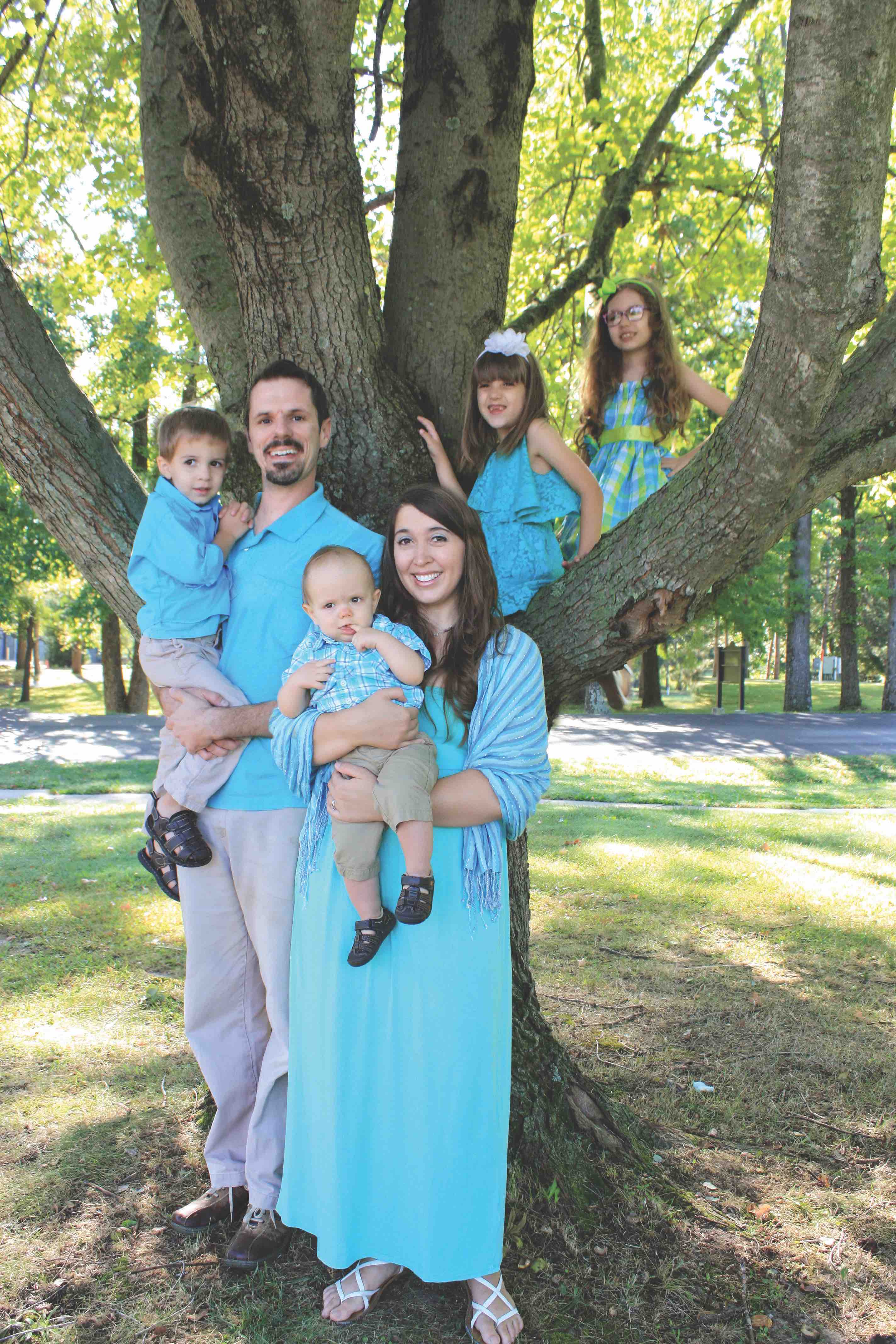 In a picture taken when the children were a little smaller, the Williams family poses for a photo. Shown from left to right are Joseph holding Nathanael, Sarah holding Timothy, and their daughters Grace and Clara. Williams says she spent 2022 (after the loss of her last child, Noelle, in February 2022) trying to process her grief. She attended two healing retreats — one at Our Sorrowful Mother’s Ministry in Vandalia and one at Catholic grief ministry for parents of child loss, Red Bird Ministries in Louisiana. “The Lord and His Blessed Mother have been so good to accompany me through this vale of tears. It has definitely tested and tried my faith, but I am a better mother and a better person for having birthed all my children and my faith would not be what it is today if I had not experienced such acute suffering.”
Williams thinks it is important that siblings know about lost babies, even if they are very young. “Our children know about their heavenly brothers and sisters, and we say their names at the end of every family rosary and ask for their intercession,” she says. “It has given my children a much deeper awareness of the communion of saints and where our true home lies. At times my eldest daughter has happily exclaimed, ‘I am the oldest of 10 children!’”
Williams, who along with her family belongs to St. Agnes Parish in Hillsboro, has advice for people who have a family member or friend who has had a miscarriage. She says that how people react to a pregnancy loss can make a world of difference to grieving parents. “Be gentle, and do not assume that if the parent has other children, this lessens the degree of their loss. A child is a unique and unrepeatable person who can never be replicated,” she said. “Miscarriage is child loss — no matter if the mother was 5 weeks along, or 25 weeks along, she feels the same pain. Be supportive and loving, ask if there is anything you can do to help, and offer a listening ear if they want to talk about it.
“Allow them space and time to grieve, and recognize the life of their child by sending a sympathy card or a small remembrance gift,” she said. “There is nothing more special to parents of loss than someone who validates the life of their child and acknowledges that child by name.”
OB/GYN answers questions about miscarriage/advice for women
Dr. Ann Church, a long-time NFP (Natural Family Planning) only obstetrician/gynecologist who is also trained in NaProTECHNOLOGY (Natural Procreative Technology) and who is based in Galesburg, feels it is important for all people to understand the frequency of miscarriage, but also the devastation when a woman miscarries a child. Managing Editor Diane Schlindwein interviewed Dr. Church to get answers about miscarriage and advice for women.
What can you tell us about miscarriage?
Miscarriage, or the loss of pregnancy before 20 weeks gestation, is fairly common, occurring in one of every five to six pregnancies. Most miscarriages occur in the first trimester. Knowing that they are common does not make the loss any easier. Emotional and spiritual support, in addition to medical care, are essential to help women and their families heal after a miscarriage. Sharing the grief of the miscarriage with supportive family members and friends is very important. Many clergy will offer prayers and memorial services for the child. Some organizations will provide burial locations, but this varies widely from place to place.
What are the main causes of miscarriage?
In the majority of cases, the cause of the miscarriage is not known. We believe that many are due to genetic or chromosomal abnormalities that occur randomly as the new embryo develops, but not specifically inherited from its parents.
There are a few conditions that may increase the risks of having a miscarriage. These include, but are not limited to: increased maternal age (more than 35 years); underlying health conditions such as poorly controlled diabetes or lupus; hormone related conditions such as polycystic ovarian syndrome or abnormal thyroid disorders; some autoimmune or antibody producing conditions; certain infections, especially those that lead to a high fever early in the pregnancy; structural problems with the uterus or cervix such as fibroids that distort the uterine cavity or a weak (incompetent) cervix; and abnormal weight (very underweight or very overweight).
If a woman miscarries, what is the chance that she will have another miscarriage?
Fortunately, the chances of having a successful pregnancy after a miscarriage is 85 to 90 percent. If you have two miscarriages, the chances are still 75 percent the next pregnancy will come to fruition. If a woman has three or more miscarriages, there is recommended testing that can be offered.
What is your advice to a woman who had a miscarriage if she wants to have another child?
It is common for women who have had miscarriages in the past to be anxious about future pregnancies. Again, most women will do well in future pregnancies. We recommend a healthy diet and exercise and getting plenty of rest. Avoid smoking and recreational drug use. If the patient has any underlying health concerns, these should be managed prior to conception. Doctors who have an interest in fertility care-based medicine will offer progesterone monitoring and support to help keep the pregnancy going.
Dr. Ann Church practices with OSF Healthcare in Galesburg. She has also practiced in South Dakota, New Mexico, and spent a year in New Zealand. In addition to being a NFP only obstetrician/gynecologist Dr. Church is also trained in NaProTECHNOLOGY (Natural Procreative Technology) which aims to discover and treat the root causes of infertility and other reproductive system issues. She and her husband, Todd, who is a Catholic deacon, have two grown sons, a daughter-in-law, and a 2-year-old granddaughter.
'I felt like I wanted to be part of the Church' - The conversion story of Jordan White of Coffeen

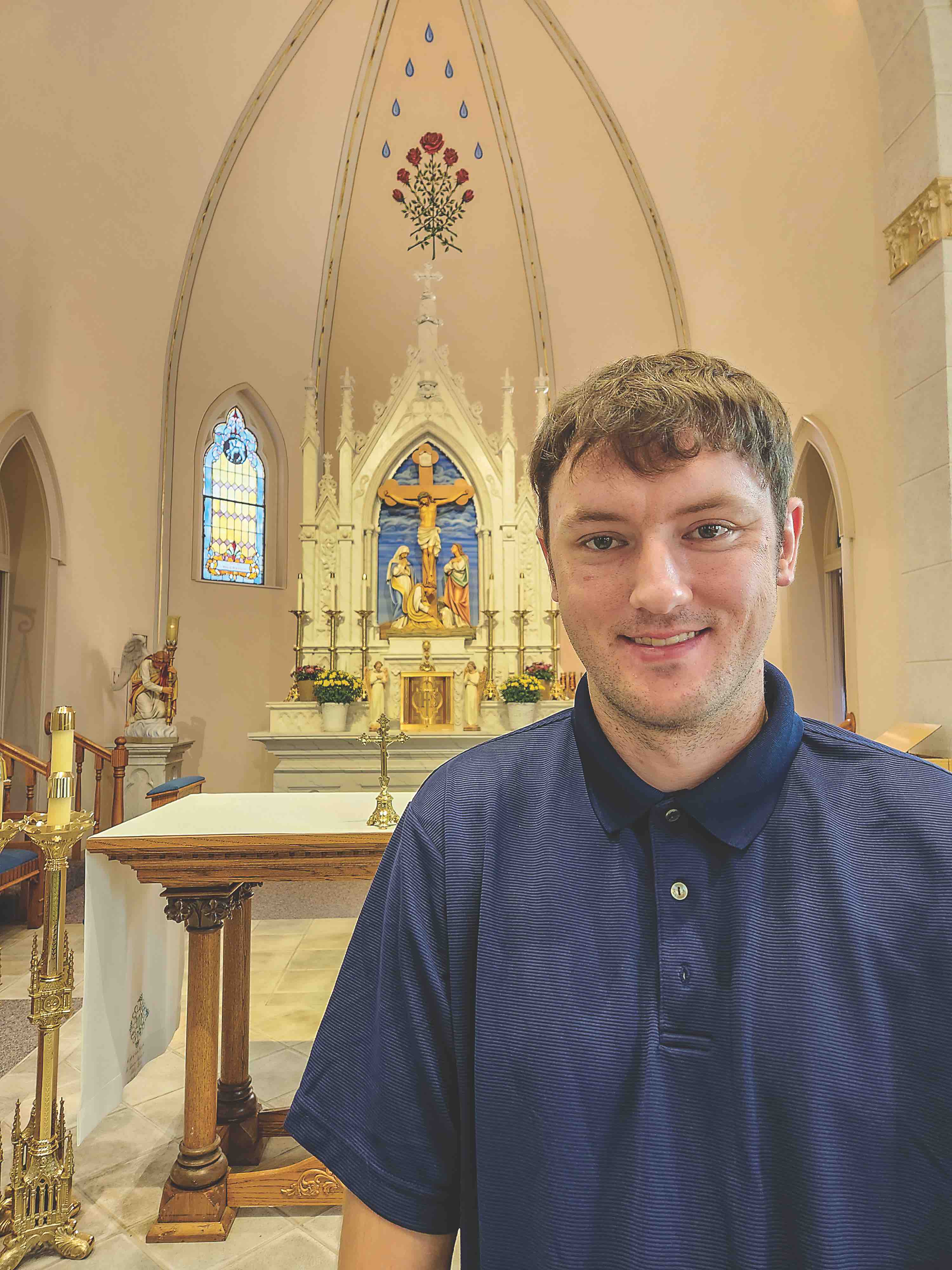 ‘I felt like I wanted to be part of the Church’
The conversion story of Jordan White of Coffeen
By ANDREW HANSEN
Editor
Growing up, Jordan White was exposed to Catholicism, attending Mass occasionally with his grandparents. He remembers, even as a child, that he was intrigued and thought the Mass was “very interesting.”
Despite that interest, years went by, but it wasn’t until Jordan met his girlfriend and her mom, attending Mass with them, that he was finally nudged toward the faith.
“I felt like I wanted to be part of the Church,” White said. “I had prayed for things, and I really enjoyed going. Also, Father Seth Brown coming to our parish in Vandalia (Mother of Dolors) really inspired me as well.”
White says that he learned the teachings very fast, and especially how the Gospels fulfill the prophecies from the Old Testament. He also felt a connection to St. Jude, even picking the saint for his confirmation saint name.
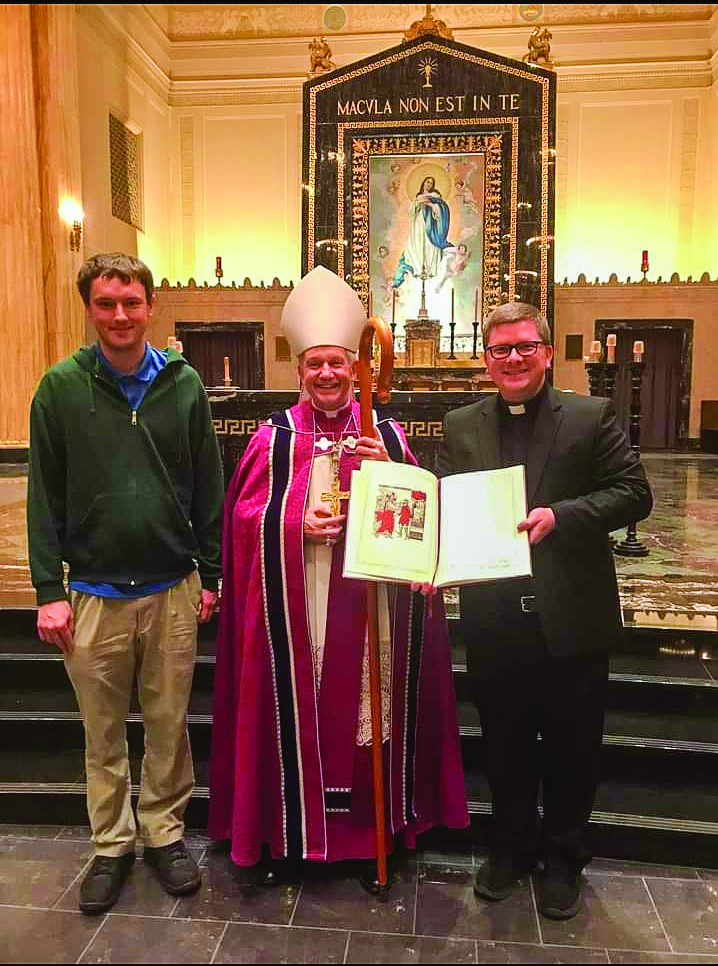 “My mom got me into St. Jude, and I had done some research on him, the patron for hopeless causes,” White said. “In my prayer book, there's a prayer I say whenever I am down or feel hopeless. I feel it helps me seek encouragement and works well. My mom had a prayer candle that also had the prayer on it. His feast day also falls on Oct. 28, the day after my birthday, which I didn't know until after I picked him as my saint.”
Being baptized, receiving confirmation, and his first holy Communion last year was a moment he will treasure forever.
“I felt the presence of our Lord was there,” White said. “It was a very spiritual moment for me in my life.”
Looking back at his journey to Catholicism, 27-year-old White says what stands out the most is how the angels, saints, and God are all there, listening to our needs and helping us when we pray. What he loves the most about the faith includes many aspects.
“I feel there are a lot of life's questions that can get answered through the Lord by going to Mass or just by reading a Scripture,” he said. “What I love most about the faith is that our faith helps achieve blessings and holiness to people in the world — the prayers, the Scriptures, and Mass in general. I feel as if we are all disciples of Christ. The Church will forever have a special purpose in this world.”
23 diocesan schools eligible for $10,000 match for scholarship donations

Eighteen diocesan schools eligible for $10,000 match for scholarship donations
Your donation also gives you 75 percent tax credit
Empower Illinois is excited to share two generous donors are sponsoring a scholarship donation match for eligible Catholic schools in the Diocese of Springfield in Illinois. Gifts made through Empower Illinois for the Invest in Kids Tax Credit Scholarship Program at eligible schools will be doubled up to $10,000.
“Matching gift opportunities inspire greater giving within local communities and help even more students find their best-fit school,” said Anthony Holter, Empower Illinois president. “With five kids remaining on the waitlist for every one scholarship awarded, we look forward to working with our school partners and generous Illinoisans to meet more of this tremendous demand for tax credit scholarships.”
Illinois’ bipartisan Invest in Kids Act Tax Credit Scholarship Program provides need-based scholarships to kids from low-income and working-class families to attend their best-fit school. Program donors earn a 75 percent state tax credit on their gift. For example, if an individual donor contributes $1,000, they will receive a state tax credit of $750. Donors can also direct their donations to a school of their choice. Since 2018, the Invest in Kids Tax Credit Scholarship Program has awarded more than 38,000 scholarships totaling more than $308 million.
Donations must be made before April 15 or when the cap is met at your select school to be eligible for the match. For more information on how to donate visit empowerillinois.org/donate or call (800) 616-7606. The schools in our diocese eligible for the $10,000 match are:
- Blessed Sacrament Catholic School - Quincy
- Blessed Sacrament School - Springfield
- Christ the King School - Springfield
- Father McGivney Catholic High School - Glen Carbon
- Holy Family School - Decatur
- Little Flower School - Springfield
- Our Lady of Lourdes School - Decatur
- Our Saviour School - Jacksonville
- Quincy Notre Dame High School - Quincy
- Sacred Heart-Griffin High School - Springfield
- St. Agnes School - Springfield
- St. Aloysius School - Springfield
- St. Dominic School - Quincy
- St. Francis Solanus School - Quincy
- St. Francis/Holy Ghost School - Jerseyville
- St. Louis Catholic School - Nokomis
- St. Mary School - Mount Sterling
- St. Mary School - Taylorville
- St. Patrick Elem - Decatur
- St. Patrick Grade School - Springfield
- St. Peter School - Quincy
- St. Teresa High School - Decatur
- St. Thomas - Newton
Father Mike Schmitz on what many get wrong about God, prayer

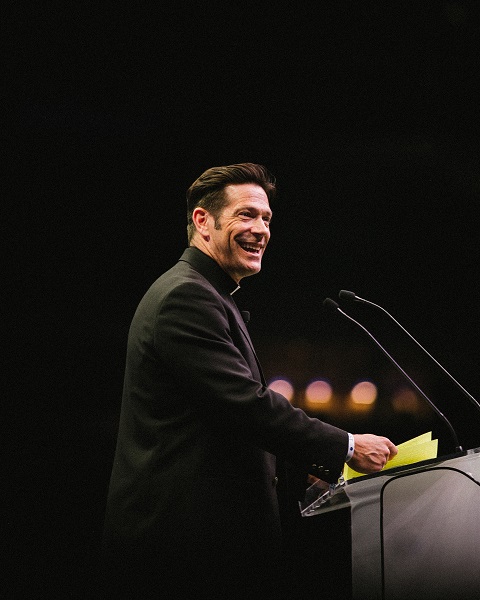 Father Mike Schmitz on what many get wrong about God, prayer
By ANDREW HANSEN
Editor
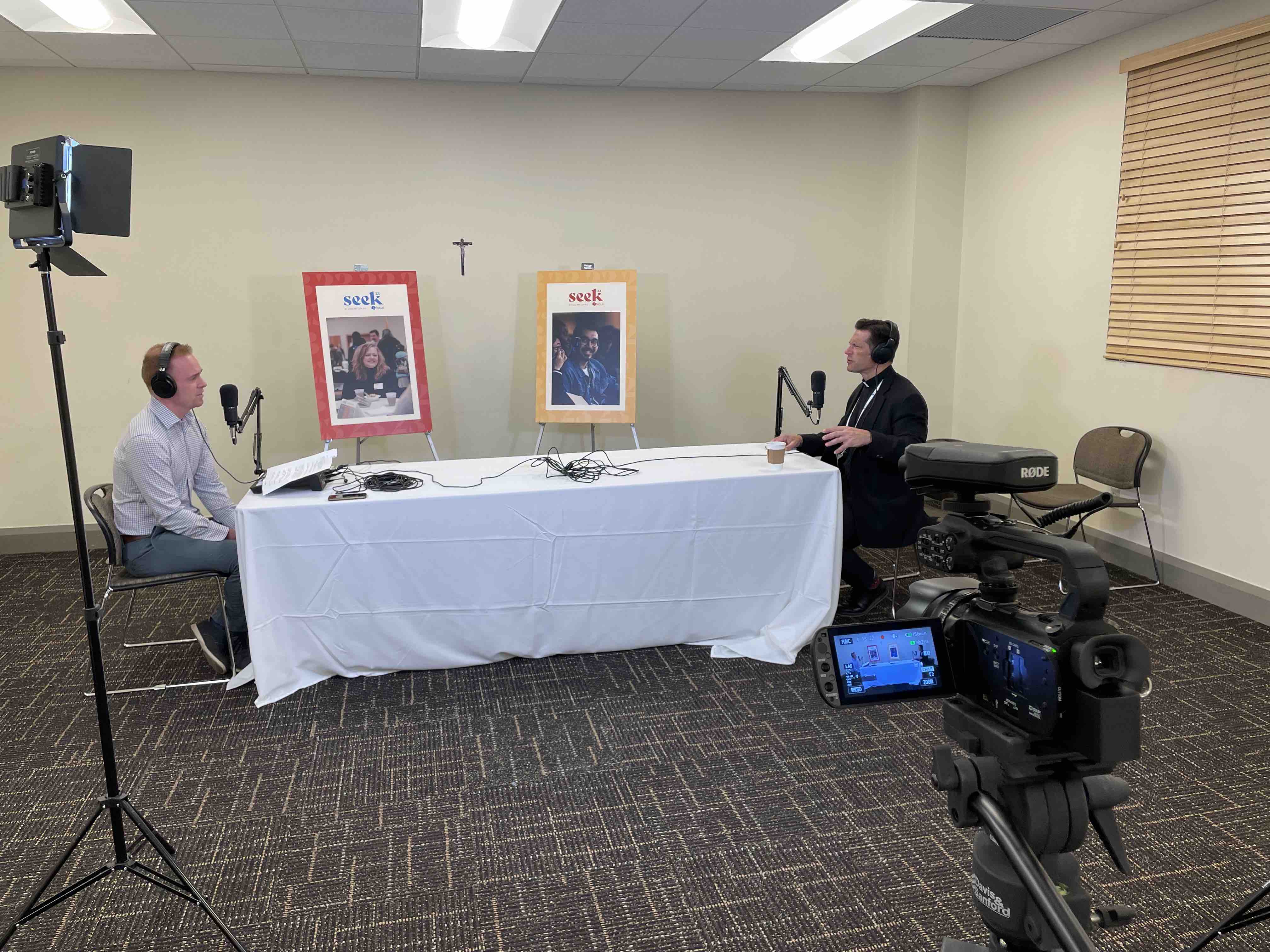
Two of America’s most popular podcasts are about Catholicism and are hosted by a priest. Let that sink in. Father Mike Schmitz, a priest of the Diocese of Duluth and chaplain for the Newman Center at the University of Minnesota-Duluth, is the host of the popular podcasts, The Bible in a Year (released in 2021) and The Catechism in a Year (released in January). His podcasts have reached No. 1 on the charts, racking up hundreds of millions of downloads. He is also a national speaker, offers weekly homilies on iTunes, and has appeared in videos for Ascension Presents on YouTube, garnering tens of millions of views. Catholic Times Editor Andrew Hansen sat down with Father Schmitz on Jan. 5 in St. Louis during the SEEK23 Conference to talk faith, prayer, and how we can get loved ones to return to Church.
You travel the country meeting thousands of people. In your conversations with people, what have you found is the most compelling thing about the Catholic faith that people either don’t know or under appreciate?
The individual is very important. I know people who have said like, “The Eucharist was something I never knew. I never realized the importance of the Eucharist until this moment where everything clicked, everything changed.” Others, who will say, “I was so confused, and it was the Church’s authority, and I realized, wait a second, all Christianity comes from the Catholic Church. Jesus founded this. When I got the piece of authority, it was everything.” Or people who have devotion to Our Lady. All those big pillar type things.
Ultimately, if there is something that I keep going back to, it is that regardless of what someone knows about the Church or the Lord, the most basic truth most Christians are raised with is this truth that they hear many times that God loves you. Most Catholics don’t actually believe that God loves them. They think God merely tolerates them. I have seen the difference. The difference between a person who is like, “I heard that God loves me, but what I really think is that He is OK with my existence, but if I am lost to Him forever, it doesn’t really matter to Him. Or, if I am close to Him, that doesn’t really matter to Him. I don’t really matter to Him.” As opposed to, the cross means something. There is a reason, and the reason isn’t because God tolerates you, it’s because He actually loves you and loves you in a way that you can never live up to. To let that truth break into a person’s heart, it changes everything. I think every Catholic needs to know that.
We’ve seen the statistics that only about 30 percent of Catholics attend Mass. If you had 30 seconds with someone who has fallen away from the faith and doesn’t attend Mass, or maybe only goes on Christmas and Easter, what would you tell them?
I would first say, ask the question, “Why? If you are not coming to Mass, how come?” The most compelling argument, and it could be, I’m kind of lazy. I’ve talked to people about how come they haven’t been to Mass, and ever since the lockdowns, how come you haven’t come back to Church? “I don’t know, I just kind of got out of the habit.” That’s the only reason! There is no deep thing like, “I hate the Church, or I don’t think it’s true.” It’s just they kind of got out of the habit. So, my first question I would ask is, “Has anyone asked you or invited you back if you are not going to Mass … how come?” Then, we can start talking. Someone can say, “I’ve never seen the point.” OK, let’s talk about that then. Or it could be something along the lines of, “I don’t really think that Catholic Church is right on X, Y, and Z.” OK, we can talk about that.
But, we treat people like a problem, as opposed to people. They are names, not just numbers. I think part of that means asking them, “What is your experience?” Bishop (Robert) Barron has this whole thing on the four main reasons why people, young people, have stopped going to Mass. Some of them are that they don’t like the Church’s teaching on some kind of aspect of morality. Others it was because they stopped going and no one asked them back. That’s a pretty wide gamut, a pretty wide range of reasons people are not there.
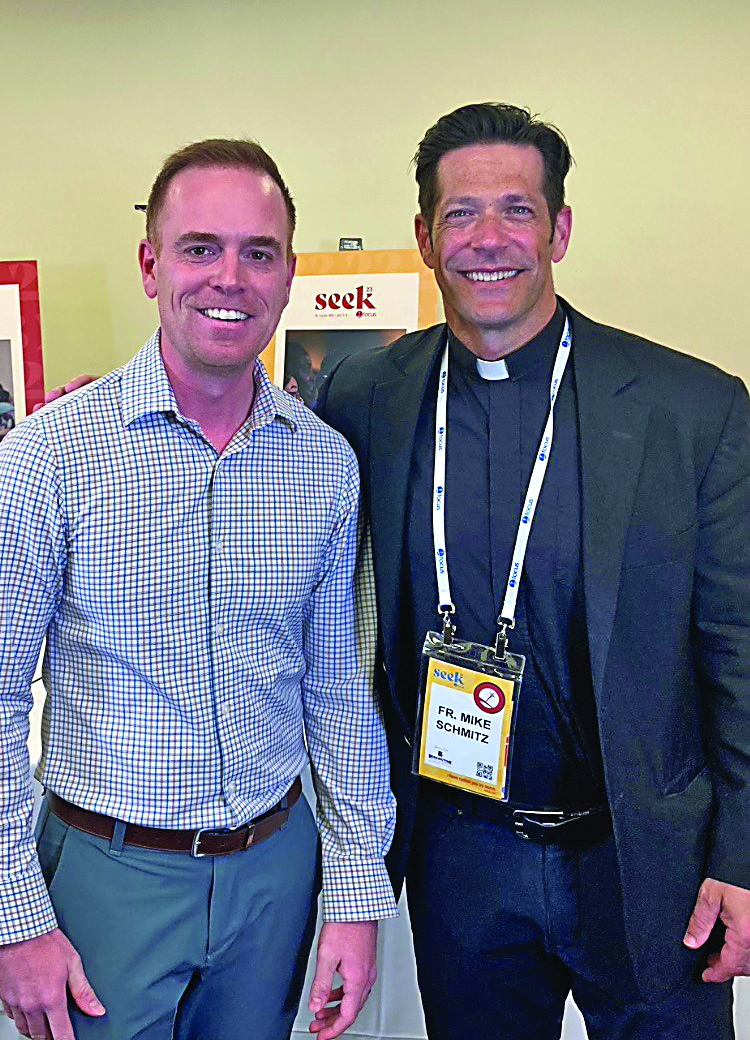 What is your advice for people when they are trying to persevere or need help, so they turn to prayer, but then “God didn’t answer their payer” and they feel like “God left them hanging”?
The fourth pillar of the Catechism of the Catholic Church is on prayer. One of the subsections is called, “The battle of prayer.” It’s one of my favorite sections in the entire Catechism. It talks about this. It says that the witness of the lives of the figures in the Old Testament, New Testament, the great saints, and even Jesus Christ Himself, all testified to this: Prayer is a battle. It’s a gift of grace, but it’s also a determined response on our part that is difficult, it’s a battle. The recognition of it that it is hard to persevere in prayer, well, yeah, in fact, that term faithfulness means steadfastness. It ultimately means perseverance in so many ways. It means other things as well. It’s that image of Moses, as his hands extended with Aaron and Hur holding up his arms as Joshua is battling the Malachites. That sense of, as long as he stood there, the Israelites would win. But, if he didn’t have that prayer, if his hands drooped down, the Malachites had the better end of the battle.
There is something in there that points to us that God is here, God is working, God is active, but He is also calling upon our participation and cooperation with Him in that intercession. So, there is this recognition of prayer is going to be a battle and part of that battle is against whom? First, against ourselves because we can find a thousand other things to do rather than pray. Then, a battle against the tempter who does everything he can to keep us from union with the Lord. You and I were made for union with God. The evil one hates that so he does everything he can to keep us from going to prayer.
So, I have the inclination to go to prayer, even the idea and plan to go to prayer, and that’s when this distraction or that distraction … even when I show up, what happens? Well, there is dryness, there is distraction, there is this question like, “Why am I not heard?”
The Catechism addresses this. It says, “Why do we complain about not being heard in prayer.” The response is just remarkable because the response was written by a man who while he was writing that fourth pillar of the Catechism, he was in a basement in Beirut as it was being bombed out. So, he wasn’t this person in this really comfortable, five-star hotel or home saying, “Prayer is a battle.” No, he was literally in a battle as he is writing about this.
Why do we complain about not being heard? He said in the first case, this should strike us as being remarkable that when we are praising God or thanking Him, we are not particularly concerned about whether or not He hears our prayers. I pause there, and I am thinking, “You’re right!” If I need something from God, then I’m on my knees, my hands are folded in the right way, and I am saying all the right words, and I need You to hear me. But when I am thanking God, I am kind of like, “Oh yeah, by the way God, thank you for that.” I’m so casual about it. When it comes to thanking God or praising Him, I am not particularly concerned about whether or not He hears my prayers, but he (the writer of this part of the Catechism) goes on to say, “We demand to see the results of our prayers when we are asking for something. That reveals our image of God.” Is God a Father who cares for us and loves us, and who will only give us good things? Or, is God basically our ATM, he’s our divine slot machine, or vending machine where we go up to Him because we need something. I think that is the key.
 What is one thing you have learned about the Bible or the Catechism as you’ve done your two podcasts?
The biggest surprise in the Bible were the prophets. The prophetic books, I have read them, but in a scattered way. All throughout Advent, we always read from the prophet Isaiah. But, I’ve never read Isaiah Chapter 1, verse 1, to the end of the book of the prophet Isaiah. Oh, and also along the way, trying to figure out what is he saying, what is he exactly communicating? But, here I am recording a podcast, I am going to read Isaiah, and at the end of this, I am going to have to tell people who are listening, “Here is what he just meant.”
So, I had to take the time to really dig in and say, “OK, when Jeremiah is writing, what is he saying when is talking about this prophet from Ephraim. What is Ephraim again?” So, that was really helpful for me because I need to at some point, I guess, an expert for the day, that was huge for me — to know the prophets and to realize the prophets were speaking to a particular people at a particular time then, and those words also spoke to me.
We see the pews not as full as we’d like and a lack of involvement in our parishes and schools. It can be deflating. What gives you hope for our Church?
One, were at SEEK23. There are 17,000 Catholic college students who are encountering the Lord Jesus, and it’s not just about this week for them. They are here because on a daily basis, there are missionaries on their campuses who are investing in them, who are walking with them, and saying to them, “Here is how you say ‘yes’ to Jesus right here, right now in your life.” I see that happen every day.
Also, when I read the letters and emails who did The Bible in a Year or are doing the Catechism in a Year, who have said, “I am 76 years old, I left the Catholic Church 50 years ago, but I listened to the Bible in a Year last year, and my life has changed, and I went to confession for the first time in 50 years.” Or, others saying, “I was a committed atheist. I started listening to The Bible in a Year, and I wasn’t sure why, but here I am and now believe.” I hear that all the time. There was another email that said, “I was completely lost, and here I am. God has found me.” Those are incredible signs of hope.
Answers taken from Andrew Hansen’s interview with Father Mike Schmitz on Dive Deep, the official podcast of the Diocese of Springfield in Illinois. To hear more from their conversation, go to dio.org/podcast or search Dive Deep on all the major podcast platforms.
Hey Father! Is there any benefit to praying in a sacred language? Are exorcisms more effective when done in Latin?

Is there any benefit to praying in a sacred language such as Latin, Greek, Hebrew, or Aramaic? Is it true that exorcisms are more effective when the priest prays in Latin? – Jake in Springfield
In answer to the first question as to whether there is any benefit to praying in a sacred language such as Latin, Greek, Hebrew, or Aramaic, I would say yes, at least in part. When I say, in part, I mean that it is beneficial that some parts of the Mass are prayed in these ancient languages, such as the Kyrie eleison (Lord, have mercy) in Greek, the Sanctus (Holy, Holy, Holy) and Angus Dei (Lamb of God) in Latin, and the Amen (so be it) and Alleluia (Praise the Lord) in Hebrew. Saying these prayers in these ancient languages connects us across the centuries with the historical roots of our liturgy. Most of the Old Testament was written in Hebrew, hence they are sometimes called the Hebrew Scriptures. Most of the New Testament was written in Greek, while the principal language of the Eucharistic liturgy became Latin as Christianity spread though the Roman Empire.
Since the Second Vatican Council in the 1960s, the Holy Sacrifice of the Mass has been celebrated primarily in local vernacular languages throughout the world. The Constitution on the Sacred Liturgy, issued by Pope Paul VI in 1963, provided that “the use of the Latin language is to be preserved in the Latin rites,” but opened the door to the use of vernacular languages “since the use of the mother tongue, whether in the Mass, the administration of the sacraments, or other parts of the liturgy, frequently may be of great advantage to the people” (Sacrosanctum Concilium, 36). This is reflected in canon 928 of the current Code of Canon Law, which says, “The eucharistic celebration is to be carried out in the Latin language or in another language provided that the liturgical texts have been legitimately approved.”
Some people find that participating at Mass celebrated in Latin, whether the traditional liturgy of the Council of Trent (Tridentine Mass) or the new order of the post-Vatican II Liturgy (Novus Ordo), to be spiritually beneficial for them, seeing Latin as a sacred language reserved these days for prayer. Others find the vernacular more beneficial to understanding what is being said in the prayers of the Mass. Hence, some combination of the ancient and the vernacular languages may be also beneficial in prayer.
With regard to whether exorcisms are more effective when the priest prays in Latin, there is some difference of opinion among exorcists about this. Some exorcists see Latin as more effective, saying that the Devil hates Latin because it is the universal language of the Church. Others argue that what is actually far more important is for the exorcist to be truly a man of God rather than focusing on the language used in the rite. Indeed, Latin is not taught as extensively to seminarians as it used to be. An exorcist with little training in Latin who stumbles through the rite using words he does not understand will be less effective than a priest using the vernacular who understands the nature of the spiritual battle taking place and is himself fighting that battle in the name of Jesus Christ.
The Most Reverend Thomas John Paprocki was appointed Auxiliary Bishop of Chicago on Jan. 24, 2003, by Pope St. John Paul II. Bishop Paprocki was named the Bishop of Springfield in Illinois on April 20, 2010, by his Holiness, Pope Benedict XVI, and was installed as the ninth bishop of Springfield in Illinois on June 22, 2010.
Author of new Cardinal George biography to sign book, make presentation at Cathedral in Springfield

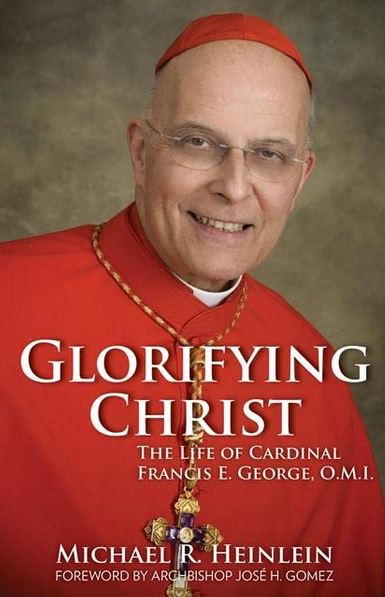 SPRINGFIELD - The author of a new biography about the late Cardinal Francis George, O.M.I. of Chicago will offer the book for purchase and have a book signing and presentation at the Cathedral of the Immaculate Conception atrium on March 19 at 11 a.m.
Michael Heinlein's Glorifying Christ: The Life of Cardinal Francis E. George, O.M.I. provides not only a factual record of the life of Cardinal George, but also a compelling narrative of the cardinal's extraordinary virtue and humility befitting a true servant of God.
A native Chicagoan, Cardinal George was told as a young man that he would never be a priest in Chicago because of a physical disability resulting from polio. He went on to be ordained a priest with the Oblates of Mary Immaculate in 1963. The native son was appointed as archbishop of Chicago in 1997, created a cardinal in 1998, and served in Chicago until 2014, just months before his death in April 2015. Bishop Thomas John Paprocki of the Diocese of Springfield in Illinois served under the leadership of Cardinal George as a priest and auxiliary bishop of Chicago.
"March 19 marks the 20th anniversary since I was ordained a bishop by His Eminence, Francis Cardinal George, Archbishop of Chicago," Bishop Paprocki said. "It was a great privilege for me to have served as his Chancellor and Auxiliary Bishop in the Archdiocese of Chicago and as one of his suffragan bishops in the Province of Chicago. I learned an abundance of important lessons that have shaped my life and ministry as a bishop by observing and working closely with this brilliant and holy churchman over the span of almost two decades. Now, thanks to the outstanding biography of Cardinal George by Michael Heinlein, many more people who never had the opportunity to meet Cardinal George will get to know this saintly and towering figure who dedicated his life to giving glory to Christ in the Church and in the world."
Cardinal George was a prophetic voice in the Church - a man able to see things as they are and from the point of view of the whole Church. His episcopal motto, "To Christ be
glory in the Church," encapsulates his legacy, because every decision he made, every action he took, every suffering he endured was about serving others and pointing them to our Savior.
Most of all, Cardinal George was a Christian in every sense. He was concerned about relationships and people, not careerism or advancement. He was attentive to the poor and those on the margins. He was a man of prayer, dedicated to Our Lady, and devoted to the Eucharist. He articulated the faith and was committed to reform. He was honest, accountable, genuine, and holy. Admired for his pursuit and proclamation of the truth and his personal witness to the Gospel, Cardinal George remains a model for discipleship and leadership.
Heinlein's presentation at the Cathedral is free and open to the public. The book retails for $29.95
Women of diocese invited to Lenten retreat

By DIANE SCHLINDWEIN
Managing Editor
The Springfield Diocesan Council of Catholic Women (SDCCW) is sponsoring a Lenten retreat Tuesday, March 28 and Wednesday, March 29 at the Villa Maria Catholic Life Center in Springfield. The subject of the retreat is “Our Journey of Faith.”
The SDCCW retreat is a tradition and features spiritual presentations, prayer, Mass, rosary, the sacrament of confession, and fellowship. The retreat begins with registration and a light breakfast at 9 a.m. on March 28 and concludes after lunch on March 29.
This year’s retreat speaker is Kim Padan. After the birth of a stillborn son, Padan and her husband Bruce were foster parents to 41 foster children over an eight-year period. She was the executive director of the local prolife group for 11 years. She joined and served two years as president of the Peoria DCCW. She joined the national Spirituality Commission in 2018, and is currently the chair of that commission. She periodically writes articles for The Catholic Post, the newspaper for the Catholic Diocese of Peoria, and is also a lay Dominican.
Retreat costs include meals, refreshments, retreat materials, and the use of the Villa Maria facility, which is located on the shores of Lake Springfield. The cost for an overnight stay, double occupancy is $100. An overnight stay, single occupancy (if available) is $120. Commuters pay $70. For those who want to stay overnight on March 27, the fee is $70 double/$50 single, with no meals.
Registration fees payable to SDCCW are due by March 21. Contact your parish office, your women’s group, or your deanery president for additional information and registration form, or contact Alice Massey at or (217) 371-1108.
Young woman's book of poetry, guided by Catholic faith, helps young adults who feel alone

By DIANE SCHLINDWEIN
Managing Editor
Thanks to her strong faith, as well as the encouragement of her spiritual director, her parents, and her friends, Maggie Deckard had a book of poetry published when she was just 22 years old.
Deckard’s book, Becoming, contains a collection of 31 poems that are close to her heart and bare her soul. They include words that she hopes will “serve as a safe place for women to go to, a place of consolation.” “If my book can do that in some way — then it is a privilege,” she says.
Deckard first starting writing poetry in high school (at Sacred Heart-Griffin in Springfield), but says it was in college (at Southern Illinois University Edwardsville) that writing poems became very therapeutic and drew her closer to Jesus. “Whenever I did not know how to process what was going on in the ups and downs of college, I turned to writing as an outlet,” she says.
Each poem in her book is a part of her “heart and story,” she says. “The topics I chose to put in the book were all real things that I went through and processed during college, some of them very tough and vulnerable, so if my book helps anyone else feel less alone, then to me it is worth it.”
 Deckard’s book is obviously faith-driven. “The whole process of creating this book felt very guided by Jesus and the Holy Spirit, so that helped overcome some of the fear around sharing hard things,” she says. Some titles included in the book are Misplaced, Secret Tears, I’d Never Tell You, and One Hail Mary.
Each poem title is accompanied by a reference to a Scripture quote. “The poems came before the Scripture quotes,” Deckard says. “I actually didn’t have the idea until over halfway through the editing process of the book. I knew I wanted Him (Jesus) to have the final word of the book, so Scripture felt like the best way to do that.”
Before her book was published, Deckard said sometimes it was easy to share poems with friends, yet sometimes it was difficult. “Many of the poems in my book, I shared with a few friends here and there, especially if I thought they could relate,” she says. “Every time I shared a poem, my friends’ responses were always so positive, and they always encouraged me to write more. I eventually just had this strong desire and conviction that my poems needed to go beyond my computer screen. There were definitely times when I would get nervous if I thought too much about what other people would think of certain poems, especially the deeper ones, but the desire to share them always outweighed the fear.”
It was in her freshman year at SIUE that Deckard began taking part in Newman Center activities and began growing in her Catholic faith. She says it was there she came across Father Rob Johnson (pastor of Mother of Perpetual Help in Maryville), who eventually helped to get her book published. “I first met Father Rob my first week of college at SIUE. I met him at the Newman Center during a community night,” she says. “I got to know him my first semester of college through different Newman events and then later that year he became my spiritual director. He helped me grow in my faith immensely, and he helped me to actually know Jesus as a person, as a friend.
“After he became my spiritual director, I began sharing different poems with him over my time in college, because writing poetry was a form of prayer for me,” she says. “And then during my senior year, he told me if I wrote a poetry book geared toward college students, that he would help me get it published. And here we are. His support helped give me the courage to share my writing with the world.” Today, Father Johnson, who wrote the forward to her book, is her pastor, too.
Deckard’s friend, Kayla Bridick, was the illustrator for Becoming. “We met at college through the Newman Center,” she says. “The illustrations were really fun to brainstorm and see come to life. Kayla really wanted to make the illustrations, images that were not specifically described in the book, yet had significance to the story. The illustrations were actually all based on actual items or objects in my house, or from Mother of Perpetual Help Church.”
Another person who assisted Deckard was her friend and editor, Megan Ulrich. “She has written and self-published two of her own poetry books, Hell, Bring the Kids Too, and Return Unto Me,” she says. “She helped guide me through the self-publishing process which I have come to learn is very tedious. It was a labor of love to say the least.”
Originally from Springfield, after her graduation from SIUE, where Deckard earned her bachelor’s degree in early childhood education, she accepted a dual teaching position at St. John Neumann Catholic School in Maryville. “I am a PreK teacher for 4-year-olds on Monday, Wednesday, and Friday, and then I am the art teacher for kindergarten through fourth grade on Tuesday and Thursday,” she says. “I never thought I’d be an art teacher, but they had a need for an art teacher and I needed a full-time job when I took the part-time PreK job, so I took it. It has actually been so fun to get to be creative with the kids. What can I say, Jesus always knows better than me!”
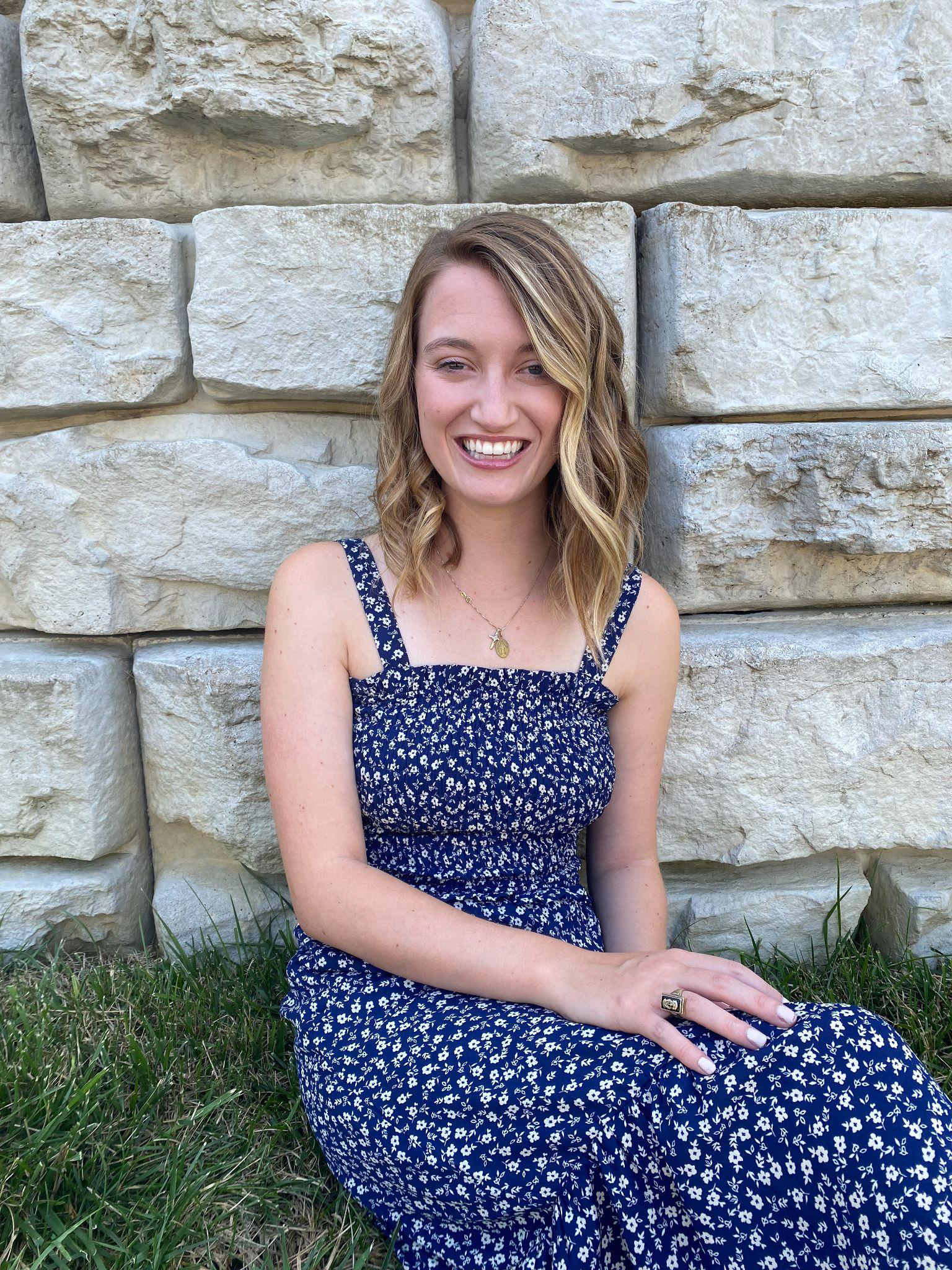 In addition to teaching, Deckard says now that she has published one book, she is working on a new collection of poetry. She hopes to publish that book and since children are so important to her, “Eventually, I think it would be cool to write a children’s book.”
As far as her faith goes, Deckard has an important message for young people. “I want to tell people to simply show up. There have been times when I did not want to go to Mass at all, but I showed up anyway and that made all the difference,” she says. “Even though I did not realize it in the moment, Jesus used those times for good. He grew my heart in those times. Show up, that’s all. Jesus will do the rest.”
Note: Becoming, by Maggie Deckard is available on Amazon and BarnesandNoble.com. There is a hardcover or an eBook option.