
Diocesan Administrator Account
Beauty Series - St. Mary in Madison

 By ANDREW HANSEN
Editor
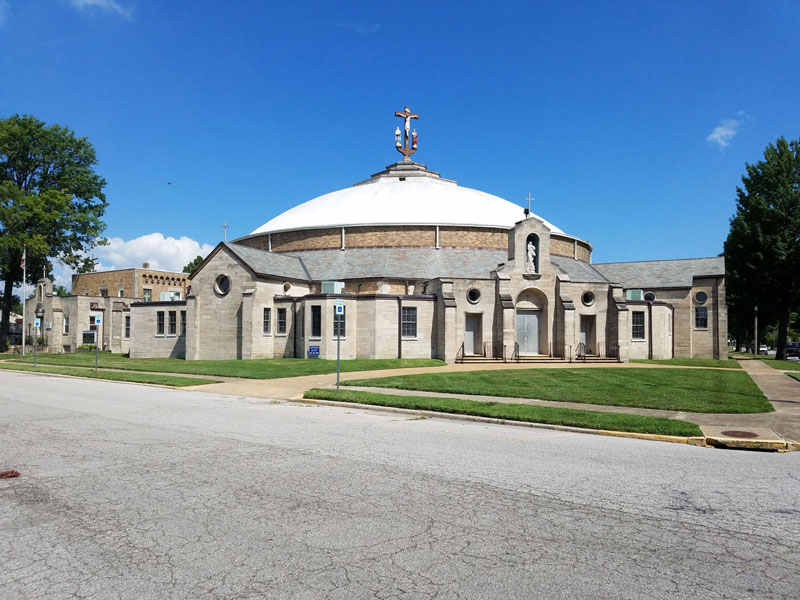
The honor of being one of the most unique churches in the Diocese of Springfield in Illinois belongs to St. Mary Church in Madison, mainly because of its domed structure. People who visit here say it reminds them of the Pantheon in Rome because that historic church is known for its dome. The dome at St. Mary spans 93 feet in diameter, much larger than what appears on the outside.
“Being where the location was picked to build the church, because of the location itself and the property, it fit better to have a dome rather than a traditional rectangle or square building,” said Father Stephen Thompson, pastor.
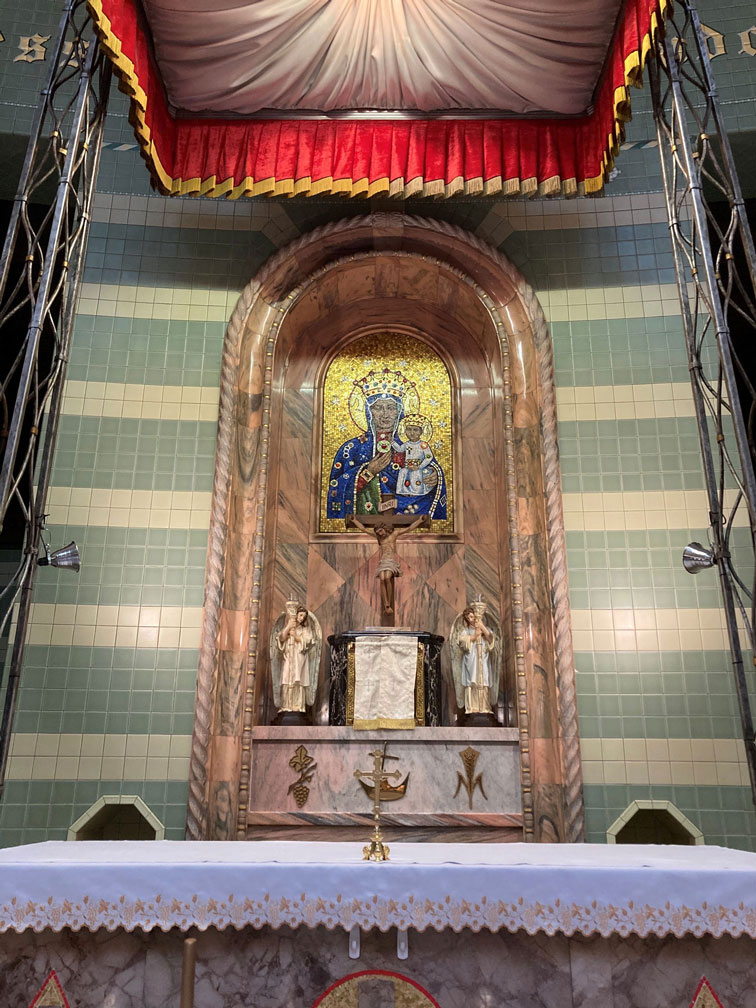
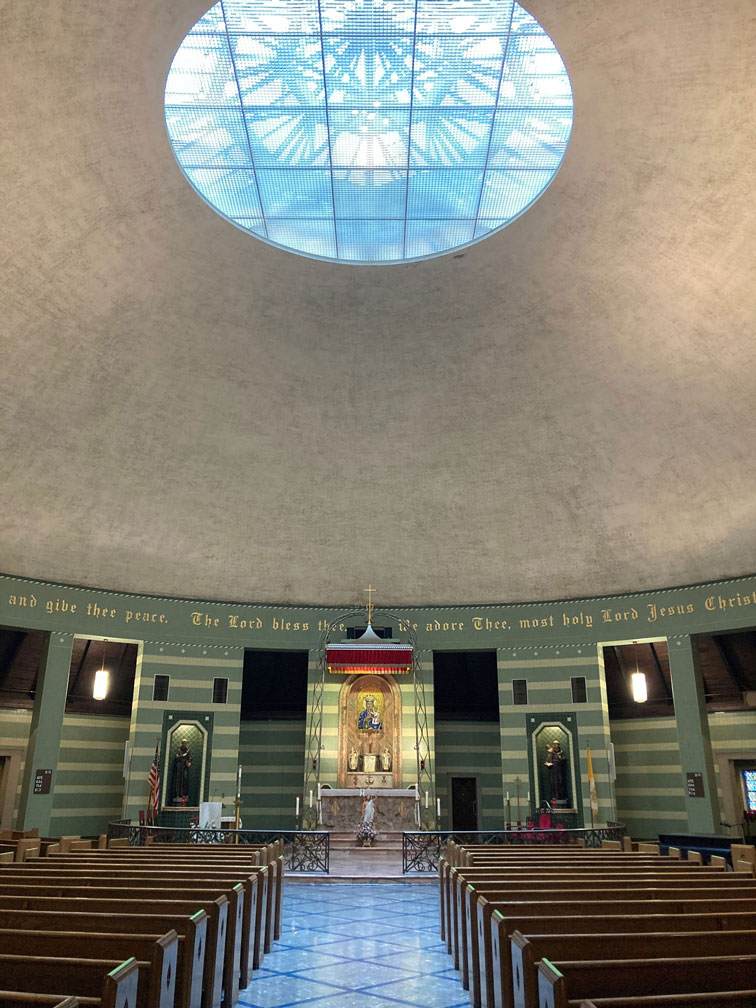
Completed in 1954, the church is dedicated to the Blessed Virgin Mary, the Mother of God, under the intercession of Our Lady of Czenstochowa. Beyond the rarity of having a dome, the church has other beauty not found in many churches. The church has three side chapels: the Chapel of the Sacred Heart, the Chapel of the Blessed Virgin Mary, and the Chapel of St. Joseph. Suspended over the altar is a baldachin or canopy on great iron bents tipped with gold and aluminum. Situated under that is a valuable mosaic of our Lady of Czenstochowa, a gift of a parishioner. The walls of the church are covered in glaze tile to prevent maintenance of a plaster interior. The Stations of the Cross are mosaic, designed by a French artist and various statues of saints can be seen throughout the church, surrounding the faithful attending Mass. The interior of the church is lighted mostly be a 25-foot diameter skylight, sitting 45 feet above the floor.
 “The first thing that strikes me when I walk in is the focus on the altar,” said Father Thompson. “The statues and the chapels that we have, it just has that old feel and Franciscan feel. You feel the Franciscan mark on this church, which they had a lot of influence here.”
 The first Catholic church built in Madison opened to the faithful in 1912. In 1925, St. Mary School opened with an enrollment of 265 students. The Franciscan influence Father Thompson talks about began in 1936 when the Franciscan Fathers of the Sacred Heart Province assumed charge of the parish, led by Father Engelbert Bienek, OFM. He had such a profound impact on the parish and its growth, his image can be found in the back of the church today. In 1952, plans began for erecting the new church. On Thanksgiving Day in 1954, St. Mary Church opened to the faithful.
“In the design of the church, the whole focus was to be on the altar, so even though you have the circular building, if you notice how the pews are facing, it’s all focused on the altar,” Father Thompson said.
The history of this parish has a heavy influence from Eastern Europe, with many of the parishioners having family histories that come from places like Croatia, Serbia, and Poland. Father Thompson describes the people here as “very warm and very welcoming.”
“I think part of that is the immigration of people here of them trying to find a home themselves, so making this a home for others,” Father Thompson said.
Hey, Father! How does one dispose of blessed objects?

How does one dispose of blessed objects? Is there a place in the diocese that will accept these? If not, I need guidance on what to do with them.
- Kathy in our diocese
It is not an uncommon experience for a Catholic to acquire blessed objects, be they books, statues, pictures, medals, rosaries, etc. After a time, some of these accumulate in great number or may no longer be needed or wanted. This leads to Catholics to wonder what they can do with these blessed items.
Traditionally, the Church recognizes three options: They may be given away to another person who may benefit from them; they may be buried; or they may be burned. Blessed items are not to be sold; if they are sold, they automatically lose their blessing.
Blessed items should not be given away simply to be rid of them and to clear up space in the closet. When considering giving away a blessed object, it should be considered who might actually benefit from this item.
When burying blessed objects, they may be buried in a place where they are unlikely to be accidentally dug up. While the diocese does not have a program to accept blessed objects, some Catholic cemeteries or funeral homes may have reserved space for the burial of these items.
When burning blessed items, it should done quietly and reverently, in a way so as not to draw attention to what is done. Also, the same fire not ought to be used for roasting hot dogs or making s’mores. Should a blessed object unintentionally be broken, it may simply be discarded, though this should be done quietly.
Father Daren Zehnle is pastor at St. Augustine in Ashland and is the director for the Office of Divine Worship and the Catechumenate for the Diocese of Springfield in Illinois.
SDCCW honors four young women with scholarships

By DIANE SCHLINDWEIN
Managing Editor
The Springfield Diocesan Council of Catholic Women (SDCCW) recently announced the names of four young women from the Diocese of Springfield in Illinois who will be recognized at the Women of Distinction Mass and luncheon on July 23. These young women were selected from 46 applicants and will receive $1,000 from SDCCW.
“These young ladies, along with all the other outstanding applicants, are fruit of the earth and hope for all,” said Mary Ann Sullivan, the SDCCW scholarship chair. “Tribute goes to their parents and all those in their lives that have taught them their faith by word and example. They are a witness and inspiration to all of us.”
The 2022 winners are:
 Ava Kessler, daughter of Dan and Kim Kessler of Newton, is a member of Holy Cross Parish in Wendelin. She is a graduate of Newton Community High School.
She is president and an active member of her parish youth group, attended March for Life in Washington, D.C., two times, and has gone on three mission trips with Catholic HEART Workcamp. Active in sports and band, Ava was also named captain of the girls’ basketball team. She was teacher assistant in the fifth-grade classroom and volunteered at the COVID vaccination drive-thru. She is also a volunteer umpire for local Little League games. Ava will be attending the University of Illinois where she will be enrolled in General Studies. “I am thankful for my parish and family that have formed me into the young lady I am today,” she said.
 Grace Lynch, who is from Sullivan and a member of Holy Family Parish in Decatur, is a home school graduate. She is the daughter of Melissa and Brian Lynch. Her Church-related activities include being a church organist/pianist, a lector, a Vacation Bible School volunteer, and a Catholic Charities volunteer for five years. Grace is a dance teacher at Sullivan Dance Studio and created her own dance classes for under resourced home-schooled students, inventing her own curriculum and marketing the program across Central Illinois. She is now teaching over 25 classes using Zoom for homeschoolers and for other students, as well during COVID. She received the Girl Scout Gold Award, has been a house manager for professional theater, and dance captain for multiple productions. She is also founder of non-partisan group Teens in Politics and is active in Right to Life activities. Grace will be attending University of Notre Dame studying political science toward a career as lawyer.
 Jenna Ochs is from West Liberty, is a member of St. Mary’s Assumption Parish in Sainte Marie, and graduate of Newton Community High School. She is the daughter of Jeff and Lisa Ochs. At her parish she is an altar server, lector, parish Youth Group member, and a Living Stations participant. She also attended the March for Life for three years. Jenna was also captain of her school volleyball team and volunteers as a junior volleyball coach. Additionally, she is an active member and officer in FFA earning a State degree, and is a long-time 4-H member. Jenna will attend Illinois Central College to study sports medicine/physical therapy. “I strive to lead by example and by my faith to others,” she said.
 Monica Wendle is from Godfrey, is a member of St. Mary Parish in Alton, and is a graduate of Marquette Catholic High School. She is the daughter of Eric and Marci Wendle. She reads Scripture daily, is a eucharistic minister, cantor, and lector. Monica created a nail painting booth for parish picnic fund-raiser and organized a prayer group for eight-grade students in the parish grade school. She was a member of Campus Ministry Club at her high school where she created a project that included making biblical message cards with candy attached for students. She organized caroling and the collection of Christmas cards for local nursing homes. Monica donated 11 inches of her hair to Children With Hair Loss. She also enjoys sewing and made 16 lap quilts for hospice patients. Monica will attend Lewis and Clark Junior College and then move onto Ave Maria University to study education and communications. “I am so humbled and blessed to receive the SDCCW scholarship award,” she said.
Catholics invited to join Bishop Paprocki in commemorating 125th anniversary of Quincy’s Father Tolton’s death

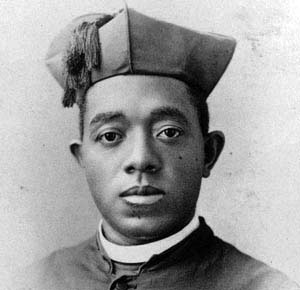 QUINCY — Area Catholics and others devoted to the Venerable Servant of God Father Augustine Tolton who grew up in Quincy, ministered in Quincy, and is buried in Quincy, will commemorate the 125th anniversary of his death with a pilgrimage procession on Saturday, July 9 in Quincy. Father Tolton is recognized as the first black priest in the United States and the Cause for his beatification and canonization of sainthood is ongoing in Rome.
The mile-long pilgrimage procession will begin at 10 a.m. at the statue of Father Tolton outside St. Peter Catholic Church at 2600 Maine St. After a few words of welcome and explanation, followed by a prayer, the pilgrimage procession will process along the south side of Maine Street where it will cross onto the east side of South 33rd Street. It will then process along the east side of South 33rd Street until it reaches St. Peter Catholic Cemetery where Father Tolton is buried.
Upon entering the cemetery, the procession will stop at the grave of Father Tolton for the celebration of Holy Mass at 11 a.m., with Bishop Thomas John Paprocki, Bishop of the Diocese of Springfield in Illinois, as the celebrant.
Following Mass, the pilgrims will pray for an end to hatred and violence, greater respect for life, and for more priests through Father Tolton’s intercession, as well as for Father Tolton’s canonization as a saint. The pilgrimage procession will conclude with the singing of Holy God, We Praise Thy Name, Father Tolton’s favorite hymn.
Those who wish to participate in the Mass but cannot walk in the procession are invited to park near the cemetery to meet the procession at the grave. Due to the small size of the cemetery, no one should park in the cemetery itself. Chairs and bottled water will be provided at the cemetery for those who wish to participate in the Mass.
Father Tolton was born into slavery in 1854. In 1862, his mother and siblings made a daring escape across the Mississippi River to Illinois. After settling in Quincy, he went to school at St. Peter’s Catholic School. Tolton later went to seminary in Rome because no American seminary would accept a black man. Thinking he would minister in Africa, once he was ordained, he was instead sent back to Quincy, where he arrived to thousands of supporters. Known for his incredible singing and homilies, Tolton spent several years in Quincy before transferring to Chicago. He died of heatstroke at the age of 43 on July 9, 1897 and is buried at St. Peter Cemetery in Quincy. Pope Francis declared him “Venerable” on June 12, 2019, the second step of four to becoming a saint in the Catholic Church.
For more information about this event, please contact: Father Daren J. Zehnle at (217) 321-1109 or .
Hey, Father! Administering drugs to terminally ill patients at death - where does the Church stand?

What is the doctrine of the Catholic Church in regard to administering drugs to terminally ill patients at, or near end of life, to end suffering and pain? If one is designated with others as a Health Care Power of Attorney for a terminally ill person and allows a Hospice nurse to administer drugs such as morphine and muscle relaxers, are they guilty of helping with euthanasia?
-Louise in Alton
A person who is caring for a terminally ill or an actively dying person or is their Health Care Power of Attorney may find himself or herself in a situation where he or she is consulted by those treating their loved one about which treatments he or she might wish to receive or how to alleviate pain. This can be a very intimidating role and two basic principles that are found within this question may appear to be at odds.
Firstly, we understand the dignity of every human life in every stage of its existence and can never morally act to end or shorten it. Secondly, we wish to help alleviate the pain and suffering of the person.
The United States Conference of Catholic Bishops have assisted us in making such decisions in accord with our Catholic faith. Their Ethical and Religious Directives for Catholic Health Care Services (Sixth Edition #62), helps us understand the validity of both of the principles here:
“Patients should be kept as free of pain as possible so that they may die comfortably and with dignity, and in the place where they wish to die. Since a person has the right to prepare for his or her death while fully conscious, he or she should not be deprived of consciousness without a compelling reason. Medicines capable of alleviating or suppressing pain may be given to a dying person, even if this therapy may indirectly shorten the person’s life so long as the intent is not to hasten death. Patients experiencing suffering that cannot be alleviated should be helped to appreciate the Christian understanding of redemptive suffering.”
Great advances in what is called “palliative care,” such as Hospice, where we are caring for while unable to treat or heal a dying person, allow us to balance the dignity of life and address their pain. While we never actively intend to shorten life, a dying person’s pain can morally be managed so long as we are not intending to hasten their death. One could ask for the minimal amount of medication required to keep the patient comfortable. One is not engaging in euthanasia if one is attempting to alleviate pain with this intention in mind.
Father Peter Harman holds a Doctorate in Moral Theology from the Catholic University of America and is rector of the Pontifical North American College in Rome.
Beauty Series | St. Anthony of Padua – Effingham

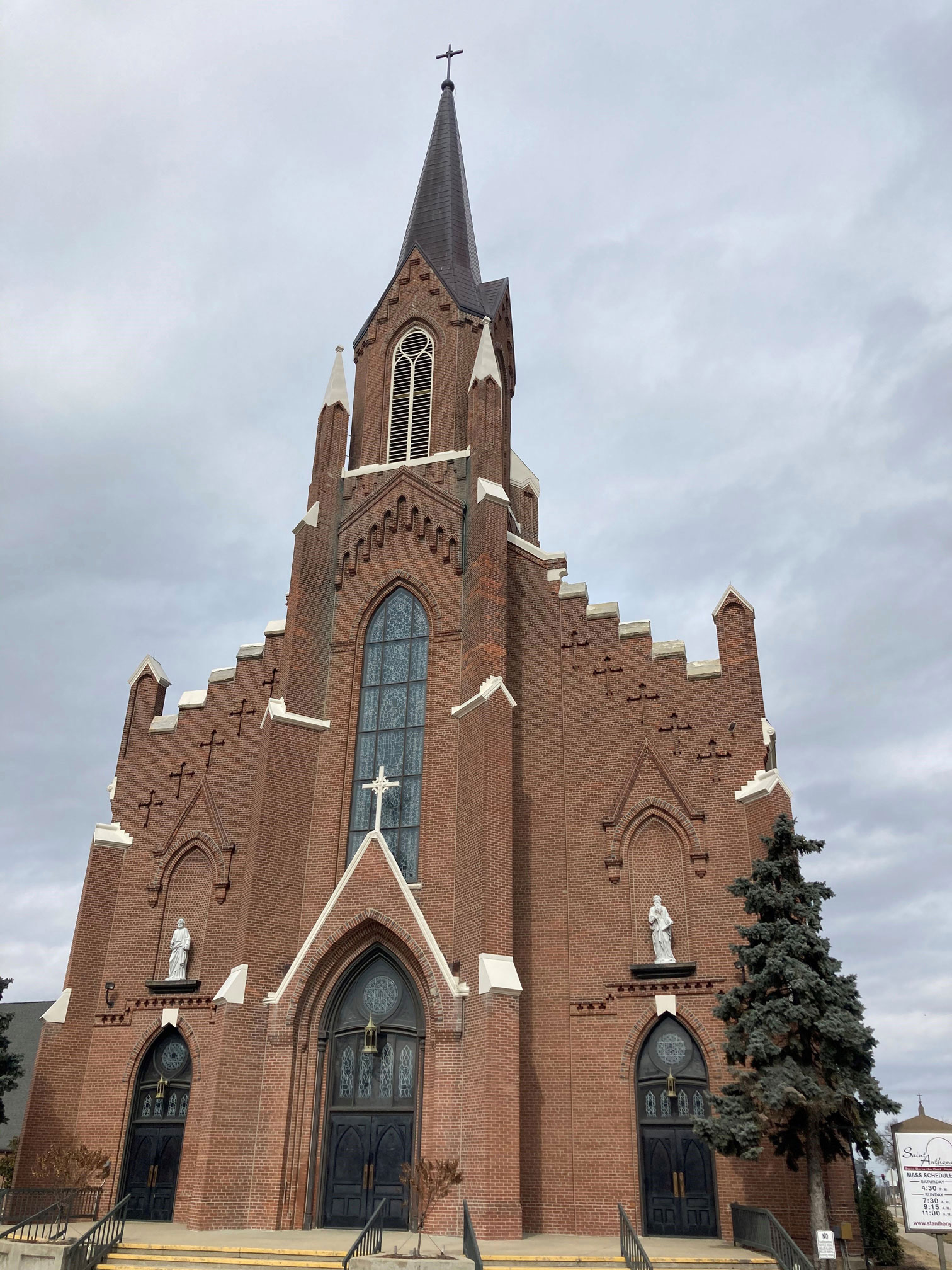 The history of St. Anthony of Padua Parish in Effingham is about as deep as any in our diocese. It all started in 1858 with a brick church on what is now the site of Goff Gym with the first Mass taking place on Christmas day. It was the first church in Effingham, a city known for its religious heritage. St. Anthony was a mission parish when it began, served by priests from the neighboring villages until 1871. Today’s church, built in 1875, is one of the most prominent structures in Effingham, attended by several generations of Catholics.
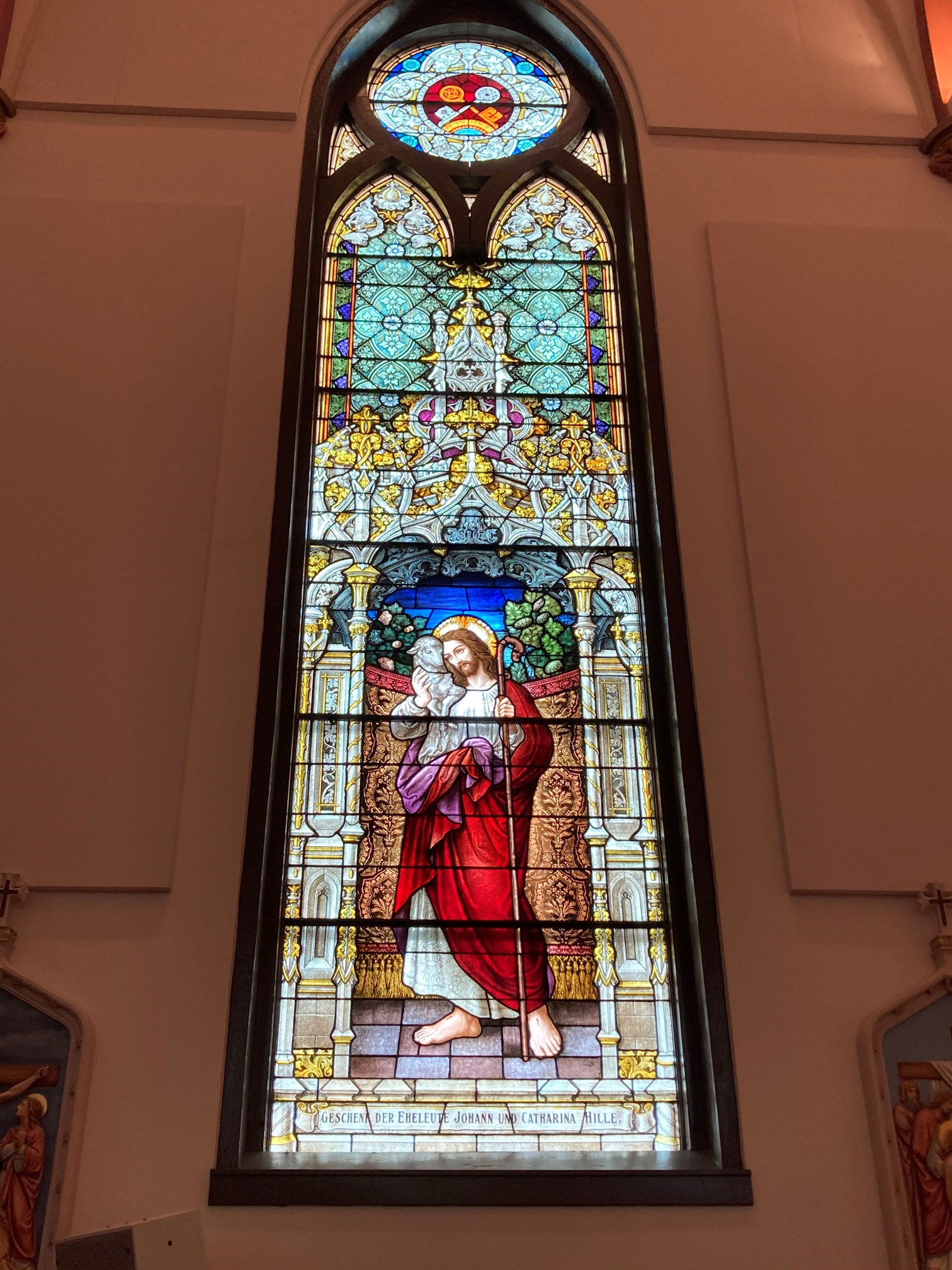
“They have all this history, and many are so willing to tell it to you, and it is such a rich history,” said Father Al Allen, pastor of St. Anthony of Padua Parish. “You can tell a lot of that by looking at the beautiful stained-glass windows and the memorials that are on the windows that mention the families. Most of them are in German it goes back that far. To talk to these people and they will say, ‘This was my great-great-great grandparent,’ it’s overwhelming at times. It is just beautiful.”
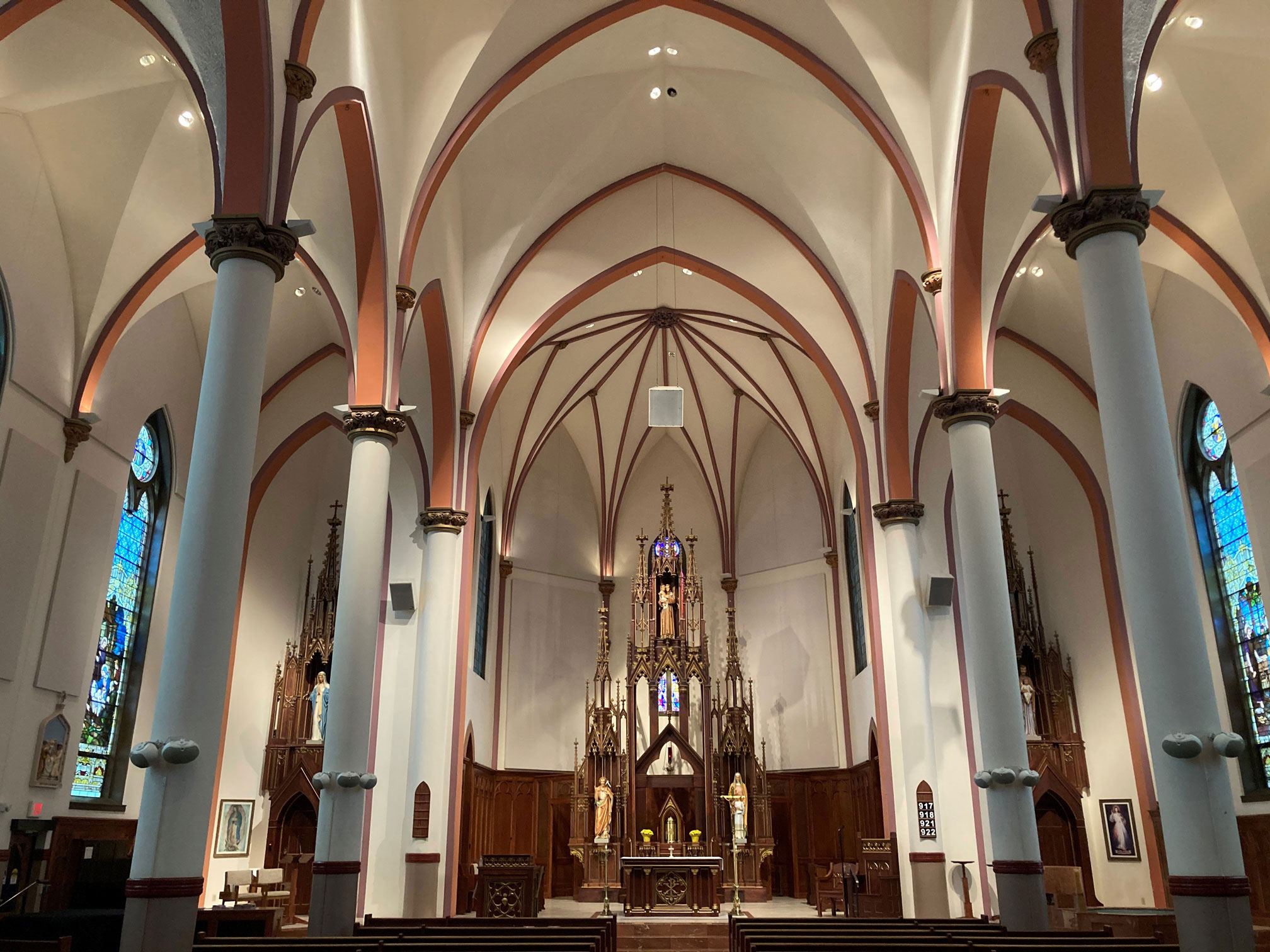
Inside the church, your eyes will be drawn to the immense ceilings and beautiful woodwork seen throughout. Like several churches in our diocese, the stained-glass windows are probably the most striking feature, which were installed in 1911. Images of saints, Mary, Jesus, and scenes from Salvation history line the walls, all displaying fine details and rich colors, which pour into the church on sunny days. A more recent window, installed in 1958, is behind the choir loft. It beautifully depicts St. Anthony holding the baby Jesus. For Father Allen, his favorite thing about the church is the baptismal font.
 “You can hardly find someone who hasn’t been in a long line of family members who have been baptized here,” Father Allen said. “I think this beautifully designed font, coordinating with the church itself, is just so great, and it makes the baptisms just warm and a very familiar feeling.”
The church has undergone several renovations over the past century and a half, including one in 1996. That renovation removed the old wallpaper, and the statues and Stations of the Cross were completely restored and repainted.
One place that Father Allen says is “well-kept secret,” even though the parish does not want it to be secret, is a prayer area behind the tabernacle.
 “I call it a meditation chapel because it has a lot of the things a chapel would have like the sanctuary light which serves the chapel and the church,” Father Allen said. “We have a lot of people who dedicate themselves to the Sacred Heart of Jesus and Mary, and we have those images on the wall. So, it affords people a place to come and meditate whenever they want to. It’s a quiet place and normally the lights are off in the church, so it gives the adorer a private and nice place to be. It’s one of things you just don’t think about until you experience it. I find it very handy during the day and when there is a little tension, you can come relax and pray and spend some time with the Lord.”
Serving the Catholic community in Effingham for more than 160 years, the history here is profound, something the 1,300 current families at the parish recognize and honor every time they step inside.
“One of the things that really gets me when you walk into St. Anthony is the peace,” Father Allen said. “The peace and the calm. You can be as tense as you can, but when you walk into the church, as big as it is, which is kind of odd — you would think it would be intimidating, but when you walk in, there is a certain peace. You can feel the grace. As I like to tell people, that is the spirit that is in this church. The spirit of the years and years of rich history that help you become calm.”
Mt. Zion student receives Bishop's Scholarship at QU

 Quincy University (QU) has announced Jack Driscoll as the 2022 Bishop’s Scholarship recipient. Driscoll graduated this spring with honors from Mt. Zion High School and will begin at QU this coming fall.
“I am thrilled for both Jack and Quincy University to award the Bishop’s Scholarship to a student who is striving every day to live authentically for Christ,” said Bishop Thomas John Paprocki of the Diocese of Springfield in Illinois. “Jack not only has a strong academic record, but his commitment to building up the Kingdom of God in our diocese is an example of his faithfulness. He has been a constant volunteer at Our Lady of the Holy Spirit Parish in Mt. Zion, helping children better understand the faith in PSR classes. He has served at the table of the Lord as an altar server and as an usher, and he was his brother’s confirmation sponsor. He is also involved in building up a culture of life and helps distribute holy Communion to those in nursing homes. I was struck by his active involvement in the Church, and with the joy he carries out his mission as an intentional disciple.”
The university awards the $10,000 Bishop’s Scholarship to one student on the recommendation of Bishop Paprocki. To be eligible for consideration, a candidate must belong to a parish in the Diocese of Springfield in Illinois and have applied to QU. Candidates must be admitted to QU, choose to enroll, and submit a statement describing their involvement in their local parish, the diocese, or the Catholic Church.
“I am so thankful for the opportunity to attend QU in the fall as the Bishop’s Scholarship recipient,” Driscoll said. “I would like to thank my family, OLHS Catholic Church, Dr. McGee, and Bishop Paprocki, who played integral roles in me receiving this scholarship. I am excited to attend QU as my parents, aunts, and uncles did. For many years, I have listened to my family tell story after story of their experiences at QU. I am excited to finally be able to chime in with my own QU stories.”
Hey, Father! Explain the Church's teaching on suicide

During my 12 years of Catholic education in the 50s and 60s, we were taught that those who committed suicide were guilty of the sin of despair and could not have a Catholic funeral Mass or be buried in consecrated ground. At some point, the Church realized that those who died by their own hands were probably mentally ill and not fully responsible for their actions. Are these souls entitled to a Catholic service these many years later if requested by their loved ones?
- Mary A. in Springfield
Thank you for taking the time to write your question, as I am sure that it is something that many people have wondered about, but were not sure how to ask it.
The Church teaches that the act of taking one’s own life is gravely wrong because it violates God’s own love of the individual, just love of self, and the good of others who will suffer because of the act (Catechism of the Catholic Church 2281). However, as you alluded to in your letter, the Church also recognizes that in many, many cases, if not all, one might argue, the person who commits such an act does not do so freely because it goes against the natural inclination of self-preservation.
The Catechism states that “Grave psychological disturbances, anguish, or grave fear of hardship, suffering, or torture can diminish the responsibility of the one committing suicide” (CCC 2282). The Church teaches and believes that “We should not despair of the eternal salvation of persons who have taken their own lives. By ways known to Him alone, God can provide the opportunity for salutary repentance. The Church prays for persons who have taken their own lives” (CCC 2283). Sadly, many Catholics do not know this aspect of the Church’s teaching. The Church has come a long way in her understanding of suicide; in fact, there are specific prayers in the Order of Christian Funerals for those who die by suicide. Sadly, many among the faithful still do not know that the Church has come to this deeper understanding of the tragedy of when someone takes his or her own life. I am sorry for the pain, suffering, and fear that many have experienced because of this.
Prayers can always be offered for the faithful departed and in various ways. The most efficacious prayer that can be offered for someone who has gone before us in faith is to have a Mass offered for him or her. In cases like you mentioned, a loved one’s grave can always be blessed by a priest or deacon along with other prayers being offered on their behalf that God will grant that person light, joy, and peace forever in heaven with all his saints.
- Father Christopher House, S.T.L., J.C.L. is pastor at Christ the King Parish in Springfield and is the Vicar Judicial for the Office for Tribunal Services for the Diocese of Springfield in Illinois
Good News! Two new priests ordained for Springfield diocese

 Father Zach Samples and Father Paul Lesupati are all smiles after their ordination.By DIANE SCHLINDWEIN
Managing Editor
It was a beautiful Easter season day both outside and inside the Cathedral of the Immaculate Conception May 28 as Bishop Thomas John Paprocki ordained Father Paul Lesupati and Father Zachary Samples to the priesthood for the Diocese of Springfield in Illinois.
Over 65 priests, a number of deacons, and hundreds of family members and friends were at the Cathedral as the two men, who both attended Saint Meinrad Seminary and School of Theology but came from quite different backgrounds, took their vows to the priesthood, were ordained, and then shared a common joy that day.
In his homily, Bishop Paprocki called the ordination Mass “a glorious occasion for all of us and for the entire Church.” He explained that Father Lesupati came to the Diocese of Springfield in Illinois after Father Jeff Grant, pastor of Blessed Sacrament Parish in Springfield, met the young social worker while he was on sabbatical in Kenya. Smiling, Bishop Paprocki gave credit to Father Grant and said, “Note to priests, if you ever go on sabbatical, you will be expected to bring back at least one seminarian!”
Zach Samples, the younger of the two men, was a “home-grown” seminarian, born in central Illinois and baptized by Father Dan Bergbower at Our Lady of Lourdes in Decatur. Speaking once again with a smile, Bishop Paprocki said, “Good job, Father Bergbower, it stuck!”
On a more serious note, Bishop Paprocki noted that as a priest a man offers himself to Christ, so Christ can use him as an instrument of salvation. “Every priest is a missionary,” he said, “because every place is a missionary place.” He said that now, as priests, the two men are “standing where Christ stood.” “It is an adventure and a sublime destiny.”
As a priest, Father Lesupati said, “I am so excited and I am looking forward to celebrating the sacraments, especially the sacrament of reconciliation, the sacrament of mercy, and celebrating the Eucharist. I am also excited to serve the people of God as a priest, journeying with them by listening and accompanying them in their day-to-day struggles.”
Father Samples had a similar statement. “I often joke that it is ‘company policy’ for a future priest to say that he is most excited to celebrate the Mass. This is obviously not a joke — it’s a reality. Without question, I am most excited to celebrate Mass, to confect the Eucharist, and to bring Christ to his people in a very real way. I’m also excited to celebrate the sacrament of reconciliation, to meet people in the midst of their struggles and pain, and to bring Christ’s light into that darkness. Finally, I am just ready to fully invest in parish life, and to put into action all that I have learned during these years of seminary formation.”
Beginning July 1, Father Lesupati will be a parochial vicar at Cathedral of the Immaculate Conception in Springfield, while Father Samples will be parochial vicar at St. Peter Parish in Quincy and associate chaplain Quincy Notre Dame High School.
Decades old homily on the real presence in the Blessed Sacrament perfect for us today
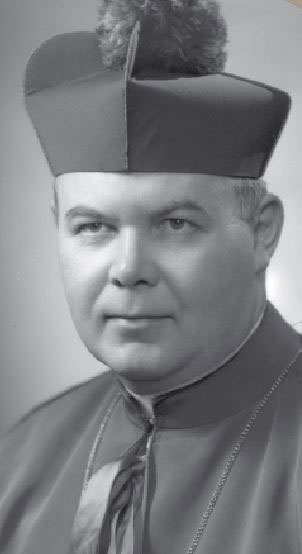 The following is an undated homily given by Bishop William O’Conner, who served our diocese from 1949-1975. This was provided to Catholic Times by the Office for Archives and Record Management for the Diocese of Springfield in Illinois.
Tonight, my dear friends, when darkness shall have once again triumphantly descended, routing the light of the day and claiming the city as his own, to reign unchallenged through the silent hours while the tired city sleeps, a taint red glow will faith fully and valiantly defend the altar of this church against the night-long siege of the surrounding shadows. Tonight, in all the Catholic churches of the city, in all the Catholic churches of the land, other vigilant sentinels will keep the altar bright, though the rest of the church be enveloped in impenetrable darkness. Why is this unusual custom so universally observed? Why has each church such a luminous sentry ever on guard; as a guard of honor, it would seem, tor it is evidently a futile protector? And why is this tiny flame so distinctive of our churches? For each of us would know with satisfying certainty that he was in a Catholic church, were he to see scarcely anything else but this little red flame on guard before the altar. And why is it that at night this tiny light should help to produce in men the same feeling of reverence and awe which the characteristic holy stillness of a Catholic church brings during the day?
These are questions which any observant non-Catholic might ask. He would naturally say to him self that this unusual custom must have a meaning, that this strange impression of his in Catholic churches must be due to some definite and constant cause. Surely every Catholic could answer these questions. He need but state this one basic truth, that a Catholic church is in a true and most wondrous sense the house of God. Yet how strange to his own ears may sound these words that express the truth to which he has assented all his lite. Perhaps only then will the vivid realization of just what this tremendous truth means and implies flash across his mind and hold him entranced and fearful. He is asked to explain why the light of the sanctuary lamp is never extinguished. He is asked to explain the strange impression of vitality and of awe that a non-Catholic feels when he enters a Catholic church. He answers, but his answer cannot but provoke the curious interest of the inquirer. The resultant questions and answers must force upon the Catholic himself the realization of the practical meaning of this wondrous fact. He answers, "The light of this lamp burns night and day, because it signifies that God is really present in this church." Then the flow of question and answer begins, "Is not God present everywhere?"
"Yes, but on our altars, God is present in a different manner. Jesus Christ, the God-man, now gloriously reigning in Heaven, is really, actually, physically present in this church, as truly as when in Galilee he went about among men, doing good."
"But where on that altar is the God-Man, Jesus Christ?"
"He is in the tabernacle, behind that bright metal door."
"But how can anyone believe that a man could get into a small chamber such as that?
"Our Lord is there present under the appearance of bread."
"How is that possible?"
"By the power of the words which the priest says over the bread, the substance of bread ceases to exist, although the appearances of the bread remain, and Our Lord becomes present under those appearances.
"Who gave the priests this power to bring God from Heaven to earth?"
"Christ Himself, and He not only gave them this power, but He commanded them to use it."
"Is that why this light is always burning?"
"Yes. When a Catholic sees this light, he knows that Christ is present on the altar. He genuflects to adore Him."
"Is it in this that Catholic churches differ so much from other churches?"
“Yes, that is the reason of that curious double impression of a real though mysterious presence and of reverence."
"Can the Catholic Church prove her teaching about Christ's real presence?"
"Yes, the Church proves her teaching by the testimony of Infallible Truth, Christ Himself.”
You see my dear friends, how quickly our habitual belief in Christ's real presence in the Blessed Sacrament can be sharpened into a practical, conscious realization of its actual significance, now, at this moment, in this very church. The questions of a non-Catholic force us to bring our minds to think of this truth of our faith, force us to understand clearly what we believe in order to explain such Catholic customs as genuflecting and the sanctuary lamp. It is at such times of clear advertence that we rebuke ourselves for growing accustomed to the presence of Our Lord, so accustomed that we are scarcely conscious of what we mean when we genuflect, so accustomed that entering the church no longer means coming into the house of God, into the dwelling-place and audience chamber of Our Lord Jesus Christ. But we must not be discouraged.
Our Lord does not demand this actual and clear realization at all times. He knows how prone to habit is our human nature and how inclined to became absorbed in tangible, material realities. But surely, we owe at least an occasional reflection to Him Who gives Himself as our spiritual food, Who stays with us here on earth that we may never feel God is far away and does not think of us. Nor need we wait until the questions of some inquirer force on us such reflection on the reality of Christ's presence. Sunday Mass, Benediction, any service of unusual meaning and interest, such as the sight of children making their First Communion, or a newly ordained priest celebrating his first Mass, should serve to bring home to us anew the tremendous truth that our God is not far from us, that He has in a most marvelous manner taken up His abode with the children of men.
But, my dear friends, this realization of Christ's real presence, even with its consequent renewed fervor of love and devotion, is not all that we owe to Our Lord in the Blessed Sacrament. Our duty is only partially fulfilled when we have made this effort to pay Our Lord the conscious homage of our mind and heart. It is equally our duty to know the reason why we can and must, as reasonable men, believe in Christ's presence in the Blessed Sacrament. For the proof of this doctrine is as strong and solid and satisfying to the reason as her doctrine itself is satisfying to the religious yearnings of the heart. Christ's infallible Church has defined as a truth to be believed by all Catholics, that Christ is present in the Blessed Sacrament truly, really, and substantially. For the Catholic, that is enough; that is the best possible proof. But we must not forget that there are other solid and certain proofs of this doctrine whose force even they must admit who do not acknowledge the claim of the Catholic Church to divine institution and to infallibility in matters of faith. It is this rational justification for his faith in the Blessed Sacrament that a Catholic should be prepared to explain to seekers after the truth. Does he not owe it to our Lord to wish to make known this greatest gift and expression of His love and of His generosity?
"And whilst they were at supper, Jesus took break and blessed, and broke and gave to His disciples and said, ‘Take ye and eat. This is My Body.’ And taking the chalice, He gave thanks, and gave to them, saying, ‘Drink ye all of this. For This is My Blood of the New Testament, which shall be shed for many unto remission of sins’” (Matt. XXVI,26-28).
In these words from St. Matthew's gospel, the Church finds a clear proof of Christ's real presence. This same solemn institution of the Holy Eucharist is narrated by St. Luke and St. Mark likewise. St. John provides an independent and equally strong argument when he tells at great length in the sixth chapter of his gospel, how Our Lord foretold and promised to give Himself as the "Bread of Life" about a year before His passion.
Then it was that He said so plainly in order to prepare the minds of His apostles for the actual institution, "I am the living bread which came down from Heaven. If any man eat of this bread, he shall live forever; and the bread that I will give is My flesh for the life of the world." And then it was that the Jews understood His words in their literal meaning, for St. John tells us how "the Jews murmured at Him because He had said I am the living bread which came down from Heaven.’"
Other strong proofs of the teaching of the Church are to be found in Holy Scripture, to say nothing of the argument from the clear and unanimous testimony of the Fathers of the Church, who witness the unbroken tradition and faith of the ages. But we will center our attention on Christ's words as given to us by St. Matthew. Let us see how clearly they show that Our Lord really gave His Apostles His Body to eat and His Blood to drink.
On what occasion were these words, "This is my Body, This is My Blood," uttered by Our Lord? They were spoken the last night of Our Lord's life on earth, only a few hours before He was captured by the Jews. Surely then if Our Lord wished to deliver an important message to His Apostles, a message He wished them to remember throughout their lives and to teach all men, He would use the simplest and the clearest possible language. Any other style of speech might be misunderstood; only plain speech would be understood clearly. In these solemn moments, then, Our Lord takes bread and says, "This is My Body." He could not mean these words to be understood in any other than their natural and obvious sense. For He knew the implicit faith and trust of His Apostles in Him; they would most readily believe His every word. He knew that they were not highly educated scholars, but humble, unlettered fishermen, who were not inclined to look for any hidden meaning in such plain speech. Further, He foresaw that they would understand Him literally; that they would believe that they were to eat not bread, but His very Body and that, fulfilling His command to do themselves in commemoration of Him exactly what they had seen Him do, they would teach this literal meaning of His words to all men. Now, if Christ did not mean just what His words clearly signify, He would have had to correct His apostles then and there. He, the God of Truth, could not allow or permit His Church to err in such a matter. But does He correct the Apostle's interpretation?
No, He rather insists the more that He means exactly what they understand. For He takes the chalice of wine and says, "This is My Blood, which is shed. Drink it." It is impossible that the apostles would have understood these words in any sense but their natural sense. It is equally impossible for our Lord to have expressed more simply or more clearly His real presence in the Blessed Sacrament.
These are the points to be remembered clearly. Just as we know Jesus Christ is God, because He said that He was God, and proved it by His miracles, so we believe that this same Jesus Christ, true God and true Man, is present under the appearances of bread in the Blessed Sacrament, because He said so. Who can say that we have not true proof for this marvelous doctrine when we have the words of Jesus Christ Himself?
This then should be our resolution. To reawaken our realization of what Our Lord’s presence among us means and to renew our intellectual grasp of the reasons for our faith in this mystery. Then, by our living faith and fervent devotion, shall we give Our Lord the perfect service of our minds and hearts, and, perhaps, bring to His love, new souls for which He hungers.