NEW FLAG APPROVED JPEG

Diocesan Administrator Account

In the Apostle’s Creed we pray, “(Jesus) suffered under Pontius Pilate, was crucified, died and was buried; he descended into hell.” What do we mean that Jesus descended into hell?

  • Anonymous in diocese

In the Apostle’s Creed, we profess that Jesus “descended into hell” and that “on the third day he rose again.” If hell is the “state of definitive self-exclusion from communion with God and the blessed” (Catechism of the Catholic Church, 1033), how can this be? Our difficulty with this is simply the difficulty of translation.

The Catechism of the Catholic Church explains why Jesus descended into the realm of the dead, what is meant here with the word hell:

The frequent New Testament affirmations that Jesus was “raised from the dead” presuppose that the crucified one sojourned in the realm of the dead prior to his resurrection (see Acts 3:15, Romans 8:11, I Corinthians 15:20, and Hebrews 13:20). This was the first meaning given in the apostolic preaching to Christ’s descent into hell: that Jesus, like all men, experienced death and in his soul joined the others in the realm of the dead. But he descended there as Savior, proclaiming the Good News to the spirits imprisoned there.

This is why St.  Peter says, “For Christ also died for sins once for all, the righteous for the unrighteous, that he might bring us to God, being put to death in the flesh but made alive in the spirit; in which he went and preached to the spirits in prison, who formerly did not obey” (I Peter 3:18-20). This is the great mystery we celebrate the morning of Holy Saturday.

In its original use, our word “hell” referred to the abode of the dead, much like the Greek word Hades or the Hebrew word Sheol. With the passage of time, our word hell acquired the exclusive meaning of the realm of the devils or the state of final separation from God. As the connotation of the word changed, our English translation of the Apostles’ Creed did not likewise change.

When he descended into hell, into the realm of the dead where the righteous were because heaven was at that moment closed to them, he did not do so “to deliver the damned, nor to destroy the hell of damnation, but to free the just who had gone before him… The descent into hell brings the Gospel message of salvation to complete fulfillment” (Catechism of the Catholic Church, 633-634).

  • Father Daren Zehnle, C.L., K.C.H.S., is pastor at St. Augustine Parish in Ashland and is the director for the Office of Divine Worship and the Catechumenate for the Diocese of Springfield in Illinois.

08 06 2023 tolton procession 1Hundreds honor Quincy’s Venerable Father Tolton
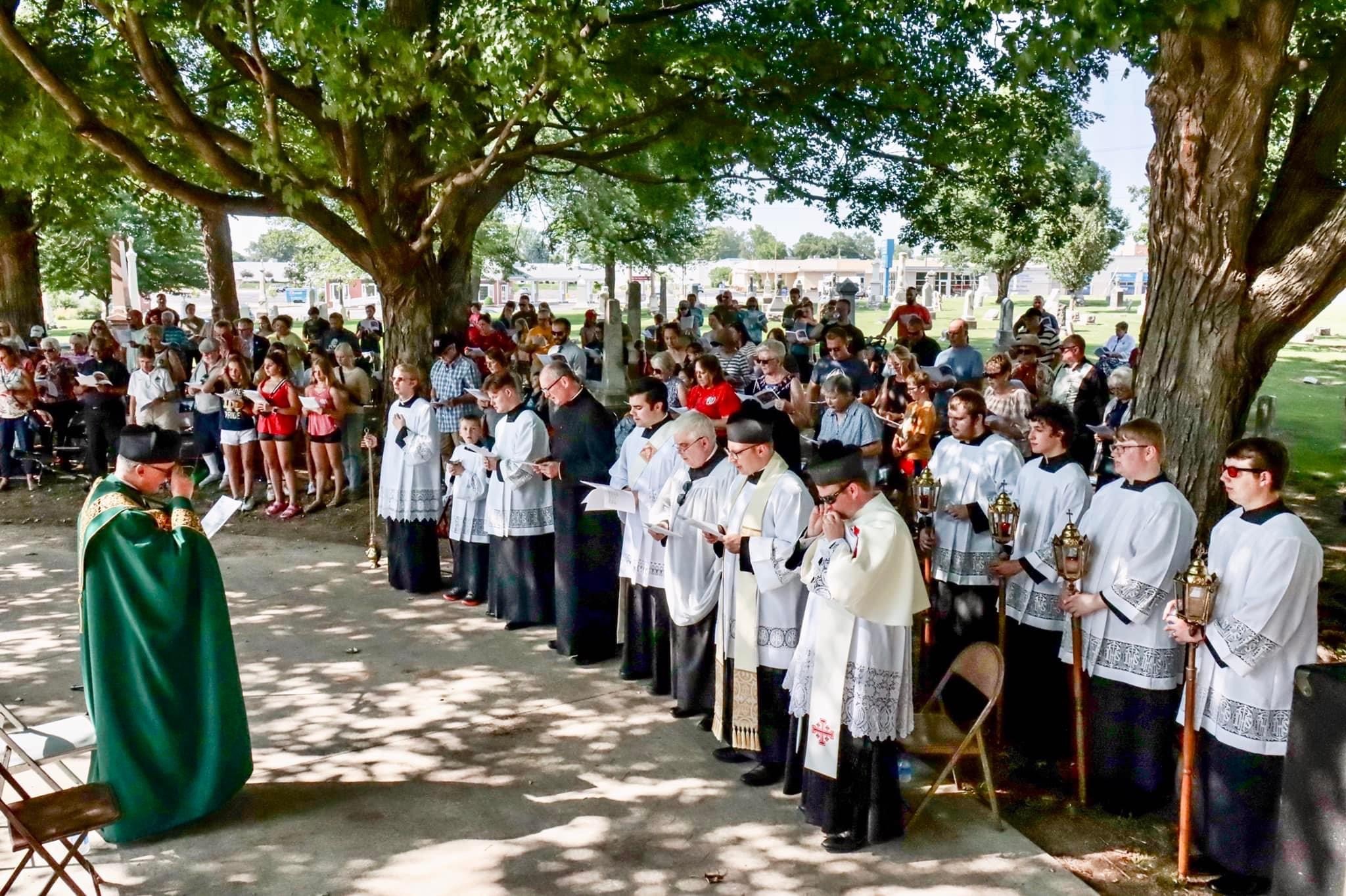
More than 200 pilgrims devoted to the Venerable Servant of God, Father Augustine Tolton, who grew up in Quincy, ministered in Quincy, and is buried in Quincy, commemorated the 126th anniversary of his death with a pilgrimage procession on July 9 in Quincy. Father Tolton is recognized as the first black priest in the United States and the Cause for his beatification and canonization of sainthood is ongoing in Rome. 

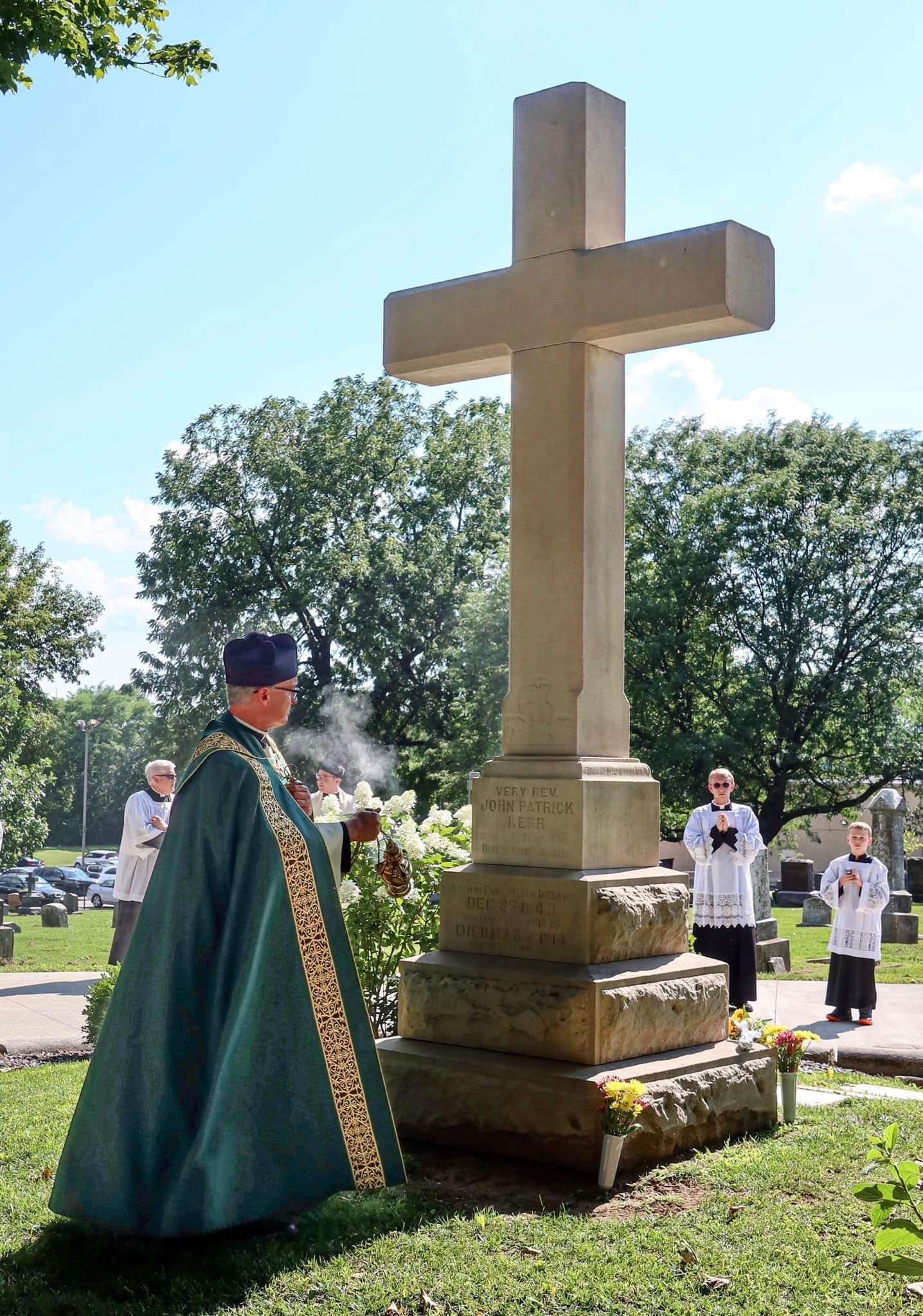
The mile-long pilgrimage procession began at the statue of Father Tolton outside St. Peter Church and concluded at St. Peter’s Catholic Cemetery where Father Tolton is buried. Father Daren Zehnle (pastor of St. Augustine Parish in Ashland), shown in insert photograph incensing Tolton’s grave, presided, while Father Tom Meyer (pastor of Blessed Sacrament Parish in Quincy) preached.

08 06 2023 tolton procession 2Following Evening Prayer, the pilgrims prayed for an end to racism and for more priests through Father Tolton’s intercession, as well as for Father Tolton’s canonization as a saint. The pilgrimage procession concluded with the singing of Holy God, We Praise Thy Name, Father Tolton’s favorite hymn.
“Within the liturgy we often speak of the saints of those who ‘spent themselves’ in the service of God,” Father Zehnle said. “Father Tolton's example shows us how to do the same in humility and love.”

At the end of the gathering, Father Zehnle announced that a eucharistic procession that will be crossing the country from California to Indianapolis as part of the nationwide Eucharistic Revival going on now, will come through Quincy in the summer of 2024. The procession will go by Father Tolton’s grave.

08 06 2023 Fr. Rosa US Citizen‘It's good to be a U.S. citizen’
Father Rosa of Sacred Heart Parish in Effingham now a U.S. citizen
By ANDREW HANSEN
     Editor


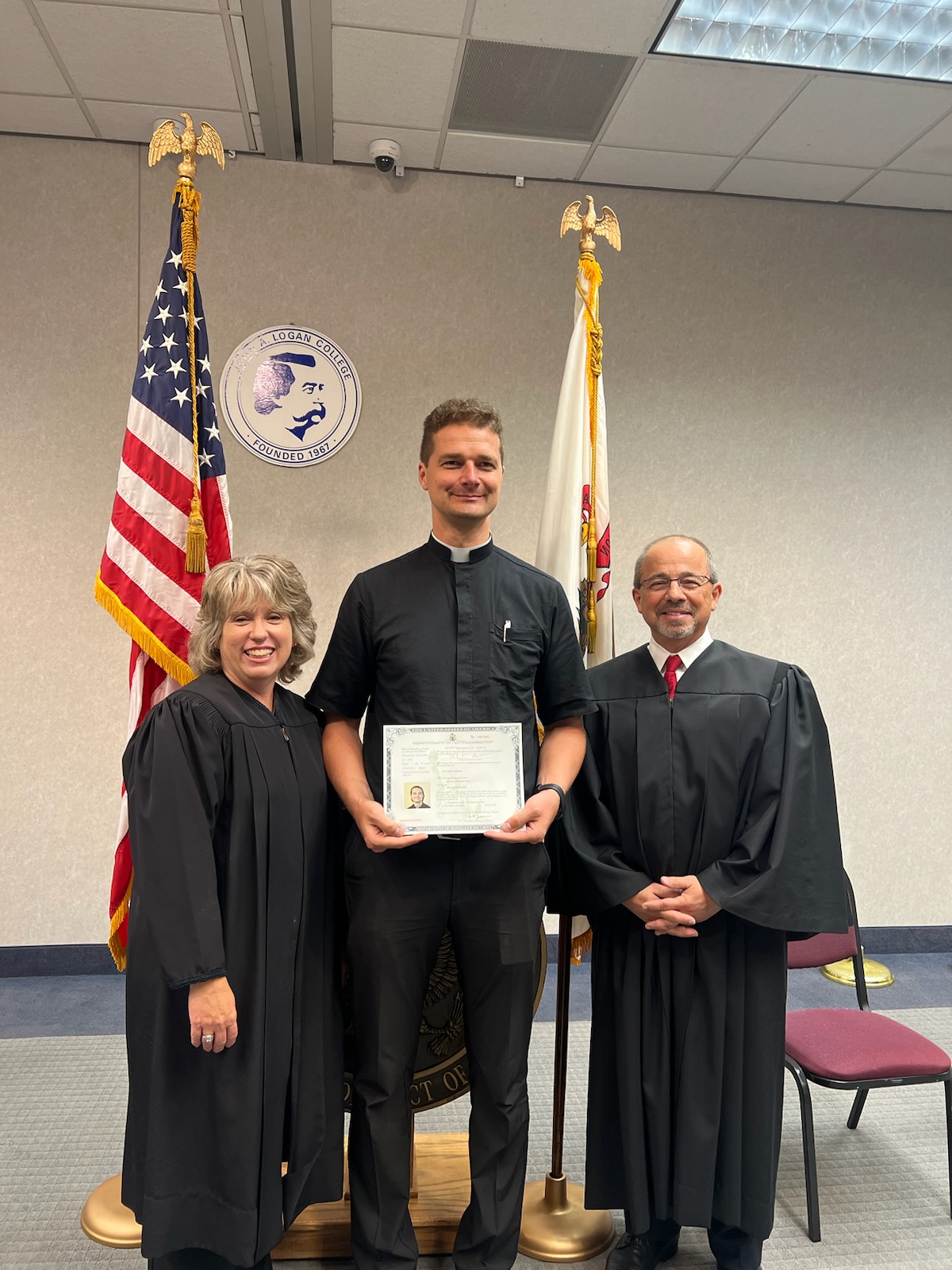
EFFINGHAM — Father Michal Rosa, pastor of Sacred Heart Church in Effingham, officially became a U.S. citizen July 7 during his oath ceremony, the final step of the naturalization process.

“I love it (being a citizen),” Father Rosa said. “Really, I feel like nothing has changed. However, it does feel great knowing that I am a citizen. The feedback from the people is amazing, and I have received so much support. It's good to be a U.S. citizen.” 

A native of Tarnow, Poland, Father Rosa came to the U.S. in 2010, primarily to serve Polish people at St. Ferdinand Church in Chicago. He was there for two years before returning to Poland in 2012. 

It was during that time in Chicago when Father Rosa met Bishop Thomas John Paprocki.

“Long story short, he invited me to come and serve in the Diocese of Springfield,” Father Rosa recalls.

So, Father Rosa came to Effingham in 2014 and started as a parochial vicar at Sacred Heart (Effingham), St. Anthony of Padua (Effingham), and St. Mary (Shumway). In 2017, he became the pastor of Sacred Heart Parish. 

Gaining U.S. citizenship involves several steps and took Father  Rosa about 10 years. This includes a two-year working visa, a one-year process for a green card, living and working in the U.S. for five years while on a green card, and a naturalization process that takes over a year.

To obtain citizenship, you must complete all the steps mentioned above. To obtain a green card, you must have your fingerprints taken and be up to date with vaccinations. After that, you must pass the naturalization interview and test. Father Rosa completed these steps in March and attended his oath ceremony on July 7, which includes him promising to fulfill supporting and defending the U.S. Constitution and the laws of the United States against its enemies.

“I am proud to be a priest in the Diocese of Springfield, and it just felt natural to become a citizen,” Father Rosa said.


When asked what he loves most about America, his response?

“A lot of things. I love the people, especially in Effingham. The food is great, especially steaks. I like the language too, even though I still have a lot to learn.” 

Cutline:

Father Michal Rosa, pastor of Sacred Heart Parish in Effingham and born in Poland, is now a U.S. citizen.

Submitted photo

New documentary features Central Illinois miraculous events and incredible stories of faith

God is Alive, produced by Diocese of Springfield in Illinois, available to watch now for free


By DIANE SCHLINDWEIN

      Managing Editor


In a world full of selfishness, hardships, and despair, more and more people are asking, “God, are you up there?” God is Alive, an original documentary, created and produced by the Diocese of Springfield in Illinois, answers that question in an adventurous, impactful, and local way.

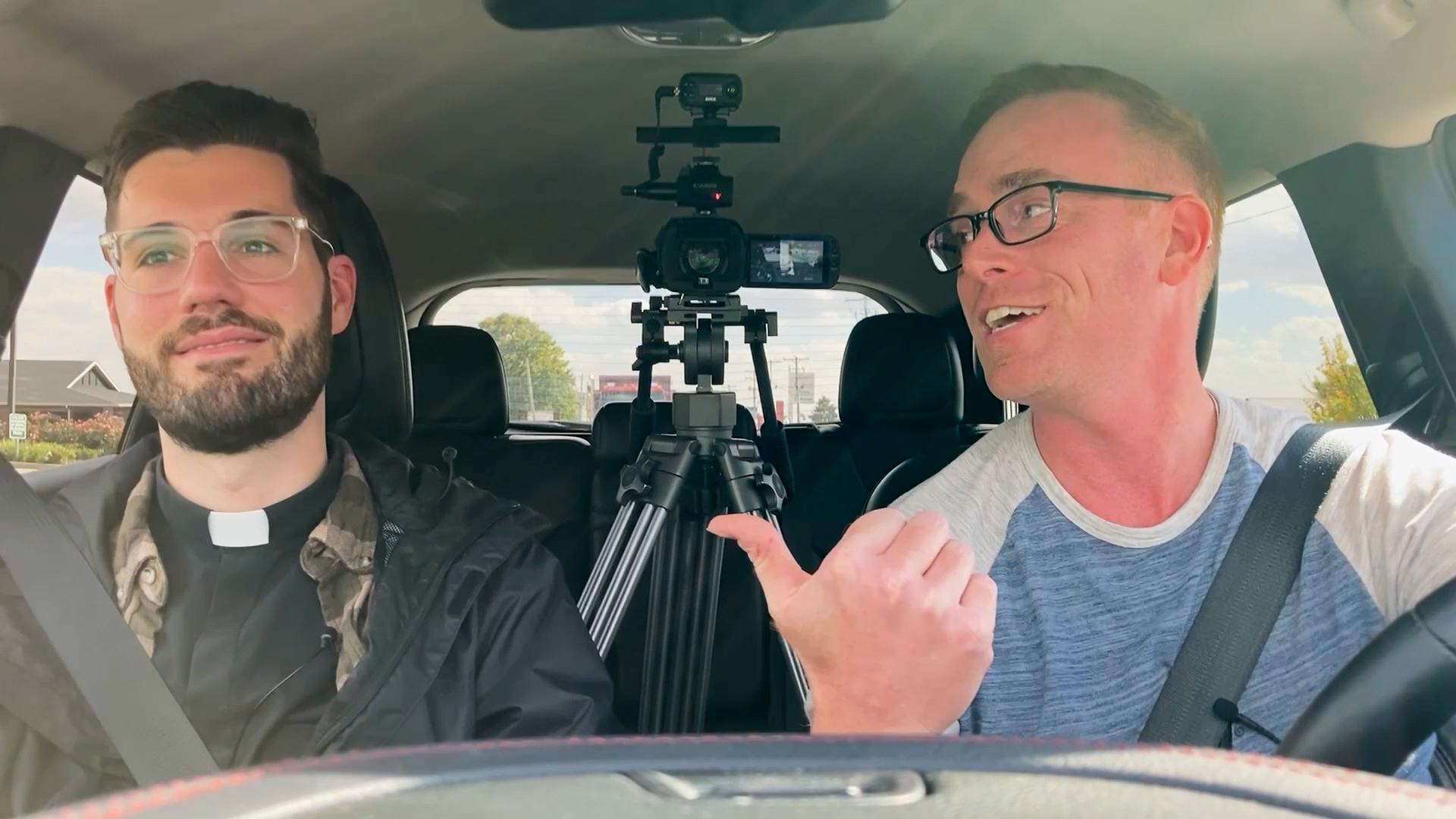
1Father Michael Trummer and Andrew Hansen produced a documentary, God is Alive, using two cameras and cell phones.Andrew Hansen, host of the Catholic podcast Dive Deep, editor of Catholic Times, and former television personality on ABC, NBC, and FOX affiliates in Central Illinois, teams up with Father Michael Trummer, parochial vicar of St. Boniface Parish in Edwardsville and chaplain at Father McGivney Catholic High School in Glen Carbon, in a journey across Central Illinois, as they find five incredible stories of faith/miraculous events in five cities that will show God is alive and help move people to put their faith in action.  

“If you are full of faith, clinging to faith, or have lost hope in faith, we invite you to watch this one-hour documentary that will make you laugh and cry, but most importantly, get you inspired, move you to hope, and fall in love with faith in a whole new way,” Hansen said. “We set out to find ‘jaw-dropping’ stories of miraculous events and people — who despite the walls of pain or struggles closing in — found light and joy in unexpected ways. Miracles still happen, and they are happening in Central Illinois.”

God is Alive takes viewers to Jerseyville, Springfield, Peoria, Quincy, and Decatur and features Hansen and Father Trummer traveling to each city, discussing certain aspects of faith and their own marriage and priestly vocation stories, then a feature on the miraculous event/person of incredible faith, and then the two of them reacting to each story with Father Trummer discussing how each story can help people in their own faith journey. The five stories highlight miraculous events that people will be surprised to learn about and touch on many things people struggle with such as prayer, feeling unforgiveable, and dealing with an incredible hardship.

The five stories include:

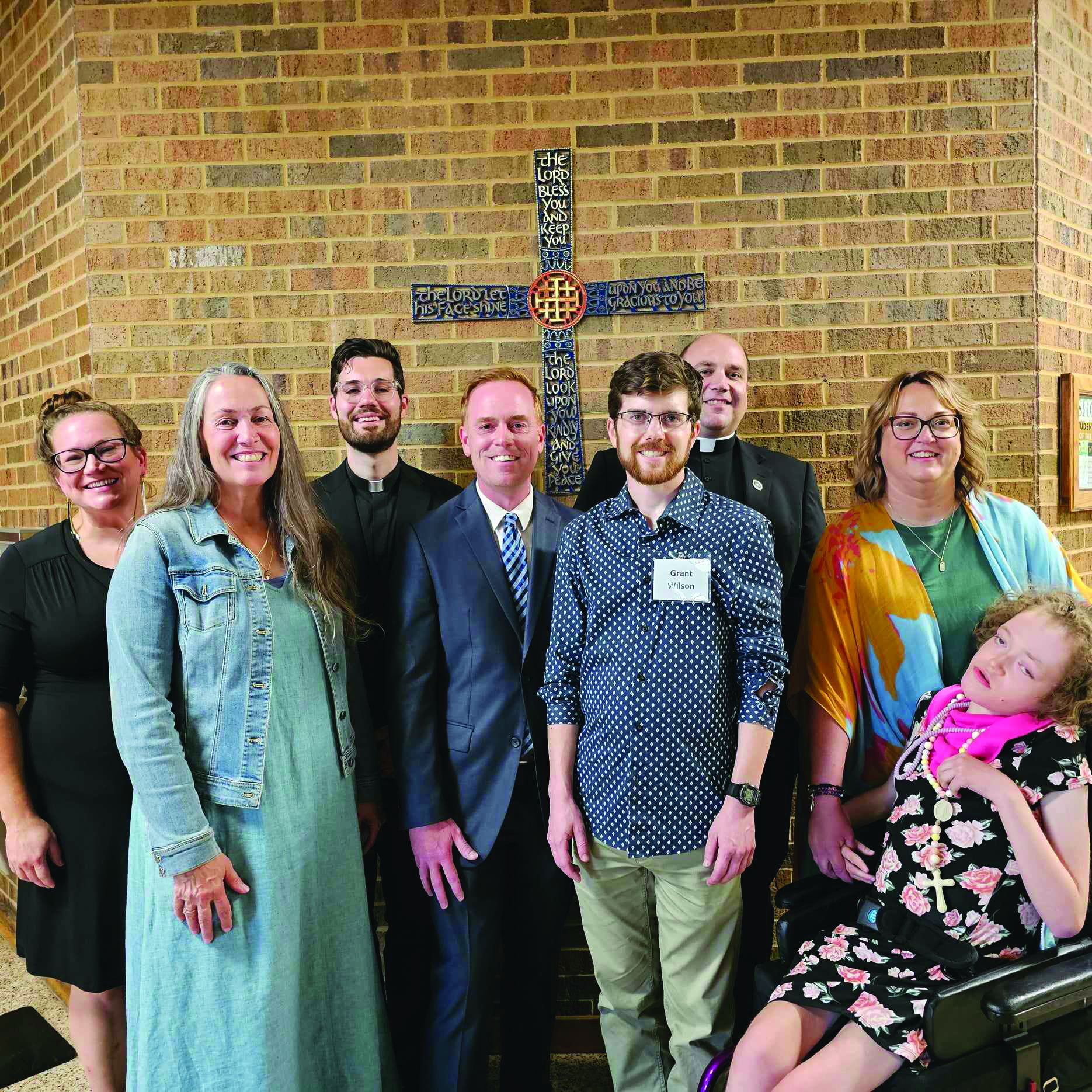
  • 358612639 978660083330037 4896434635185077396 nThe cast of God is Alive: Bonnie Enstrom, Betty Parquette, Father Michael Trummer, Andrew Hansen, Grant Wilson, Father Marty Smith, Sarah Reichert, Hope Reichert.About a year before Father Marty Smith of Jerseyville was set to be ordained a priest, he had serious doubts about becoming a priest, until God answered his prayer in a miraculous way;
  • After having two abortions, Betty Parquette of Springfield felt broken and unforgiveable, that is until a conversation with a priest changed everything for her. That moment not only gave her life new purpose, but sent her on a mission to save lives;
  • Bonnie Engstrom of Washington (near Peoria) faced a new parent’s worst nightmare, delivering a child with no signs of life. Needing a miracle, she turned to one specific person to intercede for her lifeless son, James, hoping God could raise him from the dead;
  • Sara Reichert of rural Adams County (near Quincy) admits she used to equate intelligence with worth. Then, God gave her a daughter, Hope, that changed her entire outlook on life and faith;
  • Grant Wilson’s constant back pain due to having different leg lengths was always a challenge. After doctors advised against surgery, Grant turned to a healing service in Decatur. What happened there made people “gasp.”

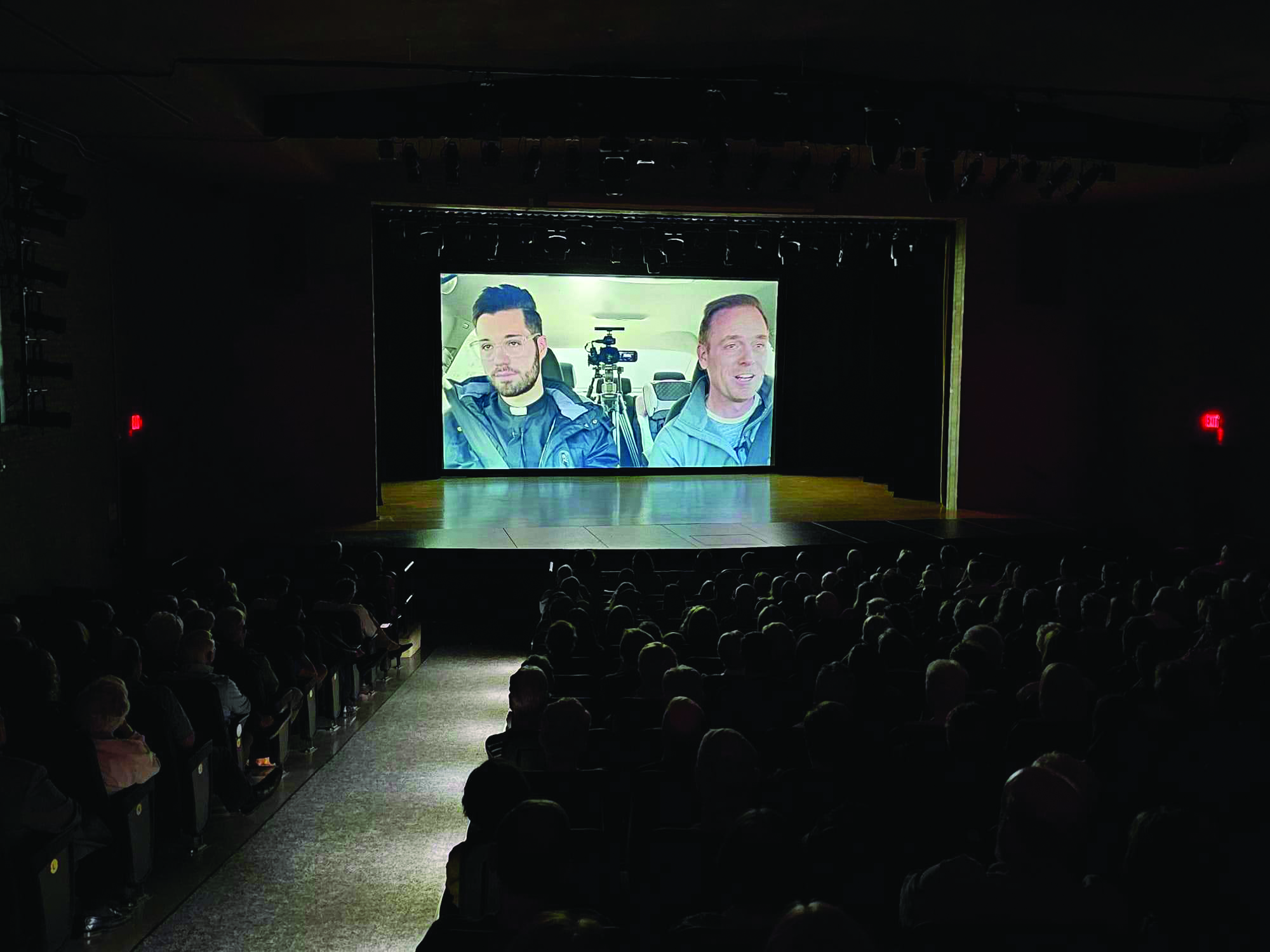
SHG NightMore than 300 people attended the premiere of God is Alive at Sacred Heart-Griffin High School in Springfield on July 8.“Sharing stories and testimonies is a very powerful thing for evangelization and building faith, and it’s encouraging because we are all struggling in some way,” Father Trummer said. “St. Paul says that faith comes from what is heard, so it’s really supposed to be part of our culture to share testimonies of ways God is active in our lives, and we are supposed to share that with other people.”

God is Alive was filmed over a five-month period using two cameras and cell phones, with Hansen and Father Trummer doing all the work.

“We want to take viewers on an authentic and raw journey with us as we travel Central Illinois, so it’s our hope that intimacy makes viewers connect more with the stories,” Hansen said.

“The documentary was awesome, and I encourage people to go see it,” said Bishop Thomas John Paprocki. “It tells some incredible stories of faith, healing, and real miracles, so go watch it.”

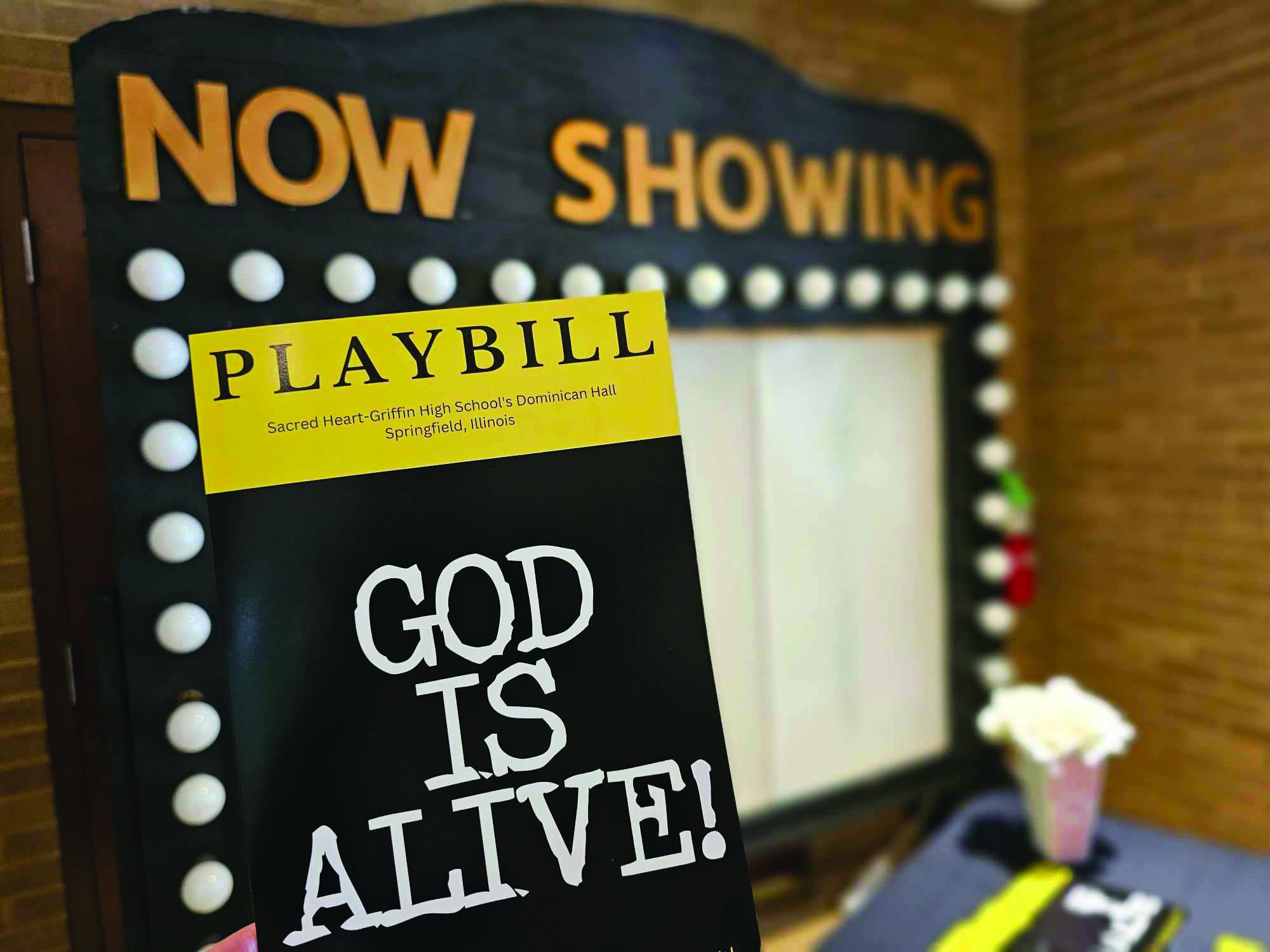
359537943 3549587622031315 4403999708317262928 n 1Shown is the playbill of God is Alive for its premiere showing at Sacred Heart-Griffin High School in Springfield July 8.“The documentary was fantastic,” said Father Christopher Trummer (Father Michael Trummer’s brother), parochial vicar at St. Agnes Parish in Springfield. “I’ve noticed in my own life and in my ministry being with different people that there is really not a shortage of these stories of God touching people and God working in miraculous ways, but there is a shortage of us sharing about it. I just loved it, and I highly recommend it.”

To watch the documentary, click here.

God is Alive Part 2? Calling for incredible stories/miraculous events!

Catholic Times has been asked if there will be a sequel to God is Alive. That depends on if other people in our region have amazing faith or miraculous stories to share. If that’s you or you know someone who does, email Andrew Hansen at .

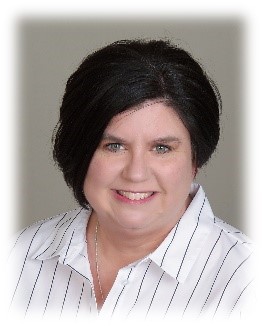
CathySPRINGFIELD DIOCESAN COUNCIL of CATHOLIC WOMEN 95TH Annual Convention, “CHRIST IS ALIVE,” will be held on Wed., Sept. 27, 2023, 8:00 AM - 4:30 PM at Sacred Heart Griffin High School West Campus, 1601 W. Washington, Springfield, IL. Bishop Paprocki will be the main celebrant of the Mass at nearby St. Agnes Church at 11:00 am. The convention will be hosted by the Springfield Deanery Council of Catholic Women.
Cathy Becker is the key-note speaker.

Cathy has a Master of Arts in Pastoral Studies from Catholic Theological Union in Chicago and is a Nationally Certified Lay Ecclesial Minister.

Cathy currently serves as the Director of Faith Formation at St. Agnes Parish in Springfield, IL. At St. Agnes, Cathy has developed a Family Formation Program, Restored Order Sacrament Process and Adult Formation Ministries.

Cathy’s previous ministries include being a sales representative and catechetical resource for the Catholic Publisher RCL Benziger, Pastoral Associate at St. Katharine Drexel Parish, Springfield IL., and Director of Religious Education and Youth Ministry Coordinator in parishes in Rockford, IL. and Greensboro, NC.

Cathy has been a teacher and author for the Center for Ministry Development and Benedictine University in Springfield, IL. and the NFCYM Pathways to Professional Ministry Focus Area.

Cathy has presented retreats, keynotes and workshops on spirituality and ministry leadership in several dioceses across the country including, Belleville, Colorado Springs, Boise and Honolulu.

Cathy resides in Springfield with her husband, Joshua and three daughters.

Cathy Becker will give two presentations: “New Maps for a New Landscape.”

Current statistics reveal that while 58% of Americans go to church only once a year or never, 93% believe in God (or a higher power) and almost 50% pray daily. Throw Covid, politics, generational differences and culture into the equation and it can seem as though the Catholic Church has no hope.

Nevertheless, there is always HOPE to be found in our God of Resurrection.

The landscape has changed for the Church but that has always been true; the only constant in our history is that there is always change.

Cathy will guide the participants in looking at the changing landscape of faith, find the fixed landmarks and chart a new map with new routes. Routes to help us welcome back the prodigals, engage new seekers and find comfort and hope in our new surroundings.

You can register via this link: https://dio.org/wp-content/uploads/2023/07/SDCCW-2023-Convention-Registration-Form.pdf

For, questions, contact Janet Zimmerman at  or 217-494-4743.

Residential home for at-risk pregnant women and their children opening this fall in Effingham
By ANDREW HANSEN
Editor  

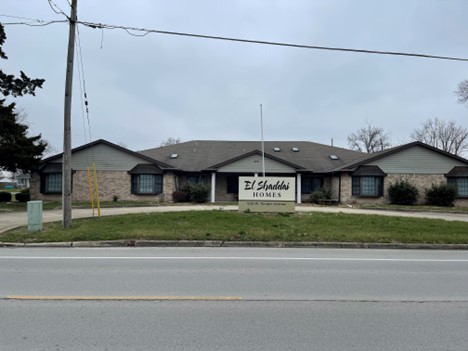
07 23 2023 Effingham residential homeEl Shaddai Homes will open this fall in Effingham.A home for pregnant women who are wanting to keep their baby but are facing hardships, women wanting to put their child up for adoption, women who are homeless with children, and women who are facing an urgent need to leave their current residence for safety reasons will soon have a warm, welcoming, and safe home to turn to in Effingham. This fall, El Shaddai Homes is scheduled to open, which will be able to house 10 women and their children. El Shaddai, which translates to God almighty, was founded by Lisa Krampe. With the help of area businesses, generous donors, and Catholics in Effingham County, the 19-bedroom facility will fill a tremendous need in the area.   

“I felt attracted to the empty for sale building that was once a living facility, after this happening a few times I began to pray about it,” Krampe said. “I felt like God was attracting my attention to this building. After much prayer He began to open my eyes and heart to a maternity home going there. I didn’t know much about a maternity home but began stepping out in faith.”

The home, located at 505 W Temple Ave., just a few minutes from St. Anthony of Padua Parish and Sacred Heart Parish in Effingham, continues to undergo renovations in preparation for its opening. Krampe says most of the supporters of this pro-life effort have come from the Catholic community in Effingham County.  

Once open, residents must attend church every Sunday, attend parenting and money management classes and finish high school or GED classes (if needed). If they are able, they must also have a job. They will also be responsible for their own cooking and cleaning the home. Women will be able to live at the home for the duration of their pregnancy and three months after the baby is born (they can apply for extension after that if they need additional time). If they can afford it, Krampe says they will charge $50 a month so the women have “some responsibility.” 

When asked what the goal of the facility is, Krampe answered that these women and children are “to be introduced to Jesus Christ and transition out into the community to be self-sufficient and live hopeful lives for themselves and their babies in our communities.”

El Shaddai Homes is funded by donations and, once they open, hopefully grants as well. Krampe says she has already received phone calls from pregnancy centers in the area asking if they are open because they have pregnant women who are homeless in need of support, love and care — so the need in the community is already there. Krampe would like area businesses, restaurants, health-care facilities, and pregnancy centers to have brochures of their facility to help spread the word about El Shaddai Homes. To support their mission, go to elshaddaihomes.com.

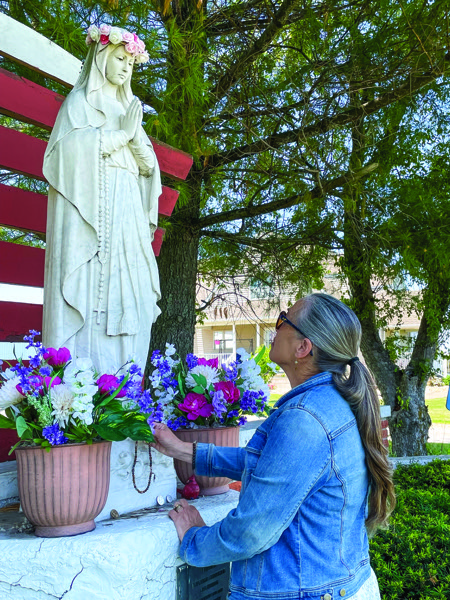
07 23 202320Our20Lady20of20the20Highway20CYMKBetty Parquette of St. Katherine Drexel Parish in Springfield, prays at the statue of Our Lady of the Highways on West Frontage Road in Raymond. Our Lady of the Highways off I-55 provides hope and road to our savior
By BETTY PARQUETTE
Special to Catholic Times 

I remember as if it were yesterday. Looking back, nearly 20 years have gone by as quickly as the signs on the highway. I relaxed in the passenger seat as my husband skillfully maneuvered our SUV through the swift traffic of I-55 toward St. Louis.

I watched the farms and fields fly by as I mindlessly gazed out the window. That's when it happened. That's when I saw her. She stood on a pedestal atop a wall of stone. Majestic, she looked with folded hands, she looked down at me  — at us — at every passerby.

As if being drawn by some unworldly voice calling to me, I found my hand raising gingerly to my forehead, then to my left shoulder, and again to my right. I did it. A Baptist girl made the Sign of the Cross

"What did you just do?" my shocked husband asked. Oh yes, silly me. I thought I had been pretty slick, making this gesture as quietly and subtly as possible. Nothing gets past a State Trooper (my husband) though. What on earth was I thinking? "Well, it can't hurt, right," I thought. True, it certainly doesn't hurt but for someone with my upbringing, it was a fairly scary and poorly executed sleight of hand. 

I remember as if it were yesterday. I made that Sign of the Cross, hoping and praying for the longing in my heart to come to fruition. And now, as I've made that prayer thousands of times over as a convert to Catholicism, I can honestly say my cup, the longing in my heart and soul, is full and spilling over. 

She called me that day, silently bidding from the highway and not just any highway. She called me from the old route, the one less travelled. Route 66 is fondly known as the Mother Road. It was the route for travelers back in the day, a day when families traveled and explored together. It was a dangerous road with many tragedies. And so it was, youth from the area wanted to bless the families who traveled this narrow road.

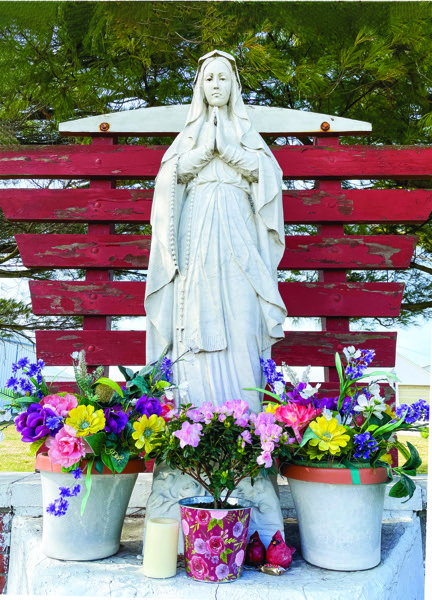
07 23 202320Our20Lady20of20the20Highway20220CYMKThe statue of Our Lady of the Highways has been in place near Raymond for over 60 years. More than 63 years ago, a group of youth scrounged and saved for a beautiful statue of Our Lady who would be there for those who desired to pray for safe passage and ask her intercession. Those dedicated young people collected $1,000 for the Carrera marble statue (that is $10,444.00 in today’s dollar). 

Our Lady of the Highways was dedicated in 1959 and has been interceding for everyone who has asked for her intercession, and as I can attest, for those who haven't yet asked. The youth had May crownings and rosary walks often together. I like to think that back then when I was just a babe, they were praying for me.

Though I've looked for her each time I've passed that way, I never stopped to take time with her to linger a while and pray. That changed a few years ago. She called to us again as we began a long trip out West. 

Though she is weathered from years of storms across the farm fields, she is to me as beautiful as any marble tribute to her in the basilicas of Rome. I see the road she is on running parallel to the faster, wider road and I think of the road less travelled — the road that Jesus tells us we need to be on.

Mary is there. She waits for us on this road. She walked the narrow road of her Son. She longs for us to stop and pray with her. We don't always know the way to go, but she wants to be our guide — and who better than she? 

I travel this road weekly now. It has become hard as I traverse to be with a loved one, my sister in hospice care. And, because I don't know the soul of the one I care so much for, I take her to Our Lady. 

My sister and I have not always been on the same path, in fact the paths have been quite different. One could say we haven't really known each other for quite some time. So, I stop at Our Lady of the Highway and ask for her prayers. I ask her to be with my sister, to guide her on her via dolorosa, her narrow path. 

Over the months, Our Lady has been with us and our relationship has been restored, or better yet, remade. It's a path that is both terrible and joyful, yet I wouldn't want it any other way. As I stop and pray, I see the cars and trucks hurling by. I ask Our Lady to intercede for them, to call them to the road less travelled. Come back. Come back to the narrow road — the Mother Road.

Betty Parquette lives in Springfield and is a parishioner of St. Katherine Drexel Parish in Springfield. She was also featured in the documentary, God is Alive, produced by the Diocese of Springfield in Illinois. Watch the documentary at dio.org/documentary.

About Our Lady of the Highways 

  • Located at 22353 W. Frontage Road, Raymond
  • Project of the Litchfield Deanery Youth beginning in July of 1958
  • Groundbreaking on Feb. 11, 1959, and blessing of the statue on Oct. 25, 1959
  • On the property of the Francis Marten Farm
  • Two parking spots on either side of the Marten Farm drive are part of the original roadway of the old Route 66
  • The Carl and Tim Marten families continue to maintain the statue 
  • Carl was 6 years old when the shrine was dedicated
  • All are welcome to come pray at Our Lady of the Highways 
  • Restoration work has begun, beginning with cleaning the marble. If you are interested in assisting (cost) with the restoration, contact Carl and Marlene Marten at

07 23 2023 Cathedral Alton indulgence 1The diocesan-wide Year of the Eucharist going on now has a heavenly treasure of our Catholic faith attached to it. Bishop Thomas John Paprocki received permission from the Holy See, granting a plenary indulgence to those who make a pilgrimage to the Cathedral of the Immaculate Conception in Springfield or Ss. Peter and Paul Church in Alton (the “Old Cathedral”) from now through Dec. 8. One must also partake in the other usual conditions to receive this indulgence by going to confession, receiving the Eucharist, and saying prayers for the intention of the pope. These acts “may be carried out several days preceding or following the performance of the prescribed works. But it is more fitting that communion and the prayer for the pope’s intentions take place on the day the work is performed” (Handbook of Indulgences, Norms for Indulgences, 23.3). 
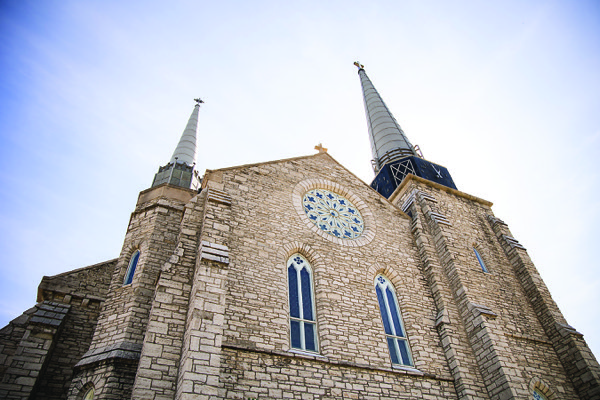
So, what is an indulgence? Many misconceptions remain regarding indulgences, but the Church has never done away with them. Put simply, an indulgence is a gift and grace that remits the temporal punishment due to a sin, which has already been forgiven but not rectified. The Church grants indulgences for specific pious actions (certain prayers and devotions, pilgrimages, carrying out the works of mercy, reading the Scriptures, etc.) to encourage such devout practices as aids to growth in holiness.

The Handbook of Indulgences describes an indulgence further:

The remission in the eyes of God of the temporal punishment due to sins whose culpable element has already been taken away. The Christian faithful who are rightly disposed and observe the definite, prescribed conditions gain this remission through the effective assistance of the Church, which, as the minister of redemption, authoritatively distributes and applies the treasury of the expiatory works of Christ and the saints (Norms for Indulgences, 1).

An indulgence can be either plenary (that is, full) or partial. This plenary indulgence for coming to the Cathedral/Ss. Peter and Paul Church may be offered for one’s own spiritual benefit or may be applied through prayer for the souls of the faithful held in purgatory.

07 23 2023 Cathedral Alton indulgence 2 CYMKThose coming to the Cathedral for the sacraments of confirmation and first holy Communion should be mindful to take advantage of this opportunity for a plenary indulgence. 

But what if you went to confession and received absolution for your sins — how is it that there is still temporal punishment for those sins? St. Augustine provides a helpful answer: “Man is obliged to suffer (in this life) even when his sins are forgiven, although it was the first sin that caused him to fall into this misery. For the penalty is of longer duration than the guilt, lest the guilt should be accounted small, were the penalty also to end with it. It is for this reason —either to make manifest the indebtedness of his misery, or to correct his frailty in this life, or to exercise him in necessary patience — that man is held in this life to the penalty, even when he is no longer held to the guilt unto eternal damnation.” 

The difference between forgiveness of the guilt and paying the penalty can be seen clearly in the sin of stealing. When a person goes to sacramental confession and is absolved of the sin of stealing, there is still an obligation in justice to make restitution, that is, to pay back or restore what was stolen. If the rightful owner also discharges the debt, in a sense that is an indulgence, since the rightful owner is being indulgent in pardoning the debt as well as the guilt. 

Similarly, a person who confesses to having used pornography is forgiven, but the desire to continue to look at pornography does not automatically go away and must be purged through mortification and penance. Thus, we have the pious practice of “offering up” our pains and sufferings in this life as penance for our sins. If that purgation is not accomplished before we die, it must be completed in purgatory or be remitted through various partial indulgences or a plenary indulgence. A plenary indulgence can be acquired only once a day, except for those who are on the point of death. 

So, take advantage of this immense treasure of our faith!

20230701 114449‘It’s all by God’s providence’
Norbertine Fathers open Corpus Christi Priory in Springfield, Evermode Institute to launch Aug. 15
By ANDREW HANSEN
Editor  
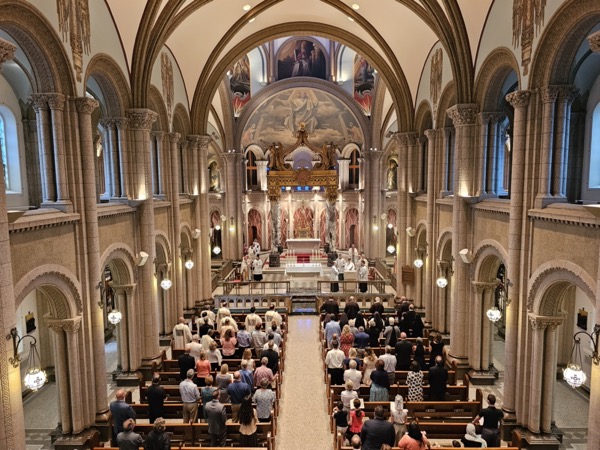
20230701 105309Beautiful music and chanting filled St. Francis of Assisi Church in Springfield during a joy-filled celebration of the holy sacrifice of the Mass on July 1 as Bishop Thomas John Paprocki, priests, deacons, religious, and the lay faithful of our diocese welcomed the newest religious community to our diocese. The Norbertine Fathers of St. Michael’s Abbey have officially established Corpus Christi Priory on Springfield’s northeast side.

“It is a very happy and very exciting day seeing a lot of things come to fruition here, and I think it’s all by God’s providence,” Bishop Paprocki said. “No one sat down and said, ‘Let’s put all these pieces of the puzzle together in one piece.’ They really came from different aspects and different directions as the Hospital Sisters of St. Francis were trying to discern what to do with their community and with this property, and as the Norbertine Fathers of St. Michael’s Abbey in Orange, Calif., were growing and wondering where they could go, where could they expand, and through conversations I had with both of these communities, eventually this came together. So, I really see God’s hand in all of this, the work of the Holy Spirit, and I am very grateful to Almighty God for all these blessings.” (Read a more detailed backstory of how the Norbertine Fathers came to Springfield in Bishop Paprocki’s column on pages 4-5). 
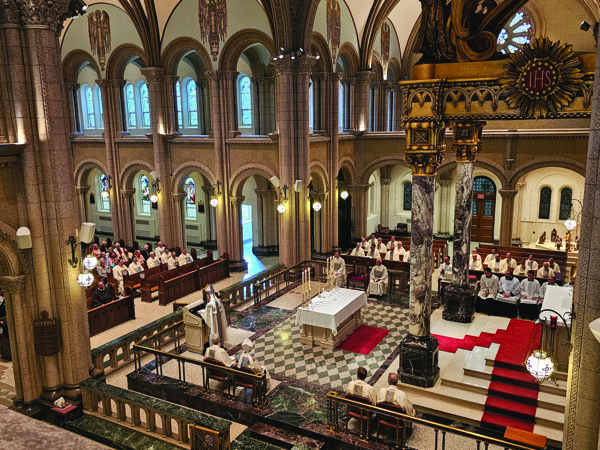
20230701 105512Immersed in the 900-year tradition of their order, the Norbertine Fathers live a common life of liturgical prayer and care for souls. Their life at Corpus Christi Priory is organized according to prayer of the Church: the Holy Sacrifice of the Mass and the Liturgy of the Hours. “Seven times a day I praise You,” says the Psalmist, and by chanting together the prayers of the Divine Office, Norbertine canons “continually offer up a sacrifice of praise to God.” 

You can pray with the Norbertines every day and attend Mass at St. Francis of Assisi Church (4867 Laverna Road in Springfield). Confessions are also offered three days a week (see the schedule on page XX).

“We are very excited to be here and begin our new life and ministry in Springfield at the new Corpus Christi Priory,” said Father Augustine Puchner, O.Praem., the prior of Corpus Christi Priory. “All of this is part of God’s providence. The response by the community to the inspiration of the Holy Spirit, the bishop’s invitation, it was months in the planning and my visits in the past months have all come to this day (opening Mass on July 1), and it’s a very joyful and happy day.
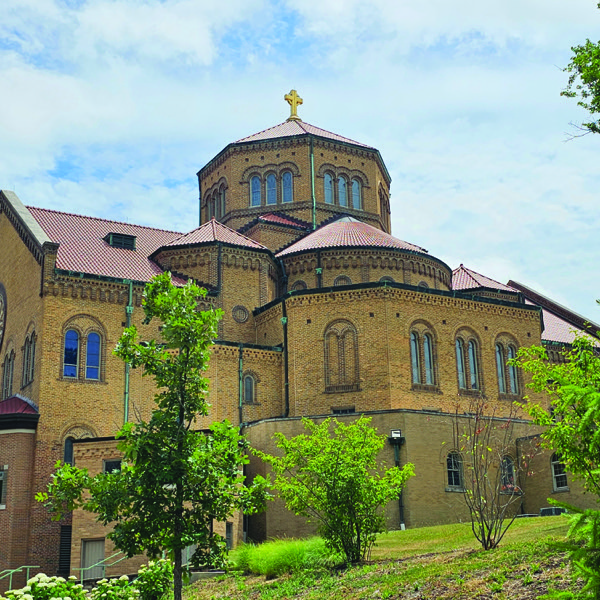
20230701 122333“We will do our best to be the Church at her best,” Father Puchner continued. “That is sort of our mission statement, to be the Church at her best. Our sacred worship with reverence, dignity, and beauty, in our ministry to teach and preach the authentic Catholic faith, and for our community life to be authentic religious, to live a joyful life, that’s really our mission and ministry.”

The Norbertine Fathers have also established the Evermode Institute at Corpus Christi Priory, which will serve Catholic teachers, administrators, and formators in our diocese and beyond, offering a complete curriculum in the fundamentals of the Catholic faith that is confident in its Catholicism and clear in its approach. 

“Our official launch date is Our Lady’s Assumption, Aug. 15, that’s when our learning management platform will be ready to go,” said Father Ambrose Criste, O.Pream, director of the Evermode Institute. “We already have plenty of people all set to be enrolled. We’ve already undertaken a couple of intense periods of filming to produce the online video content, the first-year curriculum, two semesters. Editing is happening right now. All the wheels are turning.”

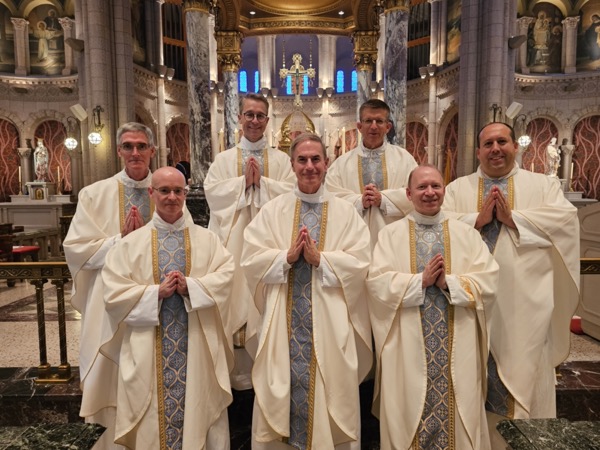
The seven priests who call Corpus Christi Priory home are: Fathers Augustine Puchner, O.Praem., prior, Stephen Boyle, O.Praem., Gregory Dick, O.Praem., Godfrey Bushmaker, O.Praem., Benedict Solomon, O.Praem., Ambrose Criste, O.Praem, and Anselm Rodriguez, O.Praem. 
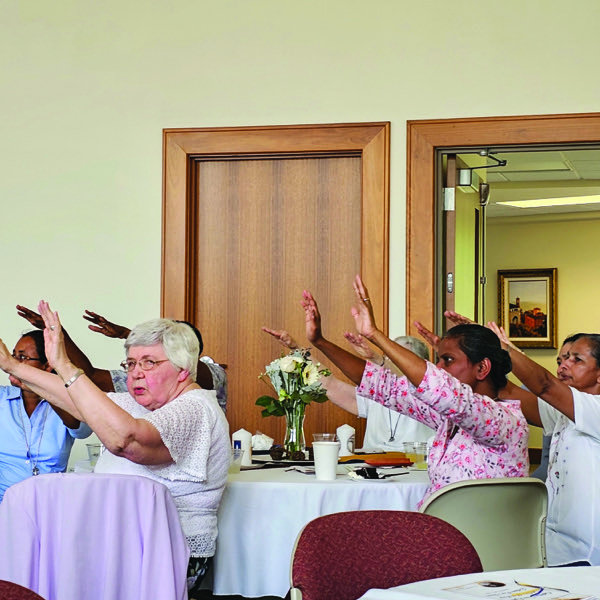
20230701 125240Many in Central Illinois are familiar with the buildings and grounds as Corpus Christi Priory is the former site of the Chiara Center, operated by the Hospital Sisters of St. Francis. The Hospital Sisters continue to live in the convent on the property. 

“It’s the end of the era on part of us, but it’s the beginning of something new, and we are very excited about it,” said Sister Janice Schneider, OSF. “We’re excited to work together. We are very happy they will be our chaplains (Norbertine Fathers), and we will get to celebrate with them, we will get to know them both personally and professionally because we will include them in some of our community activities. We hope they feel as at home with us as we do with them.”


Want to visit? Mass, sacraments, and prayer at St. Francis of Assisi Church at Corpus Christi Priory 

Monday - Saturday:

  • 5:45 a.m. - Office of Matins (Readings) and Lauds (Morning Prayer)
  • 7:00 a.m. - Holy Mass
  • 8:45 a.m. - Terce (Midmorning Prayer)
  • 12:00 p.m. - Sext (Midday Prayer)
  • 4:20 p.m. - None (Midafternoon Prayer)
  • 4:30 p.m. - Rosary
  • 5:00 p.m. - Vespers (Evening Prayer)
  • 7:30 p.m. - Exposition of the Blessed Sacrament and silent adoration [and confessions on Monday, Wednesday, and Friday until 8:30 p.m.] 
  • 8:20 p.m. - Benediction of the Blessed Sacrament
  • 8:30 p.m. - Compline (Night Prayer)

Sunday:

  • 6:45 a.m. - Matins (Office of Readings) and Lauds (Morning Prayer)
  • 8:30 a.m. - Terce (Midmorning Prayer)
  • 9:00 a.m. - Holy Mass
  • 12:00 p.m. - Sext (Midday Prayer)
  • 4:20 p.m. - None (Midafternoon Prayer)
  • 4:30 p.m. - Rosary
  • 5:00 p.m. - Vespers (Evening Prayer)
  • 7:30 p.m. - Exposition of the Blessed Sacrament and silent adoration  
  • 8:20 p.m. - Benediction of the Blessed Sacrament
  • 8:30 p.m. - Compline (Night Prayer)

Confessions:

Confessions will take place in the church confessionals Monday, Wednesday, and Friday from 7:30 to 8:30 p.m. All the Norbertine Fathers’ prayers will be open to the public. The church opens at 5:30 a.m. and closes at 9 p.m.


Like and follow the Norbertine Fathers on social media: Search, “Corpus Christi Priory” on Facebook.

Tuesday, 18 July 2023 07:44

Hey, Father! Is organ donation OK?

I have long thought organ donation was a loving and humane service to those in medical need. I have my desire to be an organ donor on my current license. Lately, I’ve been learning that organs cannot be extracted from anyone unless they are still alive. Also, declaring someone brain dead is a slippery slope because brain dead individuals might recover. This could mean killing one person to save another. What is the Catholic Church’s position on organ donation? Is it ethical according to Church teaching?

Nancy in Springfield


The Church not only regards organ donation as ethical but calls it “a noble and meritorious act and is to be encouraged as an expression of generous solidarity” (Catechism of the Catholic Church, n. 2296). In the year 2000, Pope St. John Paul II gave an address in which he called organ donation “a genuine act of love” (Address to the 18th International Congress of the Transplantation Society). In your question, however, you raise legitimate concerns about the circumstances of organ donation which can indeed affect its moral legitimacy. Here is a summary of a few important criteria that should help to clarify the matter.

First, there are two basic kinds of organ donation: living donation and cadaver donation. In a living donation, as the name suggests, the donor is alive and donates some non-essential organ or portion of tissue. Common examples of living organ donations are kidneys and segments of the liver. Blood and bone marrow are also living tissue donations. The Church always approves and commends these living donations, provided the donor understands the procedure and freely consents to it. Cadaver donations are given after death and usually involve vital organs such as the heart, lungs, and liver. These donations are morally permissible provided that two criteria are met: 1) the patient or family must give free and informed consent to the organ procurement; 2) the patient must be deceased when vital organs are removed.

The second criterion of death is usually the debated point. When exactly should a person be declared dead? This question is especially relevant in the case of organ donation, as most organs can only be preserved outside of the body for a period of hours. The primary biological indicators used to determine death are cardiac death and brain death. Brain death has been the dominant indicator used in modern medicine for decades. Brain death is defined as the irreversible and complete loss of function in the whole brain. Using brain death to define death can lead to situations in which a person appears to be “alive” by other criteria, for example, continued heart and circulatory function with the use of a ventilator. In most cases, however, this is an artificially produced state of prolonged organ function that only resembles being “alive” in the proper sense of the word. There are difficult cases in which the recovery of brain function, while statistically very unlikely, is theoretically possible. Such cases are very technical and often debated.

The Church does not claim the competency to make judgements about complex biological and neurological criteria. In the same address cited above, Pope St. John Paul II said that “the Church does not make technical decisions” regarding such criteria. The human person is not reducible to material processes and death likewise is not merely a physical event but the disintegration of body and soul. Thus, no one can determine the precise moment of death, scientifically or spiritually. The Church’s concern is to safeguard human dignity at every stage of life and condition, including during sickness and the dying process. Therefore, all that is needed for vital organ donation to proceed legitimately is “moral certainty” that the person is deceased based on the best biological indicators available. Moral certainty is not perfect or mathematical, but it is sufficient and necessary to make reasonable choices. Once this certainty is obtained —and again, with informed consent provided — organs may be ethically procured.

To clarify, one may never directly end the life of one person (the donor) in order to extend or improve the life of another (the recipient). However, the use of artificial life support, which keeps blood oxygenated and circulating even after brain death, is not morally obligatory. Therefore, one may remove this life support and allow death to occur, at which point organs can be removed. Also, one may delay the removal of such organ-sustaining life support so that the organ recipient can receive the organ or organs as quickly as possible. Allowing death to occur by the removal of extraordinary (non-obligatory) means of care is not killing the person, even though death may follow the removal of this care almost immediately.

Catholics should prayerfully consider organ donation as “a genuine act of love.”  Many resources are available for those who have further questions. Because we as human beings are a unity of body and soul, organ donation “is not just a matter of giving away something that belongs to us but of giving something of ourselves” (John Paul II, ibid). In a way, Christ Himself gave us a beautiful example of this by giving us His own Body and Blood in the Eucharist. And in the end, we have His promise of bodily resurrection, which will restore and glorify all that was lost.

Father Christopher Trummer, S.T.L, is parochial vicar at St. Agnes Parish in Springfield, associate delegate for Health Care Professionals, associate chaplain of the Springfield Chapter of the Catholic Physicians Guild/Catholic Medical Association and has a license in Sacred Theology in Moral Theology at the Pontifical University of the Holy Cross in Rome, Italy. 

Page 3 of 27