
Through prayer and sacrifice, Charleston parish preserves 'patrimony of faith and art'
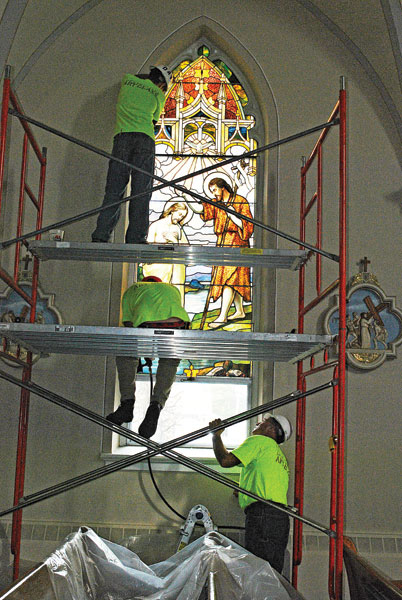 CHARLESTON — A "Legacy of Light for generations to come," the stained glass windows in St. Charles Borromeo Church in Charleston are cleaned, restored and installed once again in the church where they have stood for 95 years.
On Jan. 8, the feast of the Epiphany of the Lord, St. Charles parishioners gathered in the church nave with Father John Titus, pastor, to celebrate and ask God's blessing on their newly renovated stained glass windows.
"Your prayer and sacrifice through our 'Legacy of Light' campaign and the skilled artisans of Jacksonville Art Glass have completed the restoration," Father Titus said. "As the Holy Family received the treasures of the three kings, so we have received the patrimony of faith and art passed down from previous generations as well. And as all of God's gifts are given to be shared, we are now passing on our renewed and repaired windows to those who will follow us."
When the church was built in 1898, its windows are believed to have been "simply glass," since there is no mention of color or texture in church histories. A devastating tornado on May 26, 1917, the third deadliest in Illinois history, caused a huge loss of lives and property in Coles County, including major damage to St. Charles Church.
But less than seven months later, when a fully repaired and decorated church was completed just in time for Christmas, stained glass windows were installed in the church. They would become treasured heirlooms to parishioners.
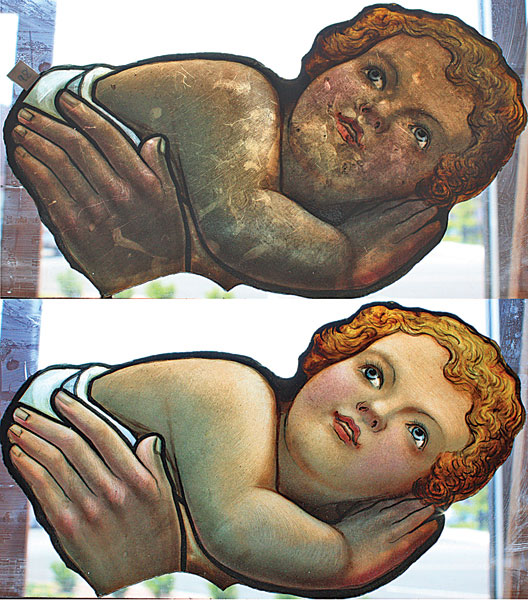
Over the years weather and age caused the windows to sustain damages — cracks, buckling and bowing were jeopardizing the integrity of the windows. Dirt and grime darkened their colors.
 "Legacy of Light for generations to come," a campaign to raise funds to pay for the restoration project was launched in 2011, and Jacksonville Art Glass was hired to do the project.
"The windows are from Jacoby Art Glass, out of St. Louis, which is no longer in business," said John Krol, owner of Jacksonville Art Glass. "The painting would have been done in Germany, which produced some of the finest painting at the time.
"Jacoby Art Glass was very unique. They painted the hands, faces and feet (of figures) and hired other studios to paint the garments. They did the windows in layers of glass, using very thin lead in-between. Then they would plate over it, using a slightly obscure glass, which distorts and softens it, to make it look like it was painted."
Over time lead oxidizes and makes the glass very weak, Krol said..
"You can't just lay it flat, because you have layers underneath. We had to carefully cut out pieces using layers of plasterboard, then rub the top layer, and then remove it. We numbered each piece we cut out. There were over 500 panels, and some of them were quite intricate."
The numbered pieces were cleaned, then laid back on a mat so workers could start leading them back together.
"Glass that is not painted will clean up like it is brand new," said Krol. "Painted glass, because the studio did it so well, showed no deterioration as well." Krol said.
In most cases, if it is an art piece that needs a repair, "a very thin patch in it will work. We try to keep all the art the same," said Krol.
Three people at Jacksonville Art Glass worked continuously on the glass from Charleston. "They are all our craftsmen," Krol said.