
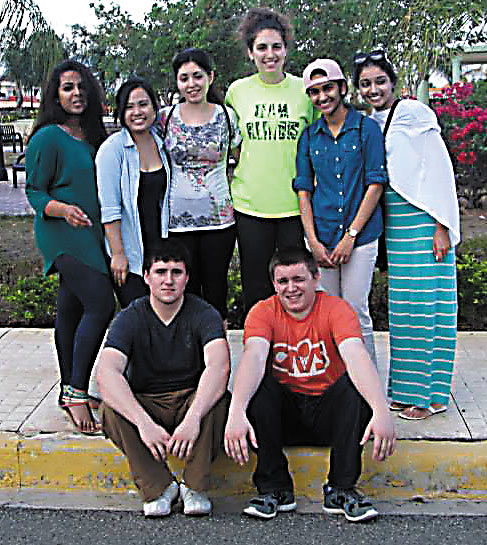
 “FUMSIL is a Catholic Christian nonprofit organization along the border,” explained McConnell, who is a senior at Benedictine and a parishioner at St. Agnes Parish in Springfield. “It is composed of men and women committed to community development that runs a wide variety of project and programs.”
Those programs include mobile medical clinics that serve over 20,000 people; reforestation projects, education initiatives, an animal raising program, a children’s nutrition program, dental care; a women’s health clinic and international volunteer programs, among others.
“We left on March 15 and returned the following weekend,” said Mapes, a junior at the university. “We went as a part of the Campus Ministries from Benedictine University. We went to a Haitian market that was close to the border and we lived in a house owned by the FUMSIL organization.”
Le said she was accustomed to the climate, but found the travel conditions and language barrier to be special challenges. “We spent a week in a tropical climate country like Vietnam, which is my home country,” said Le. The group flew from O’Hare International in Chicago to JFK International in New York and then to Santo Domingo.
“FUMSIL is located in El Llano, Elias Pina, so we had to drive for four hours from the capital to get there,” said Le, who is also a junior. “At first it was hard for me to communicate in Spanish. Then I and the local people started to open the conversation with a smile.”
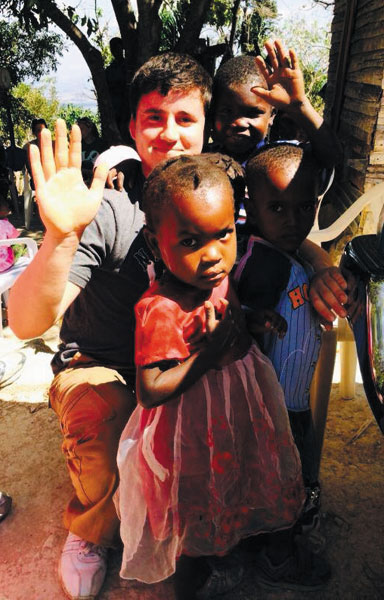 Le said the program for the week “was very detailed.” “The first day we went to a reforesting program. The second and the fourth, we went to repaint and reorganized their old school … ,” she said. “FUMSIL wants to open that school as a nutrition center for children (so that they) can stay and eat during the daytime when their parents go to work and nobody takes care of them.
“The third day we went to the border of Haiti and the Dominican Republic for the health clinic,” she said. “The clinic day will bring nutrition and protein powder to kids who are underweight, once a month. It took a long time to (get to) the place we went to help, but we all made it.” People also receive vitamins, check-ups and other health-related help at the clinics, McConnell added.
“You could tell how grateful the people were for your help,” said Mapes, who belongs to First Christian Church of Springfield and has also taken eight other disaster relief mission trips in the United States. “That made me feel as if I was doing something to better their lives.”
“I hope they know they are not alone,” said Le. “I tried to help as much as possible because I kept thinking, ‘We are doing it today, but who is going to be doing it tomorrow?’ Volunteering and helping others is my goal in life. This mission trip (helped me) set a bigger goal in my life — that I can do more than that to help other people.”
“I think everyone should take a trip like this because it will truly help you see how much you have and how little others have,” Mapes said. “I would say in order to prepare you need to be willing to live way below your current level. Certain things we take for granted, such as plumbing, are not available in the Dominican Republic.”
McConnell agreed. “When going on mission trips, mission volunteers oftentimes live in the same conditions as those they are helping. This gives them a better understanding of the people they are helping and makes them really appreciate what they have back home,” he said. “I would recommend mission trips because they are rewarding and educational at the same time. I plan to go on other mission trips in the next 10 years. I would like to go on a mission trip to Kenya or India.”