
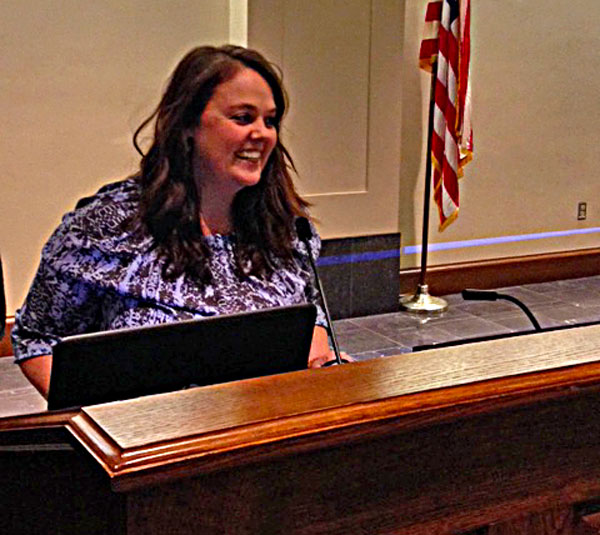
 Three women who reside in the Diocese of Springfield in Illinois are being trained to instruct in the Creighton Model FertilityCare™ System (CrMS) of Natural Family Planning (NFP), according to Carlos Tejeda, director of The Office for Marriage and Family Life. The future fertility care practitioners (FCPs) are Sue Deakos in Edwardsville, Kate Pruemer in Effingham and Melinda Osborn in Springfield.
Co-developed by Dr. Thomas Hilgers, founder and director of the Pope Paul VI Institute for the Study of Human Reproduction, the Creighton Model has come about after 30 years of research. It helps a woman to become familiar with her monthly cycles and to use this information for the maintenance of her health. Additionally, couples can use this knowledge to plan their family and build their future as a couple.
CrMS relies upon the standardized observations of charting of biological markers that are essential to a woman's health and fertility. The "biomarkers" tell the couple when they are naturally fertile or infertile — so they can either achieve or avoid pregnancy. They also telegraph abnormalities in a woman's health.
"The Creighton Model is very standardized in all aspects, including its teaching of the practitioners," says Deakos, who is a FertilityCare practitioner intern and has completed the first of two classes and is currently in the first of two practicums. "For example, following both classes and both practicums, I will sit for the certification exam. Then I will be a fully certified fertility care practitioner. We have a rigorous year of training and work closely with a supervisor to ensure we are learning to teach well."
CrMS is also the basis for the new women's health science called NaProTECHNOLOGY (natural procreative technology). It is a standardized modification of the Billings Ovulation Method. Women of any reproductive age — for example women with regular or irregular cycles, who are breastfeeding, or are infertile — can effectively use the system. In addition, some medical conditions can be evaluated, monitored and managed through the system's use.
"The diocese supports individuals or couples desiring to become instructors in any method of NFP by sharing their training costs with them," says Tejeda. "We do this because a trained NFP instructor can literally change the lives of hundreds of people during the course of their ministry. It is a tremendous return on our investment."
The Marriage and Family Life Office runs PreCana classes for those who are about to enter into the sacrament of marriage. "We don't go into the specifics of any one method of NFP at PreCana," Tejeda says. "We do incorporate testimonies regarding the role NFP has played in various people's lives. Any engaged couple can learn any method of NFP that they choose as part of their PreCana registration cost.
"We also offer scholarships to anyone interested in learning NFP after PreCana," he says. "With online on-demand NFP classes available there are really no 'external' hurdles to learning NFP, only ignorance that is exists or unfounded fear that it won't fit one's needs regarding conceiving or postponing the conception of a child."
Tejeda says that NaProTECHNOLOGY is a "tremendous blessing and a very real example of Christian laity sanctifying the world by their work and expertise." He notes that Hilgers began his life's work in 1968 in direct response to Blessed Pope Paul VI's words in Humanae Vitae.
"Natural Family Planning is important for couples to learn because it allows them to have sufficient data when they prayerfully discern God's will regarding family size," says Tejeda. "The Creighton Model of NFP is important to humanity — not just Catholic Christians — because it addresses the need for a rigorous and proven means of achieving pregnancy in the midst of reproductive difficulties without ever separating the two dimensions of the marital act: love and live or babies and bonding."
Deakos says she believes NaProTECHNOLOGY can change people's lives. "As a FertilityCare Practitioner Intern, I am eager to help women and couples not only grow in knowledge and appreciation of their fertility but also use that information to seek real women's healthcare available through NaProTECHNOLOGY.
"To understand one's body and use that knowledge is empowering," Deakos says. "How lucky I am to walk this journey with women and couples."
Osborn says she was a referred to the CrMS by a friend who had suffered with female reproductive system difficulties. Osborn says she was interested in CrMS because she "needed to learn how to space pregnancies." She and her husband "have used CrMS according to our intentions; avoiding pregnancy 100 percent of the time we chose to and conceived on the first cycle of trying with all three children."
"When I wanted advice about my charting I had to call Peoria or go to St. Louis," Osborn says. "My FertilityCare practitioner suggested that I could become one as well and bring CrMS to Springfield. I initially dismissed the idea because when I returned to work I wanted to use my master's degree in professional counseling. As I considered becoming a FCP and prayed, I became more aware of the natural fit between this method of NFP and marriage and family counseling. And so I moved forward and committed to the year-long training program to bring true reproductive health that is cooperative with a woman's menstrual and fertility cycle to the Springfield area."
Osborn, who is establishing The Salve Regina Center for private counseling and FertilityCare instruction, says, "I have personally seen how CrMS has enriched my marriage and has built a deeper respect for our total selves as we remain open to life and communicate effectively.
"I have witnessed hope, healing and relief brought forth with CrMS to women who had reproductive conditions, multiple miscarriages, or were considered infertile," she says. "Experiencing this myself, how could I not share the good news?"
For more information on the Creighton Model FertilityCare System or to contact one of the FertilityCare practitioners-in-training, call Carlos Tejeda at (217) 698-8500, ext. 132 or email . For more information of The Salve Regina Center, call (217) 717-4406, email or go to www.SalveReginaCenter.com.