
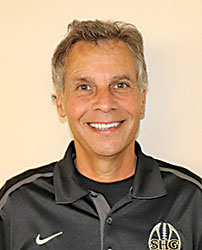
 The day after the shooting at Marjory Stoneman Douglas High School in Parkland, Fla., Dr. Bill Moredock, principal of Little Flower School in Springfield, made a point to visit with his middle school students. As both a school leader and clinical psychologist, it was important that he understood how students were feeling and just how much they knew about the tragic event.
It turns out they knew a lot. “I visited the sixth-, seventh-, and eighth-grade classes and just asked them what they had learned about the Florida shooting and how did they feel about it,” he says. “It was universally true that yes, they had heard the news. A week or so later I talked to the fourth-graders and they were all aware of it. So yes, this shooting has resonated with the student population at Little Flower and it would be my guess also in other Catholic grade schools.”
In this time of instant news and abundant social media sources, Moredock wasn’t surprised. “They had different sources — some heard it from word of mouth or on the national news and others heard it on social media. Shockingly, several had seen actual footage of the carnage on Snapchat and Instagram,” he says. “Our children are exposed to more than we know sometimes.
“So when I did go to the classrooms the reactions ranged from anxiety and fear to a less intensive reaction. Some students were alarmed and some seemed kind of used to it. In general the students were reverent about it, certainly sad. There was also gratitude that we are safe here and we thought about how much the lives of our families mean to us and how much the lives of our classmates mean to us.”
Moredock says he, like so many others, worries about the sheer amount of violent news children are exposed to every day. He also wonders if, tragically, “The bar has been lowered on human life, in some ways.”
Obviously, a third-grader doesn’t need to see the same news coverage as a student in high school, he continues. “They get exposed to things at a very young age but also a steady diet of it. Violence is highlighted by our national media. Nowadays with Snapchat, Instagram and Facebook, kids get that steady diet of news — and with any spin on it that anybody decides to take. Now they show faces and give descriptions. So, much of the innocence is gone.”
So, when horrifying events happen, how should parents talk to their children? Moredock says parents should take the opportunity to find out what kids know, reassure them that they are safe in schools, and to let them know that it is OK to ask questions and to ask for reassurance. “Parents think they know what their kids are thinking, but often they don’t,” Moredock notes. When they see tragic news, does it make them fearful or anxious — or are they becoming somewhat jaded to yet another school shooting?
It is crucial that parents know what their kids are seeing — and just how they get that plethora of information. What disturbs Moredock is how easily students could use their phones and social media to get raw footage of the shooting. “The 13-year-old could see what happened in that school more so than you and I. It propagates and it’s shared — it’s like wild fire. If you want to, you can get YouTube and get footage of almost anything. Some students had direct access to video tape of the smoke (filling the school). There was even footage of the perpetrator walking down the hall.
“Are they really equipped to deal with that?” he asks. “They might think they are. But really, how frightening would that be for a child?” In short, parents should check out their children’s social media access and then talk to them about what they’ve seen.
Now more than ever, it is important for students and faculty to feel safe in a school building, Moredock explains. “We’ve always done safety drills and intruder drills and we have systems in place to make our students feel safe. We’ve discussed as a faculty what to do to keep our kids safe. We have the lock systems that everybody uses in Catholic schools. Our kids feel safe at school. We know that because we’ve asked them. But we are always looking to improve.”
In fact, over the past few weeks, Moredock has also been welcoming Springfield Police officers into his building. “Now we routinely have walk-throughs. We welcome them and the kids are getting used to it, although at first I think they were a little alarmed to see me walking around with a police officer. But now it’s going to be routine.”
The shooting in Parkland has obviously made a difference in the country, Moredock says. “I think this one seems to have hit a chord with the people of the United States, more so than some of the other school shootings. Columbine (in 1999) definitely had an impact on the nation — not necessarily on the legislative process, but it did have impact on nation’s psyche and the nation’s thoughts.
“With this shooting, it was the violent nature of what happened — the carnage in the school and that it hit a community that was perceived to be very safe. Also, we saw how easily a young man was able to get into the school, access a weapon of mass destruction and do these evil deeds — it just struck a chord with parents and students. … We’re three weeks out now and there is still a lot of news coverage.”
Being in a Catholic school can help students cope, Moredock says. “Here is where the Catholic education becomes a reality. In a society where a tragic incident becomes a forum for gun control debate and finger-pointing, at Little Flower we are able to do something meaningful, valuable and wonderful. We are able to pray for the persons whose lives were cut short that day, for their grief-stricken families, for the faculty and staff of the high school and for the community of Parkland, Fla.
“Little Flower is a family,” he concludes. “When someone is in need of prayerful support, we are there in love and spirit doing our part to make the world a better place. That is what Catholic education is all about.”